
24/7 Customer Support

Free returns

Same-day & Next-day Delivery

Quality Guaranteed

Unlock Your Welcome Offers: FREE Delivery | Up to 80% OFF | Free 30-day JoyPlus trial
Download the APP
A mini trampoline can be a fantastic addition to your home, whether you're seeking a low-impact cardio workout or a fun way for your children to burn off energy indoors. However, the market is filled with options that look similar but perform very differently. Choosing the wrong one can lead to disappointment, from noisy frames that disturb the household to safety features that fail when you need them most.
As a Joybuy Product Recommendation Officer, my role is to help you navigate these choices. This guide cuts through the marketing jargon to focus on what truly matters, helping you avoid common pitfalls and find a model that suits your needs perfectly.
Before you add a rebounder to your basket, be aware of these frequent issues that can turn a good investment into a frustrating purchase:
kids indoor trampoline, the gap between the jumping mat and the frame is a major hazard. Inexpensive models often have a thin, poorly-fitted cover that easily shifts, exposing the springs or bands and creating a risk of trapped feet or fingers.To ensure you get a durable and safe mini trampoline, focus on these three core parameters.
The mechanism that provides the bounce is the heart of any rebounder. There are two main types, each with distinct characteristics:
fitness rebounder with high-quality steel springs is excellent for more intense cardio workouts. Look for models with a high spring count (typically 36 or more for adult models) and a durable, integrated pad that completely covers them.rebounder for home gym in a flat or shared living space. They are also a popular choice for a toddler trampoline as they eliminate the pinching hazard of springs.The frame is the foundation of your trampoline. Look for one constructed from heavy-duty steel with a powder-coated finish to resist corrosion. The number of legs also contributes to stability; six legs are generally more stable than four.
For many users, an exercise trampoline with handle is a non-negotiable feature. A T-bar handle provides crucial stability, especially for beginners, older adults or those using the rebounder for rehabilitation. Ensure the handle is adjustable to suit different user heights and feels sturdy when gripped.
Consider your available space. A small trampoline for adults typically ranges from 40 to 48 inches (101 to 122 cm) in diameter. For children, a 36-inch (91 cm) model is often sufficient.
kids indoor trampoline, a 25kg limit is standard. Adhering to this is critical for both safety and the longevity of the product.folding rebounder is an incredibly practical feature. These models can be folded in half or quarters, allowing them to be stored under a bed or in a cupboard.Based on these practical criteria, we've matched a few options to specific user needs.
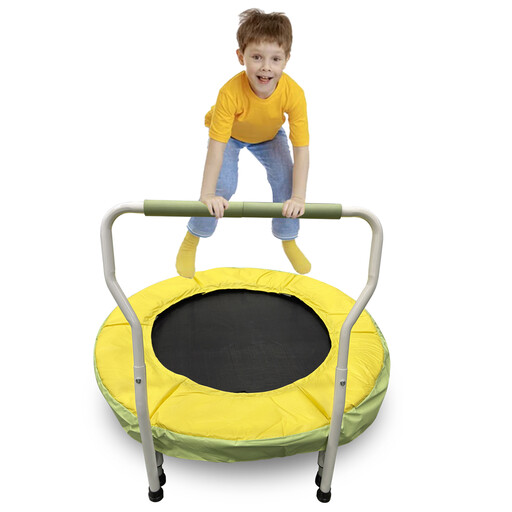
Why This Fits Their Persona: Designed specifically for young children (3-6 years), this model prioritises safety above all else. It's an ideal way to provide a fun indoor activity that helps little ones expend energy safely on rainy UK days.
It directly addresses the 'Safety Pad Gap' pitfall with a full-coverage spring safety pad that completely covers all 24 springs, preventing access to the mechanism.
Features a soft, foam-covered handlebar for a secure grip and an adjustable height to grow with the child. The 25kg max user weight is appropriate for toddlers and young children.
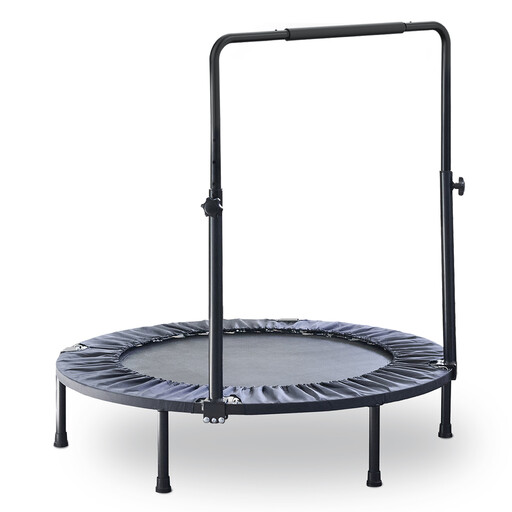
Why This Fits Their Persona: Perfect for those living in smaller UK homes or flats who need a full-size workout solution without sacrificing living space. The combination of a large jumping surface and easy storage is its main appeal.
This model avoids the instability of flimsy rebounders with a solid steel frame and an adjustable T-bar handle, providing confidence during workouts. Its 80kg weight capacity is reliably built for consistent adult use.
The foldable design is its standout feature, allowing for quick and easy storage. It comes pre-assembled with 40 steel springs, reducing setup time.
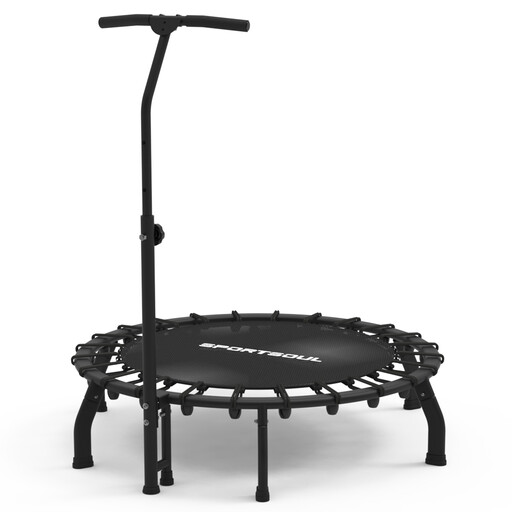
Why This Fits Their Persona: This rebounder is for the serious home fitness user who needs a robust, high-capacity model for daily workouts. It's built to accommodate a wider range of users and more demanding exercise routines.
It counters the 'Unreliable Weight Capacity' pitfall with a substantial 120kg (264 lbs) maximum user weight. The elastic rope system also avoids the 'Silent Squeak Trap', ensuring a quieter workout experience.
The high weight capacity makes it suitable for a broad range of users. Its elastic rope system provides a low-impact but effective rebound, ideal for protecting joints during intense cardio.
We have compiled a complete, real-time list of products that fully satisfy these strict selection criteria and UK safety regulations.
1. How much space do I need for a mini trampoline? For an adult fitness rebounder, you should have at least 2-3 feet (about 1 metre) of clear space around the trampoline in all directions. Crucially, ensure you have adequate overhead clearance – stand on the trampoline and reach your arms up fully. There should be at least 30cm of space above your fingertips to the ceiling to prevent injury.
2. Are spring or elastic band rebounders better? Neither is inherently "better"; they serve different purposes. Springs provide a firmer, more traditional bounce that is great for high-intensity training. Elastic bands offer a quieter, lower-impact bounce that is easier on the joints and less likely to disturb others, making them a good choice for general fitness and use in flats.
3. How can I stop my exercise trampoline from squeaking? If you have a spring-based model, squeaking often comes from metal-on-metal contact. First, ensure all legs and frame components are fully tightened. If the noise persists, applying a small amount of silicone lubricant or grease to the points where the springs hook into the frame can often solve the problem. Regularly checking and tightening bolts is good practice for any model.