
24/7 Customer Support

Free returns

Same-day & Next-day Delivery

Quality Guaranteed

Unlock Your Welcome Offers: FREE Delivery | Up to 80% OFF | Free 30-day JoyPlus trial
Download the APP
Resistance bands have become a staple for home workouts, physical therapy and gym sessions across the UK, and for good reason. They are portable, versatile and offer a fantastic way to add challenge to your fitness routine. However, the market is saturated with options, and it's easy to end up with a product that's more frustrating than functional.
As a Joybuy Product Recommendation Officer, my role is to help you cut through the clutter. Before you add a set of exercise bands to your basket, let's look at the common pitfalls that lead to buyer's remorse and how you can avoid them.
Many shoppers find their new fitness bands gathering dust after just a few weeks. Often, this isn't due to a lack of motivation but rather a poor purchasing decision driven by marketing hype. Here are the key issues to watch out for:
To ensure you get a durable and effective product, focus on these three core specifications.
The material of your fitness bands dictates their feel, durability and suitability for different exercises.
Not all bands are created equal. The style of the band determines the exercises it's suited for.
To avoid the pitfall of inconsistent labelling, a resistance band set is often the most practical choice, especially for beginners. A set gives you a range of options to progress with and ensures you have the right level for different muscle groups (e.g., a lighter band for shoulders, a heavier one for legs). For power bands, some manufacturers provide an estimated resistance in pounds or kilograms, which offers a much clearer indication of the challenge.
To help you make a practical choice, we've matched some products from our selection to common user needs, highlighting how they address the pitfalls we've discussed.
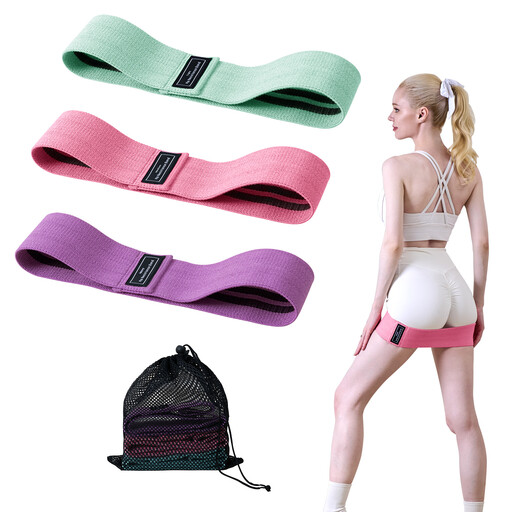
Why This Fits Their Persona: This user focuses on squats, hip thrusts and leg days. They need a band that stays put during dynamic movements. These fabric glute bands are specifically designed for that purpose, providing substantial resistance without slipping.
The wide, high-quality cotton fabric construction directly solves the "snap and roll" problem. It won't bunch up or slide down your legs during squats or lunges.
The non-slip design provides excellent stability for lower-body exercises. The set of three levels allows for progressive overload or use on different exercises.
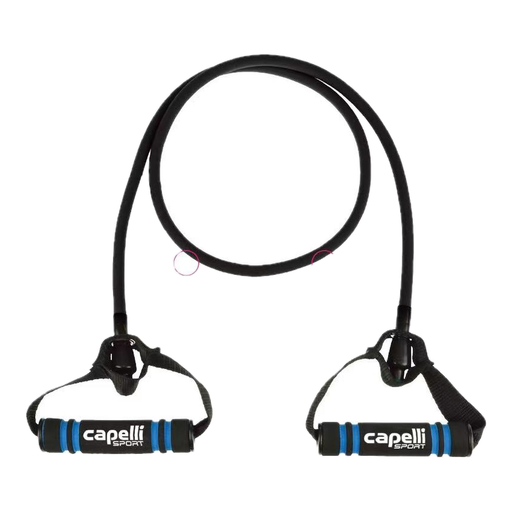
Why This Fits Their Persona: This person wants to replicate gym-style upper body workouts at home. They need a reliable band for curls, presses and rows. This tube band with handles is a perfect fit for a versatile home workout.
It directly addresses the "weak handles" pitfall by featuring durable foam handles designed for a secure, comfortable grip, reducing hand fatigue and the risk of slipping.
The TPE material is latex-free and durable. The sure-grip handles provide superior leverage and support for a wide range of upper-body resistance exercises.
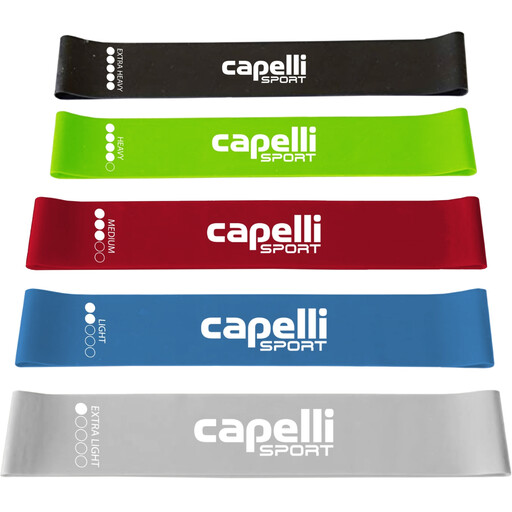
Why This Fits Their Persona: Someone starting their fitness journey needs variety and the ability to progress. This set of five mini loop bands is perfect for learning movements and gradually increasing the challenge for a full-body workout.
This set directly solves the "vague resistance levels" problem. With five distinct, colour-coded levels, you are not gambling on a single band being right for you.
A complete, portable solution. The five bands cover everything from light rehabilitation to heavy strength work for legs and glutes and come with a carry bag.
We have compiled a complete, real-time list of products that fully satisfy these strict selection criteria and UK safety regulations.
The lifespan of a resistance band depends on its material, how often it's used and how it's cared for. As a general guideline, latex or TPE bands can last from one to two years with regular use. Fabric bands are typically more durable. To prolong their life, store them out of direct sunlight and away from sharp objects. Most importantly, always inspect your bands for nicks, tears or thinning before each workout and replace them at the first sign of damage.
Yes, absolutely. Muscle growth is stimulated by progressive overload, which means continually challenging your muscles. Resistance bands are an excellent tool for this. You can progress by moving to a band with a higher resistance level, performing more repetitions or shortening the band to increase tension. They are effective for both muscle toning and building strength.
It depends on your workout. For lower-body exercises like squats, glute bridges and hip thrusts, many people prefer fabric glute bands. Their wide, non-slip design keeps them comfortably in place. For upper-body exercises, full-body movements and stretching, latex or TPE bands (both loop resistance bands and flat bands) offer greater versatility and a longer range of motion. If you have a latex allergy, TPE bands are the ideal alternative.