
24/7 Customer Support

Free returns

Same-day & Next-day Delivery

Quality Guaranteed

Unlock Your Welcome Offers: FREE Delivery | Up to 80% OFF | Free 30-day JoyPlus trial
Download the APP
A portable sketchbook can become a daily companion for garden visits, life drawing, lectures or quiet sketching at home. However, the wrong one may buckle in a damp rucksack, show ink through the page or prove too small for detailed botanical work. If you are searching for an RHS A5 hardbound sketchbook, the key is to look beyond the cover design and compare construction, paper weight and intended use.
This guide explains the main buying pitfalls, the specifications worth checking and several suitable options for gardeners, artists, students and gift buyers in the UK.
Botanical covers and RHS artwork can make a sketchbook appealing, but appearance does not automatically indicate a strong binding. A book carried between a home, allotment, garden centre and outdoor class needs a cover that protects the pages and a spine that can tolerate regular handling.
A hardbound sketchbook generally offers more cover rigidity than a softcover pad. Still, check the product description for the actual binding style rather than relying solely on photographs.
Paper weight is useful, but it does not tell you everything. A 110gsm sketchbook may work well for pencil, coloured pencil and many drawing pens, but it is not automatically intended for wet media. Watercolour, heavy marker layers or repeated erasing require a paper designed for those techniques.
For comparison, a 140gsm drawing journal offers a little more substance, while dedicated watercolour pads in the range use 190gsm paper. These differences matter more than vague phrases such as “premium paper”.
An A5 sketchbook is convenient for everyday carrying, but the compact page area can feel restrictive for large compositions or detailed studies of leaves and flowers. Conversely, an A4 pad may be less practical on a crowded train table, in a garden bag or during a walking trip.
Before ordering, consider where you will use it, whether you need space for written observations and whether the book must fit inside your existing bag.
Paper weight is measured in grams per square metre, or gsm. As a practical guide:
The RHS Rose A5 Hardbound Sketchbook is listed with 110gsm paper, making it a practical choice for portable botanical notes and dry-media sketches. If you intend to use washes, compare it with a watercolour pad instead of assuming all sketchbooks will handle moisture equally.
A hard cover helps shield pages from pressure inside a bag. It can also provide a firmer surface when sketching outdoors without a desk. Look for clear information about whether the book is hardbound, cloth-bound, casebound or simply finished with a thick cover.
Rounded corners, a storage envelope and a sturdy cloth finish are useful features for travel journals. They are specified for the Speedball drawing journals, but these journals are not A5: one measures 5.5 × 8.25 inches in landscape format and another measures 3.5 × 5.5 inches in portrait format.
An A5 sketchbook measures approximately 148 × 210mm, although the usable drawing area may be slightly smaller because of the binding. Check whether the pages are blank, ruled or specially designed for a particular medium. A ruled notebook may suit gardening records, but it will not provide the same freedom as a blank artist sketchbook.
For botanical work, a useful layout might include a plant name, date, location, weather notes and a drawing. For this reason, page usability can be more important than simply choosing the highest gsm figure.
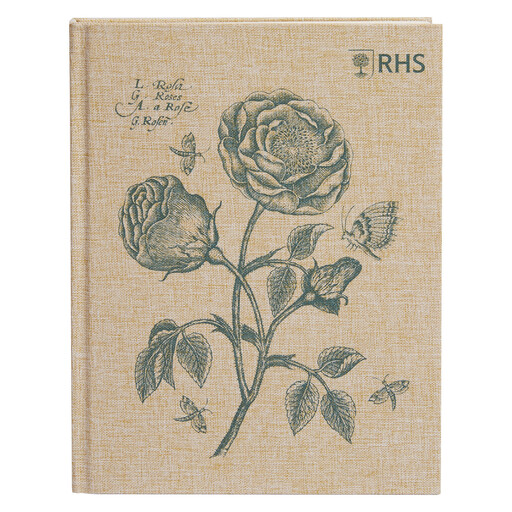
Why This Fits Their Persona: A sensible starting point for gardeners, stationery collectors and casual sketchers who want a recognisable RHS design in a portable format.
Its listed A5 hardbound construction addresses the risk of choosing a flimsy cover, while the stated 110gsm paper gives you a clear specification to compare with similar products.
A5 format; hardbound cover; 110gsm paper; RHS Rose design suited to gardening notes and dry-media sketches.
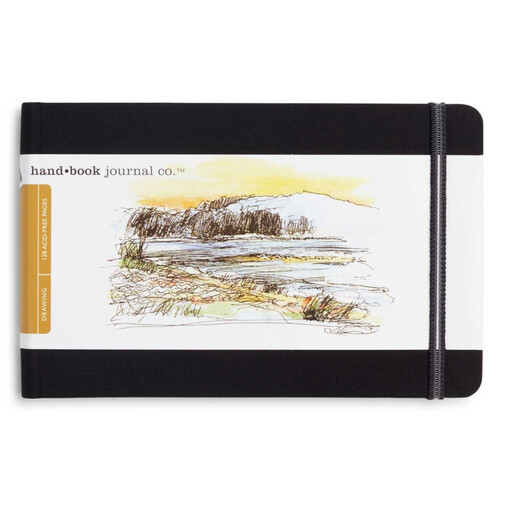
Why This Fits Their Persona: A considered option for artists who value a cloth-bound finish, a landscape page and a journal that can travel between studio, class and outdoor locations.
The 140gsm acid-free artist paper and stated cloth binding provide measurable details rather than relying on decorative wording.
140gsm acid-free paper; 64 sheets; inner clear storage envelope; rounded corners; compatible with pen and ink, pencils and markers.
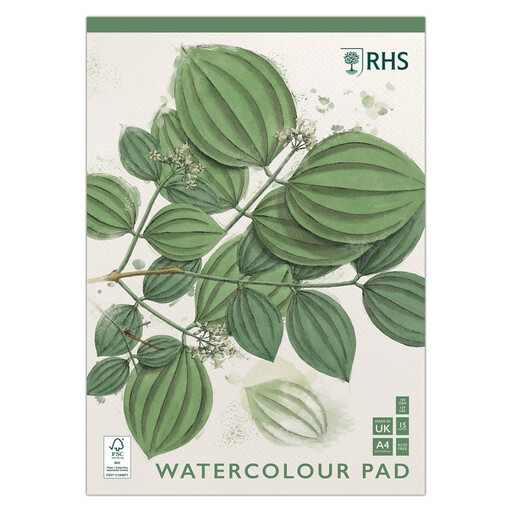
Why This Fits Their Persona: Better suited to artists creating larger botanical studies or working with watercolour-related projects rather than quick, dry-media notes.
It avoids asking a lightweight A5 sketchbook to handle a medium for which it may not be intended. The product listing clearly states 190gsm, A4 size and 15 sheets.
190gsm paper; A4 working area; intended for watercolour work; RHS-themed presentation.
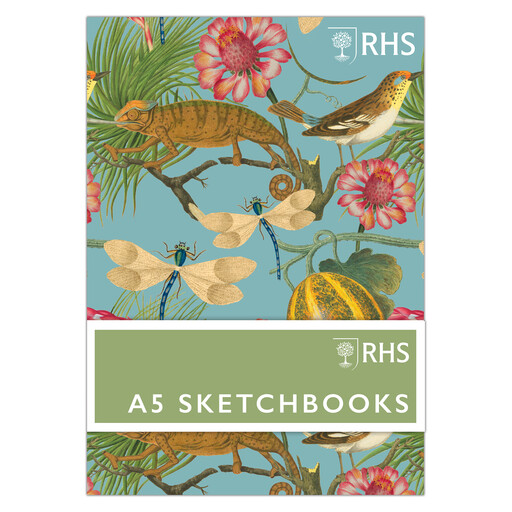
Why This Fits Their Persona: A flexible present for a gardening enthusiast, creative hobbyist or student who may want separate books for sketches, plant records and ideas.
A three-book format gives the recipient more than one place to organise creative work, instead of paying for a decorative book that may be used only occasionally.
A5 format; pack of three; RHS Tropical designs; suitable for portable sketching and gifting.
An RHS sketchbook can appeal to people who want stationery connected with gardening and botanical imagery. It may be suitable for recording plant observations, garden layouts, flower studies and seasonal notes. An artist sketchbook with heavier or acid-free paper may be more appropriate for finished drawings, archival work or mixed media.
For an everyday gardening sketchbook, prioritise portability, cover protection and enough room for writing. For a botanical sketchbook used with water-based materials, move up to a dedicated watercolour pad where the paper specification supports that purpose. Avoid paying more simply for a branded cover if the paper and format do not match your technique.
Check the paper specification before using watercolour. The RHS Rose model is listed with 110gsm paper, which is more naturally suited to lighter drawing and writing than repeated wet washes. A dedicated 190gsm watercolour pad is a more appropriate comparison for water-based techniques.
Lifespan depends on handling, storage and how heavily the pages are used. Keeping the book away from excessive moisture, avoiding overloading the cover and storing it flat when not in use can help preserve its condition. Outdoor users may also benefit from a protective document sleeve inside a bag.
For quick studies, garden notes and portable sketching, A5 is convenient and easy to carry. If you regularly draw large leaves, full plant structures or detailed watercolour compositions, an A4 pad may provide a more comfortable working area.