Who this is for

Households with daytime and evening viewing

Useful when one main screen is used for daytime television, streamed programmes and evening films, and changing room light means no single viewer’s preference should decide the display type. Ofcom reported in Media Nations 2025 that broadcaster content still makes up the majority of in-home viewing.

Families or housemates using several sources

For rooms where catch-up TV, subscription streaming, games consoles, a soundbar or a recorder may all need access to the same television. Ofcom estimated that 86% of UK primary TV sets in use at the end of 2023 could be used to watch TV online, but app and port availability still varies by model.

Film and sport viewers with wide seating

For sofa layouts with off-centre seats or several viewing positions. LG states that its OLED technology offers wide viewing angles, so OLED is a relevant route to compare where consistent viewing from different seats matters.

Buying priorities

OLED television

Consider it when: films and series are often watched in a dim room and people regularly sit away from the centre seat.

Check first: exact brightness, reflection handling, stand size, HDMI layout and UK app support rather than assuming these from the OLED label.

QLED or LED television

Consider it when: the room is mainly used in daylight or has strong window and lamp light. Samsung positions QLED as a route for bright rooms.

Check first: local dimming, anti-reflection treatment, viewing angle and ports at model level, as these are not guaranteed by the category name.

Mini LED television

Consider it when: a bright LCD-based set with controlled backlighting suits mixed daytime viewing, sport and HDR use.

Check first: dimming details, reflection handling, sound, apps and connections, as Mini LED alone does not define all of these features.

Priority What to check Household need
Screen size and fit Measure viewing distance, full TV width, depth with stand, stand footprint and wall space. Check the VESA mounting pattern and weight if wall mounting is planned. I want a screen that works from the usual seats without overwhelming the furniture or leaving no room for a soundbar.
Room light and seating Note the brightest viewing period, window reflections and off-centre seats. Compare the exact model’s display technology, local dimming and reflection information. Daytime television, evening films and side seats should all be considered before choosing OLED, QLED or Mini LED.
UK catch-up and streaming Confirm the exact UK app list, Freeview Play status, software-support information and home internet requirements. A smart-TV label does not prove every app is available. I want household members to reach the services they use without adding another device. Ofcom estimated that 86% of UK primary TV sets in use at the end of 2023 could watch TV online; this measures connected capability, not a buyer preference.
HDMI and sound Count permanently connected devices, then check HDMI input count and which port supports eARC or ARC. Match these details with the soundbar or AV receiver where relevant. A console, recorder, receiver and soundbar should not mean routinely swapping cables or losing the intended audio connection.
Electricity use Compare the energy-label consumption figures, including kWh per 1,000 hours where shown, for the exact screen sizes under consideration. I want to compare the likely electricity use of the sizes I am considering, rather than relying on the A-to-G letter alone. Energy Saving Trust notes that larger appliances generally use more energy regardless of rating.

Common buying pitfalls

  • Assuming a smart-TV platform guarantees every UK app

    Connected-TV access and app prominence can depend on arrangements between platform operators and content providers. Freeview Play also requires compatible equipment to be pre-installed.

    Open the exact UK product specification before ordering and confirm the catch-up apps, Freeview Play status, software-support position and internet requirements your household needs.

  • Choosing a display category without checking the room

    A shared room may combine bright daytime viewing, dark-room films and seats at different angles. OLED, QLED and Mini LED labels do not guarantee identical reflection control, local dimming or off-centre viewing.

    Map window reflections, the brightest viewing period and the normal seating positions, then compare the precise models rather than relying on a broad display category.

  • Choosing a larger screen by energy letter alone

    An energy-label class does not by itself show the likely difference in electricity use between screen sizes.

    Compare the consumption figures on the label, including kWh per 1,000 hours where available, for the exact sizes being considered.

  • Leaving installation and audio connections until after delivery

    Diagonal screen size does not confirm that a TV will fit a cabinet, leave room for a soundbar or suit an existing wall mount. HDMI allocation and eARC or ARC can also affect a multi-device setup.

    Check full dimensions, stand width and depth, weight, VESA hole pattern, HDMI count and eARC or ARC before purchase. Compare the TV and soundbar specifications if both are part of the plan.

Relevant brand references

LG

Relevant for households considering OLED in sizes ranging from smaller 42-inch options to larger living-room screens in LG’s UK OLED range.

  • LG states that OLED uses self-emitting pixels, with true blacks, high contrast and wide viewing angles.
  • Check the exact model’s stand arrangement, HDMI ports, UK tuner, Freeview Play status and app support; range-level technology statements do not confirm every model feature.

Samsung

Relevant when comparing mainstream LED or QLED, Mini LED or Neo QLED, and OLED options from one UK brand.

  • Samsung’s UK guidance positions Neo QLED or Mini LED for brightness and contrast, OLED for cinema-style viewing, and QLED for bright rooms.
  • This is Samsung’s own positioning rather than independent comparative testing; reflection control, ports, sound and app availability can differ between models.

Sony

Relevant for households wanting to inspect exact-model connectivity and Mini LED specifications alongside a Google TV-based smart-TV route.

  • Sony’s BRAVIA 7 K-65XR70 specification lists Mini LED backlighting, local dimming, four HDMI inputs, eARC or ARC, 120Hz, Chromecast built-in and VESA mounting details.
  • Those specifications apply to the named K-65XR70 model and should not be assumed for every Sony television.

Joybuy TV options

Joybuy options for a shared living room, including Mini LED and OLED televisions with details relevant to room light, multiple viewing positions, connected devices and soundbar planning.
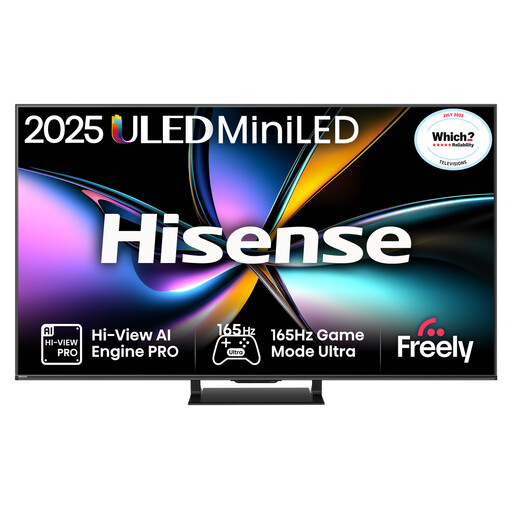
Hisense 65U7QTUK Pro 65-inch MiniLED QLED Smart TV

Hisense 65U7QTUK Pro 65-inch MiniLED QLED Smart TV

A 65-inch Mini LED option for mixed daytime viewing and several connected household devices.

Listed specifications include 4K Mini-LED QLED, 165Hz, local dimming, a 178° viewing angle, four HDMI 2.1 inputs, USB, Ethernet, Bluetooth and VESA 400 × 400 mounting.

Confirm Freeview Play, required UK catch-up apps and eARC support for a planned soundbar before buying.

Joybuy
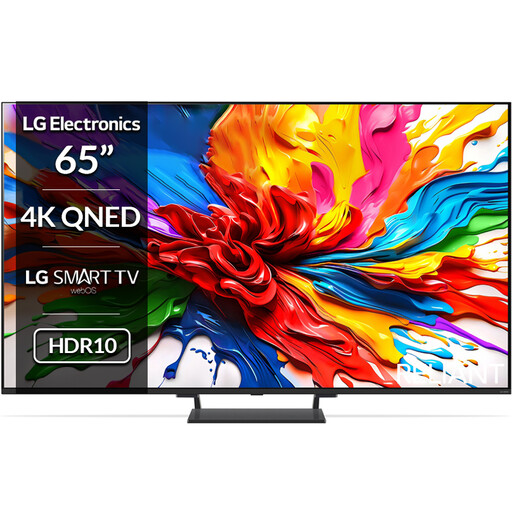
LG 65QNED93A6A 65-inch QNED Evo MiniLED 4K Smart TV

LG 65QNED93A6A 65-inch QNED Evo MiniLED 4K Smart TV

This 65-inch Mini LED model is relevant for a bright, mixed-use room with a console, soundbar and other permanent sources.

The listing states 4K, QNED Mini LED, Precision Dimming Pro, Dolby Vision, HDR10, HLG, four HDMI 2.1 inputs, eARC, 40W audio and VESA support.

Check the current UK catch-up app list and Freeview Play status, plus reflection handling and off-centre viewing if these matter in the room.

Joybuy
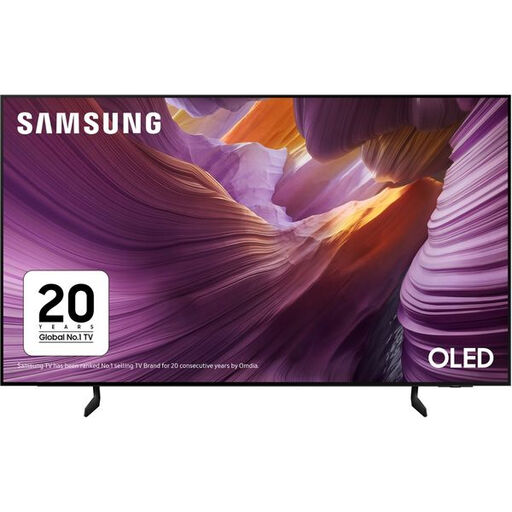
Samsung QE65S85FAE 65-inch 4K OLED Smart TV

Samsung QE65S85FAE 65-inch 4K OLED Smart TV

An OLED option for a main screen used for dark-room films and an installation with several sources and a soundbar.

Listed details include 4K OLED, 120Hz support, HDR formats, Dolby Atmos decoding, four HDMI inputs, eARC and VESA mounting.

Check Freeview Play and each required UK broadcaster catch-up app for this exact configuration. Measure the 1446.6 mm width, 263.3 mm stand depth and VESA 300 × 200 mm pattern before installation.

Joybuy

Samsung S90F 55-inch OLED 4K Smart TV

Samsung S90F 55-inch OLED 4K Smart TV

A 55-inch OLED choice for film viewing where reflections matter and a smaller measured screen size suits the seating area.

The listing specifies 4K OLED, 144Hz support, HDR formats, an anti-glare screen, 60W 2.1.2-channel audio, four HDMI ports, ARC or eARC, a centre stand and VESA 300 × 200 mounting.

Confirm the exact UK Freeview Play and catch-up app provision, and check that the centre stand fits the intended furniture.

Joybuy

TCL 75Q7C 75-inch QD-Mini LED 4K HDR Google TV

TCL 75Q7C 75-inch QD-Mini LED 4K HDR Google TV

A large 75-inch Mini LED option for a shared room used in daytime or for sport, provided the room and furniture have been measured first.

The listing states 4K QD-Mini LED, approximately 3000-nit peak brightness, up to approximately 2048 local dimming zones, a 144Hz native refresh rate, Google TV and HDMI 2.1 connectivity including eARC.

Confirm the current UK app list, Freeview Play status, HDMI-port count, stand footprint, full dimensions and VESA pattern before delivery or wall mounting.

Joybuy

Frequently asked questions

Does a smart TV automatically include UK catch-up services such as BBC iPlayer, ITVX, Channel 4 and 5?

No. A smart-TV label does not prove the exact app catalogue. Freeview says that Freeview Play TVs and recorders integrate BBC iPlayer, ITVX, Channel 4, 5 and UKTV Play into the TV guide when connected to the internet, but Freeview Play must be pre-installed. Check the exact UK model’s current app list and Freeview Play status before purchase.

What internet connection is needed for Freeview Play catch-up and on-demand TV?

Freeview states that catch-up and on-demand services need a minimum broadband speed of 2Mbps and count towards any monthly data allowance. This is a stated minimum rather than a guarantee of smooth streaming in a busy household using several devices.

Do we need a TV Licence for a new smart TV in the United Kingdom?

A TV Licence is required if anyone watches live TV on any channel, pay-TV or streaming service, or uses BBC iPlayer, on any device. TV Licensing states that it is not required solely for on-demand programmes on services other than BBC iPlayer, such as Netflix, ITVX or YouTube.

How many HDMI ports should a shared household choose?

Count the devices that need a permanent connection, such as a console, TV receiver, recorder and soundbar, then check the exact port count and which port supports eARC or ARC. Sony lists four HDMI inputs and eARC or ARC for the K-65XR70, but another model may have a different layout.

Should we choose a TV by energy-rating letter alone?

No. Energy Saving Trust advises comparing the energy-consumption figures on the label as well as the rating, because a larger TV can use more energy despite having a better letter rating than a smaller model.