
24/7 Customer Support

Free returns

Same-day & Next-day Delivery

Quality Guaranteed

Unlock Your Welcome Offers: FREE Delivery | Up to 80% OFF | Free 30-day JoyPlus trial
Download the APP
Sponge scourers are a small household purchase, but choosing the wrong type can lead to scratched cookware, unpleasant odours and frequent replacements. UK households often buy cleaning pads based on pack size or a claim such as “heavy duty”, without checking whether the scourer is suitable for the surface or task.
A useful approach is to compare scrubbing strength, surface compatibility, pack value and care requirements before buying. The right washing-up sponges can handle everyday plates and pans, while tougher scouring pads are more appropriate for ovens, grills and baked-on residue.
A strong scourer may remove burnt food quickly, but the same abrasive fibres can mark non-stick coatings, polished finishes, delicate glass or high-gloss surfaces. “Non-scratch” wording should not be treated as universal permission to scrub every item. Always read the product warning and test an unfamiliar pad on a hidden area first.
A large quantity of low-cost cleaning sponges may appear economical, but a pad that holds grease, loses its fibres or becomes difficult to rinse may need replacing sooner. Consider whether the sponge has features such as an anti-grease treatment, washable construction, a contoured grip or a replaceable refill format.
The absorbent sponge side of a dual-action pad is useful for wiping and soaking up liquid. The abrasive side is intended for scrubbing. Flat heavy-duty scourers and scourer pads generally offer more contact with stubborn residue, but they may be unsuitable for coated cookware. Match the product to the job rather than expecting one pad to clean every surface.
For daily washing up, look for a dual-layer sponge and scourer that combines absorbency with moderate scrubbing power. This format is practical for plates, mugs, stainless-steel pans and sinks, subject to the product instructions.
For burnt-on food, oven racks, baking trays and BBQ grills, choose heavy-duty scourers made with tougher synthetic or recycled fibres. These products should be kept away from non-stick cookware and delicate finishes unless the label specifically states otherwise.
If you need a non-scratch scourer, check the exact recommended surfaces. Some flexible pads are designed for sensitive materials, but damaged or already scratched non-stick coatings can still be vulnerable.
Pack size matters for busy families, shared homes and households that separate pads for dishes, bins and outdoor jobs. Compare the number of pads or refills, not just the shelf price. A four-pack may suit occasional use, while a larger value pack can reduce restocking for a family kitchen.
Reusable scourers may offer better value when they can be rinsed, air-dried and used for several cleaning sessions. Replace any pad when it becomes worn, develops a persistent odour or starts shedding fibres.
Rinse washing-up sponges thoroughly before and after use to remove food particles and detergent. Squeeze out excess water and allow them to air dry in a well-ventilated place. Keeping a wet sponge in a sealed container can encourage unpleasant smells.
Some products can be washed or refreshed according to their instructions. For example, the Spontex Washups listing provides microwave-refreshing directions, including allowing the scourer to cool fully before handling. Follow the product label rather than applying the same cleaning method to every material.
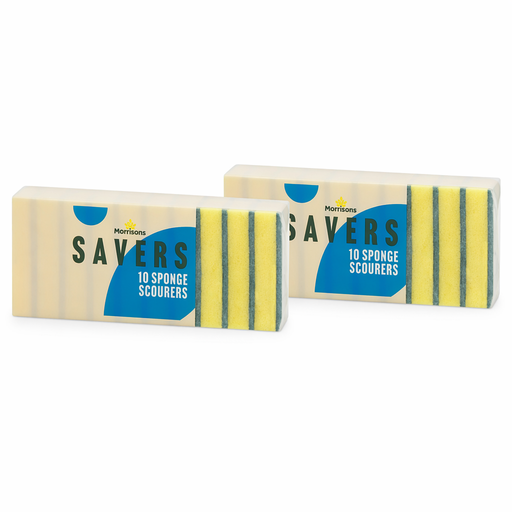
Why This Fits Their Persona: A practical option for renters, students, families and anyone who wants a substantial supply of everyday kitchen scourers.
The dual-purpose design makes the pack more versatile than buying separate sponges and pads, while the care instructions encourage rinsing and air drying.
Twenty scourers in total; combines an absorbent sponge with a scrubbing side for dishes, sinks and hard kitchen surfaces.
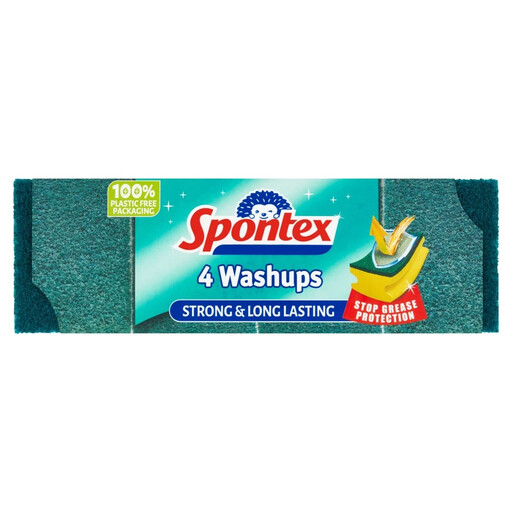
Why This Fits Their Persona: Suitable for shoppers who prioritise reusable construction, grip comfort and features aimed at regular washing up.
The product information specifies washable, reusable scourers and anti-grease technology, addressing the problem of pads quickly retaining oily residue.
Contoured nailguards for grip; the scourer section contains 35% recycled fibres and uses recyclable cardboard packaging.
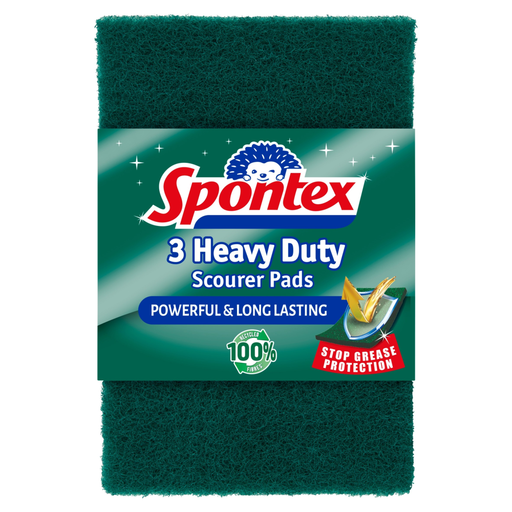
Why This Fits Their Persona: A focused choice for home cooks dealing with oven racks, baking trays, BBQ grills and stubborn baked-on residue.
Its stated heavy-duty purpose makes it more appropriate for tough residues than a general washing-up sponge, while the warnings clarify which surfaces to avoid.
Three 10 × 15cm pads; made with 100% recycled fibres and suitable for washing according to the product directions.
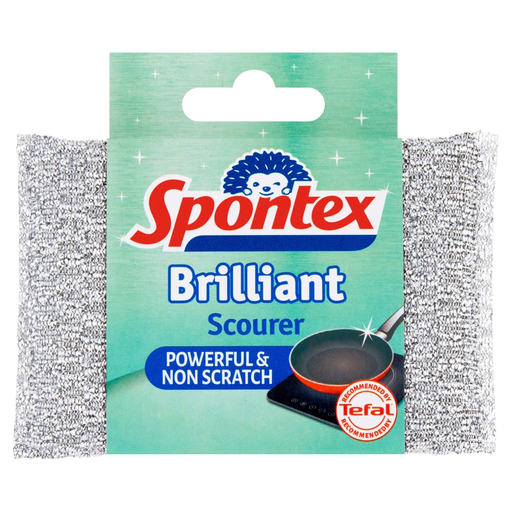
Why This Fits Their Persona: Designed for shoppers seeking a flexible pad for cookware and other surfaces where conventional abrasive scourer pads may be unsuitable.
The listing identifies it as a non-scratch scourer, but also advises against high-polish surfaces and damaged non-stick finishes, encouraging careful use.
Flexible fibre surface with aluminium particles; washable and reusable according to the product information.
We have compiled a complete, real-time list of products that fully satisfy these strict selection criteria and UK safety regulations.
Lifespan depends on usage, food residue and how well the pad dries between uses. A reusable scourer may last through multiple cleaning sessions, but it should be replaced when it smells persistently, becomes visibly worn, loses its scrubbing texture or sheds fibres.
Only use a product where the label specifically indicates compatibility, and scrub gently. Many general-purpose and heavy-duty scourers carry warnings against non-stick cookware. Avoid any pad on peeling, damaged or scratched coating, and follow the cookware manufacturer’s care instructions.