
24/7 全天候客户支持

免费退货

当日/次日达

品质保障

开启新人专享福利: 全场免邮 | 低至 2 折 | 免费试用 30 天 JoyPlus 会员
下载 Joybuy
A stainless steel frying pan can handle frying, sautéing, searing and sauce reduction without the surface concerns associated with damaged coatings. However, choosing one based on appearance or a bold product claim can lead to disappointing results.
Common buying traps include:
The right choice depends on your hob, household size, cooking habits and tolerance for maintenance.
A tri-ply frying pan typically combines stainless steel with an aluminium core. Aluminium conducts heat efficiently, while the stainless steel layers provide the cooking surface and structural support. This construction can help spread heat across the base more consistently than a basic single-layer pan.
Look for clear details about the structure rather than relying on phrases such as “professional performance”. A stated stainless steel–aluminium–stainless steel construction gives you more useful information about how the pan is built.
The products in this guide include both 304 stainless steel frying pan and 316 stainless steel frying pan options. These are grades of stainless steel, not guarantees of cooking performance on their own. The pan’s thickness, bonded core and base design also matter.
A non-stick frying pan is convenient for eggs, pancakes and low-oil cooking. It generally requires wooden, silicone or nylon utensils and should not be overheated when empty.
An uncoated stainless steel pan has no applied non-stick layer. It can be suitable for high-temperature browning and is less dependent on coating-care rules, but food release depends more on technique. Preheat the pan gradually, add oil once it is hot and avoid moving food too early.
Carbon steel and cast iron are other uncoated alternatives. A carbon steel wok heats quickly and suits stir-frying, but requires seasoning and drying after washing. A cast iron skillet retains heat effectively, although it is heavier and needs regular oiling to reduce the risk of rust.
For most UK kitchens, size is a practical decision:
Check that the base is suitable for your hob. All-hob compatible cookware should state support for induction, gas, electric and ceramic hobs. A flat, magnetic base is important for induction. Also check whether the handle is oven safe, whether the pan is dishwasher safe, and whether a frying pan with lid is included.
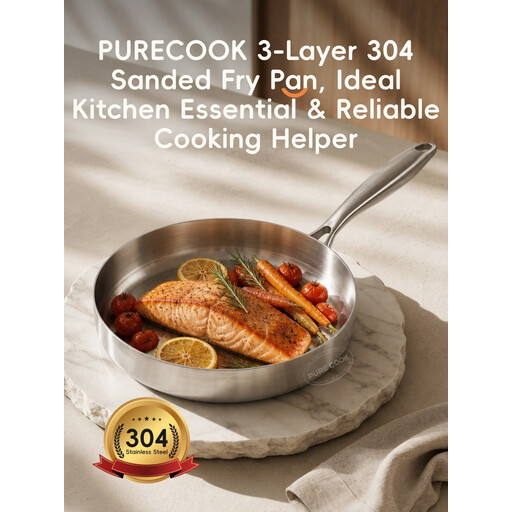
Why This Fits Their Persona: The 20cm format suits students, solo cooks and small households preparing compact meals without storing a large pan.
Its listed three-layer construction addresses the hot-spot concern associated with basic single-layer pans. It is also listed as dishwasher safe, although hand washing may help preserve the finish.
304 stainless steel, tri-ply construction and compatibility with gas, induction, electric ceramic and halogen hobs.
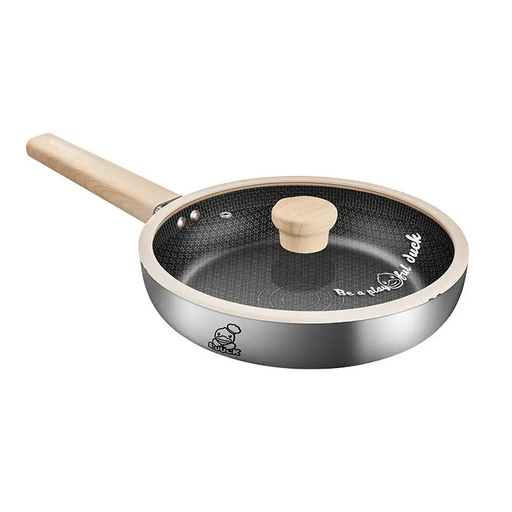
Why This Fits Their Persona: The 28cm size gives couples and families a generous cooking area for larger portions, while the specified 316 stainless steel appeals to shoppers comparing material grades.
The listing clearly identifies the pan as uncoated and not dishwasher safe, helping buyers plan for hand washing rather than assuming automatic cleaning is suitable.
316 stainless steel construction and stated compatibility with induction, gas, electric and ceramic hobs.
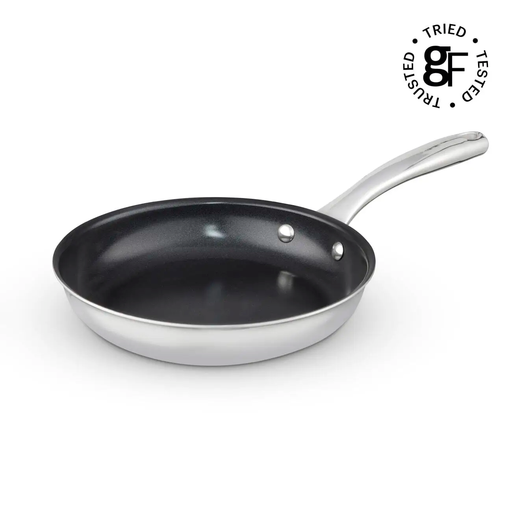
Why This Fits Their Persona: The 30cm cooking surface suits regular family meals, batch cooking and users who need room to sear or sauté without overcrowding.
The listing specifies tri-ply construction, all-hob compatibility and dishwasher suitability, while also advising hand washing to maintain the ceramic finish.
2.5mm tri-ply stainless steel with an aluminium core, ceramic coating, oven suitability up to 220°C and a riveted steel handle.
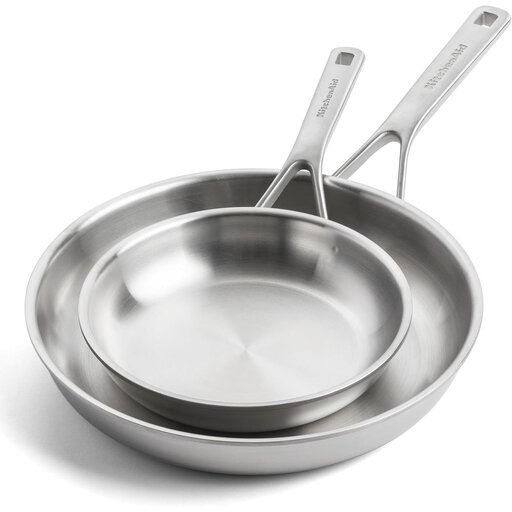
Why This Fits Their Persona: Two sizes cover individual breakfasts and larger evening meals, making the set practical where one pan would be limiting.
Both pans are described as uncoated, so there is no ambiguity about coating care. Sealed rims and a seamless interior are also specified to reduce food-trapping areas.
20cm and 28cm sizes, aluminium-core MultiPly construction, internal measurement marks and all-hob compatibility including induction.
We have compiled a complete, real-time list of products that fully satisfy these strict selection criteria and UK safety regulations.
Yes, if the pan has a magnetic stainless steel base or bonded induction-compatible construction. Always check the product specification rather than assuming that all stainless steel cookware will work with induction.
Preheat gradually over medium heat, add cooking oil, then place dry ingredients into the pan. Allow meat or vegetables to develop a seared surface before trying to turn them. Very high heat can increase sticking and make cleaning harder.
It can reduce cleaning effort, particularly in a busy family kitchen. Nevertheless, manufacturers may recommend hand washing to preserve polished, ceramic or coated surfaces. Check the care instructions and dry stainless steel thoroughly after washing to reduce water marks.