
24/7 Customer Support

Free returns

Same-day & Next-day Delivery

Quality Guaranteed

Unlock Your Welcome Offers: FREE Delivery | Up to 80% OFF | Free 30-day JoyPlus trial
Download the APP
Buying table tennis equipment for a home, club, school or academy can look straightforward until you compare blade construction, rubber types, ball grades and collection tools. Low prices may be attractive, but unsuitable equipment can create poor ball control, frequent replacements and unnecessary storage problems.
This guide explains the practical details to check before buying table tennis bats, table tennis balls, portable sets and training accessories. It also matches selected Double Fish table tennis equipment and portable products to different types of UK buyer.
A higher star rating does not automatically make a bat suitable for every player. A carbon-reinforced bat may feel too fast for a beginner, while a basic children’s bat may limit an advancing player’s ability to generate spin.
Consider the intended user, grip style, playing frequency and technical level before focusing on the number of stars.
A box of 100 training table tennis balls can be useful for multi-ball drills and club sessions, but it may be unnecessary for occasional family play. Conversely, buying a small pack for a busy academy can increase replacement costs and interrupt training.
Check whether the balls are seamed or seamless, their material, pack size and intended use. Training balls and competition balls serve different purchasing needs.
Coaches and clubs may spend more time gathering balls than expected if they do not have a suitable table tennis ball collector. A compact, telescopic collector can reduce repeated bending and keep practice sessions moving, but the mesh capacity and handle construction should be checked first.
For home users, storage is equally important. A portable table tennis set with a carry case is easier to keep organised than loose bats, balls and nets.
Look for the blade material and rubber configuration rather than relying only on marketing language.
Handle shape matters too. A concave or flared handle can help the bat sit securely in the hand, whereas a child may need a smaller, lighter design.
Most modern table tennis balls use ABS or another plastic polymer. For regular training, prioritise roundness, rebound consistency and surface durability. A seamed ABS ball can be a practical choice for repetitive drills, while competition-focused buyers should check any stated certification and specification information.
For clubs, schools and academies, calculate usage before choosing a bulk pack:
A ball collector should have a secure mesh pocket, a handle that adjusts to a useful height and a mechanism that folds or stores easily. Stainless steel handles can be convenient for regular venue use, but inspect the telescopic section and mesh before every session.
For casual play, a portable set should clearly state what is included. Check whether it contains two bats, balls, a net and a carry case, and whether the net is designed for standard tables. Outdoor use also requires a clear, obstacle-free playing area.
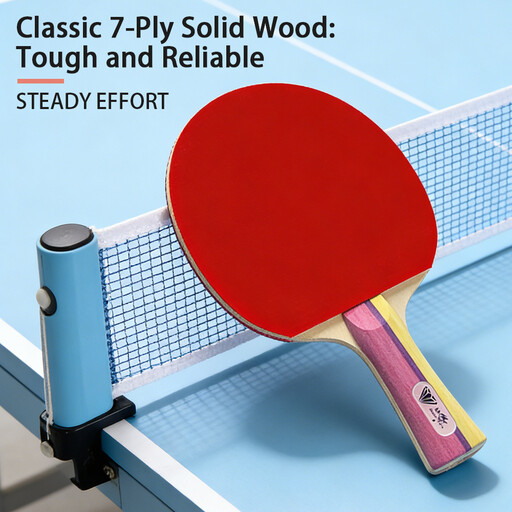
Why This Fits Their Persona: A straightforward single bat for beginners, students or buyers who already have access to balls and a table at home, school or a community venue.
Its listed 7-ply solid wood blade and double-sided rubber provide clearer specifications than a generic unlabelled bat, while the penhold design makes the grip style explicit before purchase.
7-ply solid wood construction; non-slip, sweat-absorbing handle.
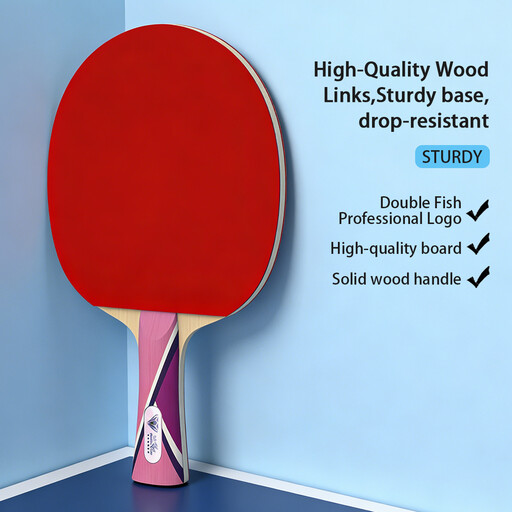
Why This Fits Their Persona: A shakehand bat for advanced players, competitive club members and serious training environments where speed and response are priorities.
The listed carbon-reinforced hybrid base, expanded frame geometry and double-sided inverted rubber identify the construction clearly, helping advanced buyers avoid vague speed claims.
High-modulus carbon fibre layer; ergonomic concave solid wood handle.
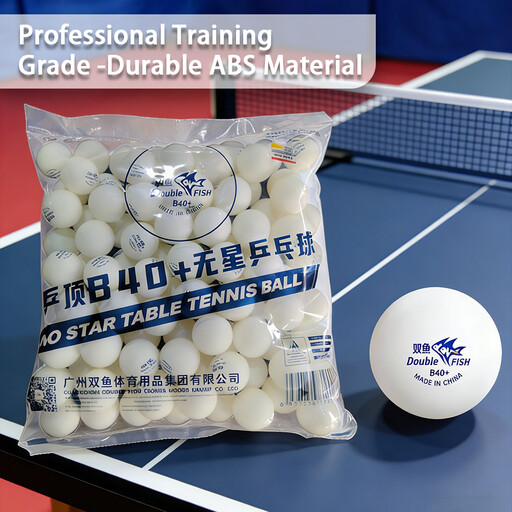
Why This Fits Their Persona: A bulk option for clubs, coaches, academies and schools running frequent drills, serving multiple players or replacing lost and damaged balls regularly.
The product listing specifies new ABS material, a seamed design and a 100-ball bag, making it easier to compare training volume and construction instead of buying on pack size alone.
New ABS material; 100-ball pack for multi-ball training.
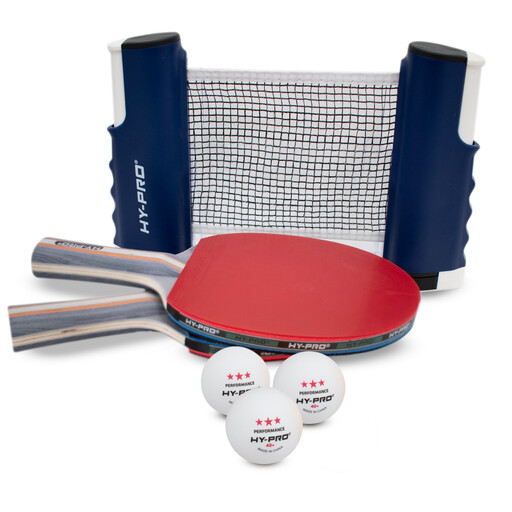
Why This Fits Their Persona: A ready-to-use option for households, offices and holidays where the main priority is quick setup rather than competition-level equipment.
The contents are stated clearly: two bats, three balls, a synthetic net and a carry case. Buyers do not need to purchase each basic component separately.
Portable carry case; quick net setup on a standard table.
Wipe bats and balls with a soft, dry cloth after use. Store rubber-faced table tennis bats away from direct sunlight, high temperatures, sharp objects and excessive moisture. Do not bend or strike the blade unnecessarily.
Collectors should be dried before storage, particularly after use in a damp sports hall or garage. Keep telescopic handles folded safely and inspect mesh pockets for damage. When children are playing, supervise use and keep loose balls away from very young children.
A beginner generally needs a suitable bat, a small supply of balls and access to a stable table with a net. A table tennis bat set or portable table tennis set can be convenient for home use because the main components are supplied together. Choose a child-sized or lighter bat if the player is young or has smaller hands.
Lifespan depends on ball quality, playing frequency, surface condition and impact. Training balls used for repeated drills may need replacing more often than balls reserved for occasional matches. Check balls for cracks, dents and irregular bounce, and replace damaged ones rather than continuing to use them.
Not usually. Professional table tennis balls or certified competition balls make more sense for tournaments, serious match practice and players who want to replicate competition specifications. For family games and basic coaching, training table tennis balls can offer a more practical balance between quantity and cost.