
24/7 Customer Support

Free returns

Same-day & Next-day Delivery

Quality Guaranteed

Unlock Your Welcome Offers: FREE Delivery | Up to 80% OFF | Free 30-day JoyPlus trial
Download the APP
For any serious mechanic or DIY enthusiast in the UK, a reliable torque wrench set is not a luxury; it's a necessity. Applying the correct torque to a fastener is critical for safety and performance, whether you're working on a car engine, a motorcycle frame or a high-end bicycle. However, the market is flooded with options, and it's easy to fall into common purchasing traps that lead to wasted money and compromised work.
This guide cuts through the marketing clutter. We'll highlight the critical pitfalls to avoid and break down the essential features you need to look for, helping you choose a tool that delivers precision and durability for years to come.
Before looking at features, it's important to recognise the common issues that can make a seemingly good tool a poor investment.
To make an informed choice, focus on these non-negotiable specifications.
The most important factor is matching the tool to the task. Torque is measured in Newton-metres (N.m) or foot-pounds (lbf.ft).
A good torque wrench set will either include multiple wrenches to cover these ranges or provide a single, high-quality adjustable torque wrench with a very wide, usable range.
A tool's accuracy rating indicates its margin of error. A professional-grade tool should have an accuracy of ±4% or better. This ensures your work meets manufacturer specifications. There are two main types to consider:
Look for wrenches made from heat-treated Chrome Vanadium (Cr-V) or Chrome Molybdenum (Cr-Mo) steel for the head and body. These materials offer superior strength and fatigue resistance. The handle should provide a secure, non-slip grip and the torque adjustment mechanism should feel smooth and lock securely in place. For mechanical wrenches, an engraved, high-contrast scale is far more durable than a printed one.
We've selected a few options from our catalogue that align with different user needs, focusing on how they address the common pitfalls and deliver on the core parameters.
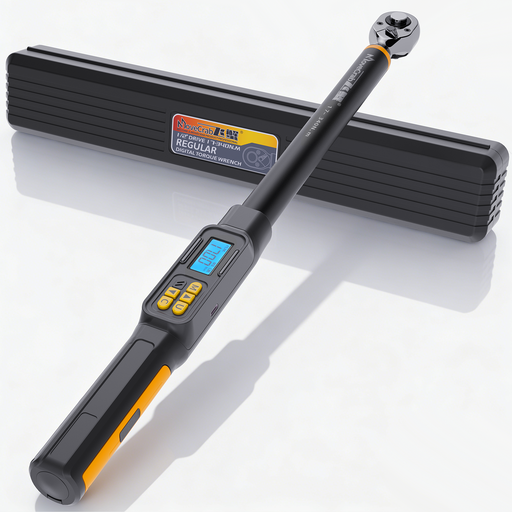
Why This Fits Their Persona: For the professional mechanic working on cars and heavy machinery, precision is non-negotiable. This tool's wide torque range (17-340 N.m) and digital interface are ideal for frequent, high-stakes jobs in a busy UK workshop.
It counters the "high-accuracy illusion" with a stated ±2% accuracy and provides triple-alert feedback (vibration, sound and LED) to ensure the target torque is never missed, even in a noisy environment.
Features Peak and Track modes with memory for 500 readings, allowing for quality control and data logging. The 1/2" drive and high torque range cover most automotive needs.
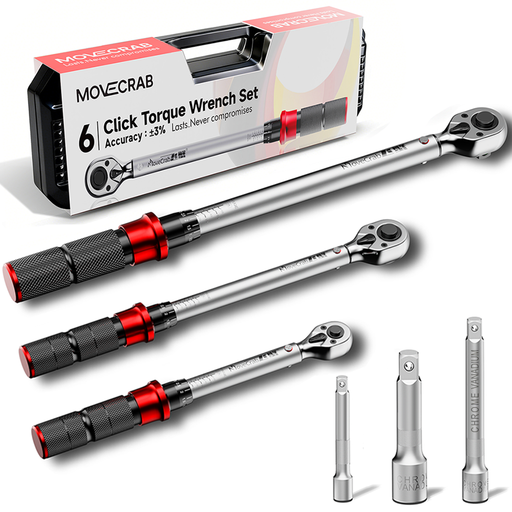
Why This Fits Their Persona: The home mechanic tackling everything from lawnmowers to car maintenance needs versatility. This comprehensive set provides three separate click-type wrenches to cover a massive 5-220 N.m range.
It solves the "one-size-fits-all" problem by providing dedicated tools for low, medium and high torque jobs, ensuring you always have the right wrench. The all-steel construction avoids the flimsy build quality pitfall.
Includes three wrenches (1/4", 3/8" and 1/2" drive) and extension bars in one case. Each wrench has a stated ±3% accuracy and comes with its own calibration certificate for peace of mind.
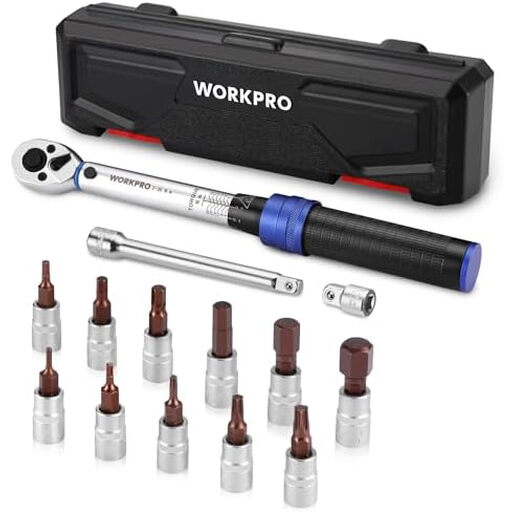
Why This Fits Their Persona: Modern bicycles, especially those with carbon fibre components, require precise, low-torque settings. This kit is tailored for that, with a 2-26 N.m range and all the common hex and torx bits needed for bike maintenance.
This is a purpose-built kit, not a repurposed automotive tool. Its low torque range and 1/4" drive are specifically designed for the delicate fasteners on a bike, preventing over-tightening and damage.
A complete 14-piece set with a stated ±3% accuracy. The dual-direction, 72-tooth ratchet head is useful for a variety of tasks and the click mechanism provides clear feedback.
We have compiled a complete, real-time list of products that fully satisfy these strict selection criteria and UK safety regulations.
For professional use where accuracy is paramount, annual calibration is recommended. For the serious home DIYer, recalibrating every 2-3 years or after approximately 5,000 cycles is a good practice. Always store a mechanical click-type wrench at its lowest torque setting to preserve the spring's accuracy.
It is strongly advised not to. Using a torque wrench, especially a click-type one, to loosen stubborn bolts can damage the internal calibration mechanism. Use a dedicated breaker bar for loosening and a torque wrench only for tightening to the specified value. Some digital wrenches are rated for bi-directional measurement, but it's still best practice to use them primarily for tightening.
A click torque wrench is simpler: set the value and pull until it clicks. It's fast and effective. A digital torque wrench offers more feedback and features. You can see the torque increase in real-time, which is helpful for understanding how a bolt is seating. The audible and visual alarms, plus data memory make it a powerful tool for professional environments where precision and traceability are key.