Who each display suits

Fast-action console players

If high-frame-rate modes and changing frame rates matter to you, verify the exact TV’s 4K/120Hz input, VRR support and required settings. PlayStation, Xbox Support and Sony describe these capabilities with console- and display-specific conditions; a gaming label alone does not establish them.

Living-room console players

Start with where the TV will stand or hang and where you will sit. Decide whether supported 120Hz and VRR modes are priorities before making them requirements for a room-based 4K setup.

Desk-based PS5 players

A monitor-sized display may suit a closer playing position. PlayStation provides a PS5 1440p output test for checking supported 60Hz, 120Hz, HDR and VRR modes on the connected display; confirm the exact monitor rather than relying on its PC specifications.

What matters when choosing

4K TV with 120Hz input and VRR

Choose when: Supported high-frame-rate or variable-frame-rate modes are a priority for your console games.

Check before buying: The exact TV model, HDMI port and enabled input mode must support the signal you want.

4K TV for everyday console play

Choose when: Room placement and a TV-sized 4K picture matter more to you than supported 120Hz or VRR modes.

Trade-off: Do not assume this route offers 4K/120Hz output when a console and game support it.

Desk monitor

Choose when: You play close to a display at a desk rather than viewing a TV from across a room.

Check before buying: A monitor’s advertised resolution and refresh rate do not establish which modes its HDMI input accepts from your console.

Concern What to check Who this matters to
High-frame-rate play and VRR Confirm 4K at 120Hz and VRR on the intended HDMI input of the exact TV model, then check the console and games support the desired modes. If fast-moving games are my priority, I want to know whether my console can use the TV’s high-frame-rate and VRR modes. About 36% of consumers put that compatibility first.
Room fit and display type Assess screen placement and your viewing position; for a desk monitor, check its console-compatible HDMI modes. Playing from a sofa calls for a different screen arrangement from playing close up at a desk. For about 29% of consumers, fitting the display to that position is the primary need.
Picture settings and HDR Check HDR support across the TV, console and games, and review the selected model’s gaming picture settings. I care about how the picture is presented in the games I play, not just whether the box says 4K. Picture configuration comes first for about 21% of consumers.
Ports and cable layout Identify the ports that accept the required mode and measure the cable run, particularly if other devices share the TV. With a console and other devices to connect, I need the right inputs to be accessible and the cable to reach them. Roughly 14% of consumers prioritise that connection planning.

Connection mistakes to avoid

  • Assuming every HDMI port offers the same gaming modes

    Samsung UK identifies specific inputs for listed 4K/120Hz Game Mode TVs, while Sony UK says the enhanced VRR format on certain BRAVIA models is available only on HDMI 3 or 4.

    Check the exact model’s input table before purchase, particularly if a soundbar or another console will also need a particular port.

  • Taking a 120Hz label as proof of 4K/120Hz console output

    The usable mode depends on the console, game, display input and settings. Xbox Support describes 4K gaming at 120Hz for Xbox Series X with a TV supporting HDMI 2.1; a headline refresh rate alone does not confirm that complete path.

    Check the model’s resolution and refresh-rate combinations, then inspect the console’s display-information screen after connecting it.

  • Choosing a replacement cable by length alone

    Xbox Support says Xbox Series X includes a 2-metre Ultra High Speed HDMI cable and recommends a certified Ultra High Speed HDMI cable if a longer one is needed.

    Measure the route from console to TV before installation, especially if the TV will be wall-mounted.

    A longer compatible cable is an additional item to plan for if the supplied one cannot reach.

  • Confusing console ownership with live-TV viewing

    TV Licensing identifies watching live TV as an activity requiring a TV Licence; playing games on a console is not itself the stated trigger.

    Consider what else you will watch on the screen rather than treating the purchase of a gaming TV as the deciding factor.

TV brands to consider

LG

LG’s OLED range is relevant if you are considering an OLED TV for console gaming, but check the exact model and size.

  • LG UK lists 4K 120fps via HDMI, VRR, ALLM and FreeSync compatibility for the specific OLED42C24LA model.
  • That discontinued model’s specifications do not establish the same inputs or modes for another LG OLED TV.

Samsung

Samsung’s UK support guidance is useful for checking whether a particular TV offers 4K/120Hz Game Mode.

  • Samsung identifies supported models and the HDMI inputs to use for this mode.
  • The guidance applies to a select range, so a Samsung TV’s brand or panel type does not confirm its 4K/120Hz input path.

Sony

Sony BRAVIA support guidance covers gaming settings, including enhanced HDMI formats, VRR and Game Mode on applicable products.

  • Sony UK provides setup guidance for supported 4K/120Hz and VRR configurations.
  • The instructions depend on the model or operating system; on certain models, the enhanced VRR option is restricted to HDMI 3 or 4.

TV and desk-monitor selections

These Joybuy listings cover room-based 4K TVs and QHD monitors for desk-based console setups. Compare their stated display features with the HDMI modes supported by your particular console.

TCL 55P8K QLED 4K HDR PRO TV

TCL 55P8K QLED 4K HDR PRO TV

Consider this TV for a room-based console setup if the 55P8K’s stated gaming features interest you. Its title identifies a QLED 4K HDR PRO TV and names a 288Hz Game Accelerator; that name does not establish its native refresh rate or 4K console modes. Confirm the exact HDMI input, resolution and refresh-rate combination before choosing it for 4K/120Hz play.

View on Joybuy
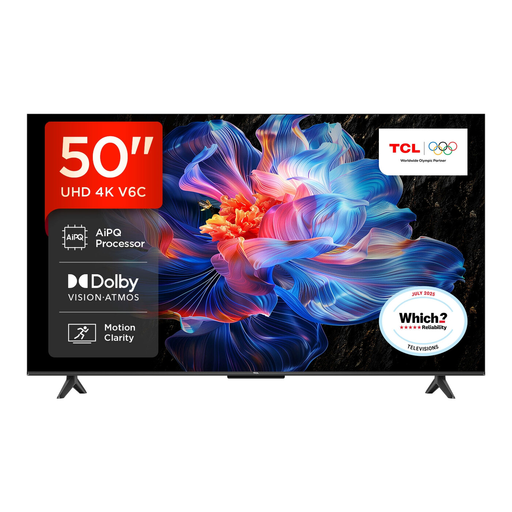
TCL 50V6C Direct LED 4K HDR TV

TCL 50V6C Direct LED 4K HDR TV

This room-based TV is worth considering if you want a 4K display without assuming that its accelerated gaming mode operates at 4K. The title specifies a Direct LED 4K HDR TV and a 120Hz Game Accelerator at FHD resolution. Check the HDMI modes available to your console if 4K/120Hz or VRR is a priority.

View on Joybuy

HKC G27H2DPro 27-inch QHD monitor

HKC G27H2DPro 27-inch QHD monitor

For a desk-based setup, this model offers a monitor-sized alternative to a TV. Its title specifies Fast IPS, 2560 × 1440 resolution and 220Hz; the stated refresh rate does not establish the modes available from a PS5 or Xbox over HDMI. Check 1440p, refresh-rate and VRR operation with your console.

View on Joybuy

CRUA 32-inch 1500R curved QHD monitor

CRUA 32-inch 1500R curved QHD monitor

Consider this larger desk monitor if its curved format suits your space. Its title specifies 2560 × 1440 resolution, 165Hz, Adaptive Sync and HDMI and DisplayPort connections. The listing’s 165Hz maximum depends on DisplayPort, and HDMI refresh may be lower; confirm the modes your console can use through HDMI.

View on Joybuy

Samsung Odyssey G6 S27DG612 27-inch QHD OLED monitor

Samsung Odyssey G6 S27DG612 27-inch QHD OLED monitor

This is another desk-based option if you are comparing QHD monitors rather than room-sized TVs. Its title states OLED and 240Hz, but that refresh-rate figure does not confirm the QHD or adaptive-sync modes available from your console. Verify the supported HDMI modes for the S27DG612 before buying.

View on Joybuy

Common questions

Do I need HDMI 2.1 for a PS5 or Xbox TV?

Prioritise a verified HDMI 2.1-capable TV input if you want the Xbox Series X 4K-at-120Hz setup described by Xbox Support. PlayStation says PS5 supports HDMI 2.1 and 4K 120Hz output. If those modes are not a priority, choose by the console modes you actually want rather than the HDMI version label alone.

Why is 4K/120Hz or VRR missing after I connect my console?

Start by checking the TV’s designated HDMI port and whether its enhanced input format or gaming mode must be enabled. Samsung UK and Sony UK both give model-dependent port guidance; also check the console’s output information, the cable and whether the game supports the mode you expect.

Can I use a 1440p monitor with a PS5?

Yes, if the particular monitor accepts the PS5 modes you need. PlayStation’s 1440p output test checks supported 60Hz, 120Hz, HDR and VRR combinations on a connected display; a monitor’s advertised PC refresh rate is not a substitute for that check.

Does using a console on a TV require a TV Licence?

Playing console games is not itself the live-TV viewing activity identified by TV Licensing as requiring a licence. If you also watch live TV on the screen, TV Licensing says that viewing requires one.

What if an advertised TV gaming feature does not work as described?

Keep the product description and record which console, port and settings you used when checking the feature. For UK purchases, GOV.UK says the seller must offer a full refund if goods are faulty or not as described; the Consumer Rights Act 2015 explanatory notes also describe repair or replacement remedies in applicable circumstances. Those remedies are distinct from changing your mind about a working TV.