
24/7 Customer Support

Free returns

Same-day & Next-day Delivery

Quality Guaranteed

Unlock Your Welcome Offers: FREE Delivery | Up to 80% OFF | Free 30-day JoyPlus trial
Download the APP
A new television can transform your living space, but leaving it on a bulky stand can feel dated and take up valuable floor space. A TV wall mount offers a sleek, modern solution, but choosing the right one involves more than just matching your screen size. Many shoppers fall into common traps, leading to incompatible brackets, unsafe installations or a viewing experience that just doesn't work for their room.
As a Joybuy Product Recommendation Officer, my role is to help you navigate these choices. Let's look at the frequent pitfalls and how to select a TV bracket that is secure, functional and perfectly suited to your home.
To make a confident purchase, focus on these three core parameters.
Before you even browse for a mount, you need to know your TV's VESA size. It's expressed as two numbers in millimetres (e.g., 400 x 400mm), representing the horizontal and vertical distance between the mounting holes on the back of your television. This information is in your TV's manual or can be found by measuring it yourself. A TV bracket will list the range of VESA patterns it supports; ensure your TV's pattern falls within this range.
While screen size is a helpful guide, the TV's weight is the crucial safety factor. Always choose a mount rated to hold well above your television's actual weight. If you're opting for a full motion TV mount, consider the leverage effect. When the arm is fully extended, the force on the wall increases dramatically. A robust mount designed for this stress is essential.
Be honest about your DIY skills and your home's construction.
Based on common UK household needs, here are a few options that address different user profiles.
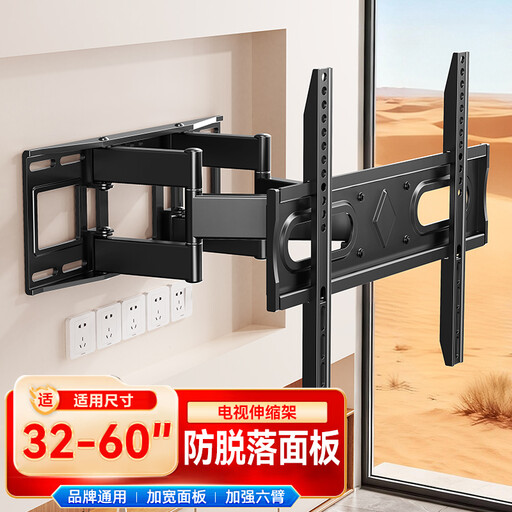
Why This Fits Their Persona: Ideal for open-plan living spaces where the viewing angle needs to change frequently, whether you're on the sofa, at the dining table or trying to avoid afternoon glare from a window.
This full-motion mount is built to handle the added stress of an extending arm. The safety warnings clearly state the need for secure installation into studs or solid concrete, preventing the common pitfall of mounting on weak surfaces.
The telescopic arm provides maximum flexibility for positioning. It supports a wide range of TV sizes (32-65 inches), making it a versatile choice for most living rooms.
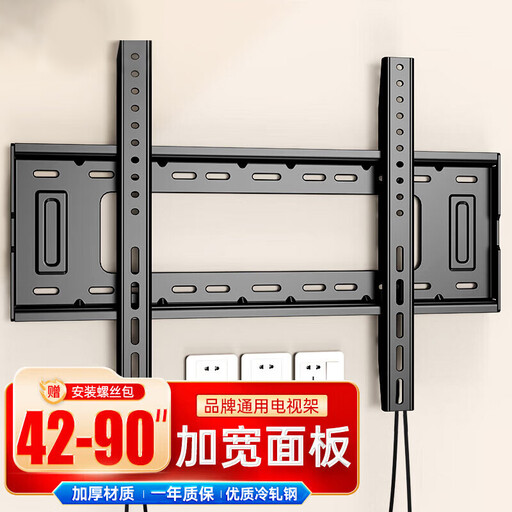
Why This Fits Their Persona: For someone creating a home cinema or who has a dedicated viewing area where the seating is fixed. The goal is a clean, flush-to-the-wall appearance that minimises distractions.
This fixed bracket is designed for large, heavy screens (50-90 inches). Its robust build and clear instructions on locating wall studs prevent the pitfall of underestimating the support needed for a big TV.
It offers a very low profile, meaning the TV sits almost flush against the wall for a professional, minimalist aesthetic. The simple locking mechanism ensures the TV is held securely in place.
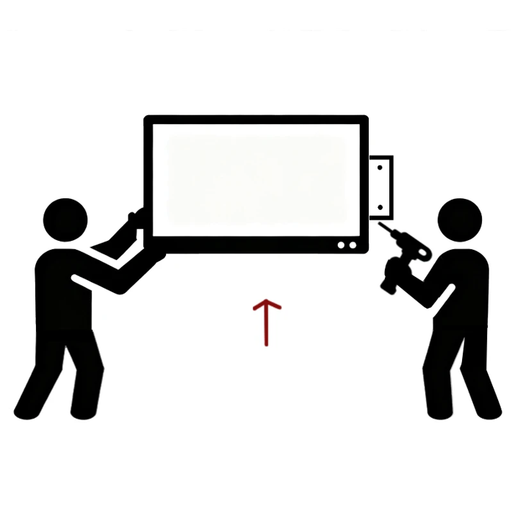
Why This Fits Their Persona: For anyone who values their time and wants a guaranteed safe and professional result without the hassle of finding studs, drilling and heavy lifting. It's the 'done-for-you' solution.
This service completely bypasses the primary pitfall of incorrect installation. The professionals handle wall type assessment and use the appropriate fixings, ensuring the mount is secure and the TV is safe.
Provides complete peace of mind. The service ensures a level, secure and tidy installation, often including basic cable management, saving you time and potential damage to your wall or TV.
A wall-mounted TV can become the centrepiece of your living room. To create a cohesive and personal space, consider complementing it with other wall-mounted elements. This is where thoughtful home organisation solutions come into play, turning a functional wall into a stylish feature.
We have compiled a complete, real-time list of products that fully satisfy these strict selection criteria and UK safety regulations.
Yes, but with a critical condition: you must secure the TV wall mount directly to the wooden studs behind the plasterboard. Never attach a mount to the plasterboard itself, as it is not strong enough to hold the weight and will fail. Use a stud finder to locate the studs and ensure your bracket's wall plate is wide enough to span two of them for a secure fixing.
A fixed TV bracket holds your television flat against the wall. It offers a very slim profile and is ideal for situations where the viewing position is directly in front of the screen. A full motion TV mount has an articulated arm that allows you to pull the TV away from the wall and swivel it left or right, as well as tilt it up or down. This is much better for large rooms, corner placements or for adjusting the screen to avoid glare.
Check two key specifications on any bracket you consider: the supported VESA patterns and the maximum weight capacity. Your TV's VESA pattern (e.g., 200x200mm) must be listed as compatible with the bracket. Secondly, the bracket's weight capacity must be higher than the weight of your television. Most brackets also list a suggested screen size range, which is a useful but secondary guide.