
24/7 Customer Support

Free returns

Same-day & Next-day Delivery

Quality Guaranteed

Unlock Your Welcome Offers: FREE Delivery | Up to 80% OFF | Free 30-day JoyPlus trial
Download the APP
When you're miles from shelter in the British hills, the difference between a reliable waterproof hiking shell jacket and a poorly chosen one becomes starkly clear. One keeps you dry, comfortable and safe; the other can leave you dangerously cold and wet. Yet, the market is flooded with technical jargon and marketing claims that make finding the right jacket a challenge.
As a Joybuy Product Recommendation Officer, my role is to help you see past the hype. Many experienced hikers still fall into common traps, investing in gear that fails when it matters most. Before you spend your hard-earned money, be aware of these frequent purchasing pitfalls.
To make an informed decision, you need to understand the numbers and features that truly define performance. Here are the non-negotiable parameters to check before you buy.
This is the definitive measure of how waterproof a fabric is. It is measured in millimetres (mm) and indicates how tall a column of water the fabric can withstand before it starts to leak.
Breathability is just as important as waterproofing. It's measured in grams of water vapour that can pass through a square metre of fabric over 24 hours (g/m?/24h). A higher number means the jacket is better at letting your sweat escape.
For challenging environments, a jacket must be more than just a rain barrier.
Based on these critical criteria, here are a few options from our catalogue matched to specific user needs.
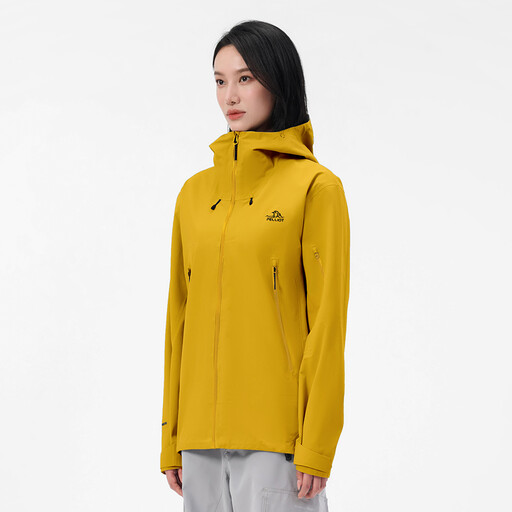
Why This Fits Their Persona: This unisex hiking jacket is for the serious adventurer heading into remote, unpredictable terrain in places like the Cairngorms or Snowdonia. Their priority is not just weather protection, but verifiable safety technology for peace of mind.
It directly counters the pitfall of ignoring safety by integrating a RECCO avalanche rescue reflector, a feature often overlooked in mainstream jackets but critical for backcountry exploration.
Features extended underarm zippers for superior ventilation during high-exertion climbs and a lighter, more elastic fabric for freedom of movement without compromising on protection.
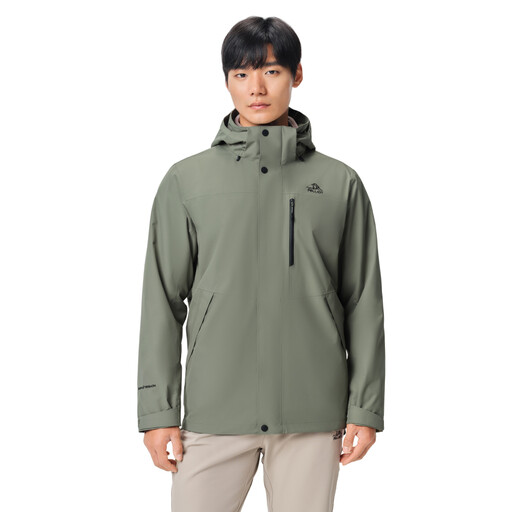
Why This Fits Their Persona: This user wants a single, versatile investment that adapts to the UK's notoriously changeable weather. They need a system for a cool autumn hike in the Lake District, a wet day in the Brecon Beacons and a cold winter camp.
The 3-in-1 design (shell, liner, or both combined) directly solves the problem of poor temperature regulation. It provides a high-performance shell that avoids the "boil-in-the-bag" issue and a separate thermal layer for when you need warmth.
Exceptional technical specifications with a 35,900mm H?O waterproof rating and 16,000g/m?/24h breathability. The inner fleece liner features anti-static treatment for enhanced comfort.
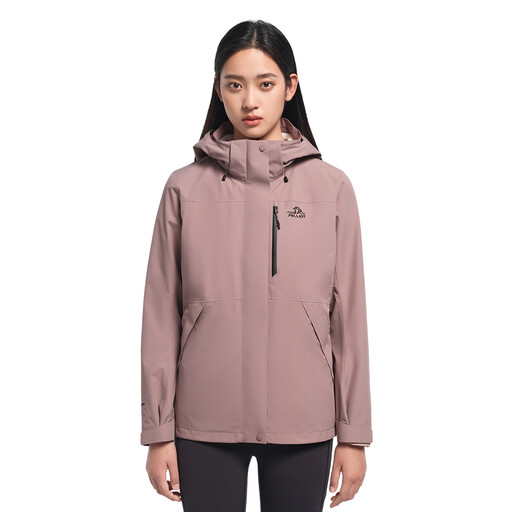
Why This Fits Their Persona: This is for the female hiker who needs a reliable, high-performance jacket that works for everything from a weekend camping trip to a tough mountain trek, without needing a different jacket for every season.
It avoids the trap of buying a single-purpose jacket by offering a modular 3-in-1 system. The shell provides storm-proof protection, while the thermal liner offers warmth, ensuring you have the right configuration for any weather.
Features the same impressive 35,900mm H?O waterproof and 16,000g/m?/24h breathability ratings as the men's version, along with a highly durable shell tested for over 40,000+ abrasion cycles.
We have compiled a complete, real-time list of products that fully satisfy these strict selection criteria and UK safety regulations.
Always follow the manufacturer's care label. Generally, you should wash it with a specialised technical wash, not standard detergent, which can clog the breathable membrane. Close all zips and fasteners before washing on a gentle cycle. To reactivate the Durable Water Repellent (DWR) coating on the outer fabric, you can often tumble dry it on a low heat for about 20 minutes or apply a new DWR treatment spray.
This refers to how the waterproof membrane is constructed.
No, it is not. A RECCO reflector is a passive device that can only be detected by professional rescue teams with a RECCO detector. An avalanche transceiver (or beacon) is an active device that can both transmit and receive signals, allowing members of your own party to perform an immediate companion rescue. For travel in avalanche terrain, a transceiver, shovel and probe are essential, while a RECCO reflector provides an additional, valuable layer of searchability for organised rescue.