
24/7 Customer Support

Free returns

Same-day & Next-day Delivery

Quality Guaranteed

Unlock Your Welcome Offers: FREE Delivery | Up to 80% OFF | Free 30-day JoyPlus trial
Download the APP
A wireless mouse can make laptop work, studying and home computing more comfortable, but choosing the wrong model often leads to connection issues, hand fatigue or a dongle that quickly goes missing. Whether you need a wireless mouse for laptop, a wireless mouse for PC or a portable option for commuting, the headline features do not always tell the full story.
Common buying traps include:
A 2.4GHz wireless mouse communicates through a USB receiver, usually offering a straightforward plug-and-play setup. It is useful for desktop PCs and laptops with an available USB-A port. The receiver may also provide a consistent connection without requiring Bluetooth pairing.
A USB wireless mouse is not necessarily wired. This term commonly refers to a wireless mouse supplied with a USB dongle. Check whether the receiver is stored inside the mouse, as this can reduce the risk of losing it while travelling.
Bluetooth models can help preserve USB ports, but they require Bluetooth support and pairing. If you regularly move between devices, a USB receiver may be simpler, provided your laptop has a compatible port or adaptor.
Most everyday models use an optical computer mouse sensor. Optical tracking is suitable for office software, web browsing and study on many ordinary desk surfaces, although performance can vary on glossy or highly reflective materials.
DPI, or dots per inch, controls pointer sensitivity. A 1600 DPI silent click mouse may feel responsive for general work, while an adjustable DPI mouse gives more flexibility for switching between precise document work and faster navigation.
For most users, adjustable settings between around 800 and 2400 DPI are practical. More settings are useful only if you have a clear reason to change sensitivity.
An ergonomic mouse should support a natural hand position without forcing the wrist or fingers into an awkward angle. Look for a shape that matches your grip and consider the mouse’s dimensions if you work for several hours at a time.
An ambidextrous mouse is shaped for either hand and can be useful in shared households, classrooms or offices. Additional side buttons may help with browser navigation, but they can also be pressed accidentally if positioned poorly.
For business travel or university, a portable mouse with a compact body and receiver storage is easier to pack. For a permanent desk setup, a larger shape may provide better palm support.
The following options suit different UK shopping needs. Check the individual product listing for current price, delivery information, system requirements and available stock.
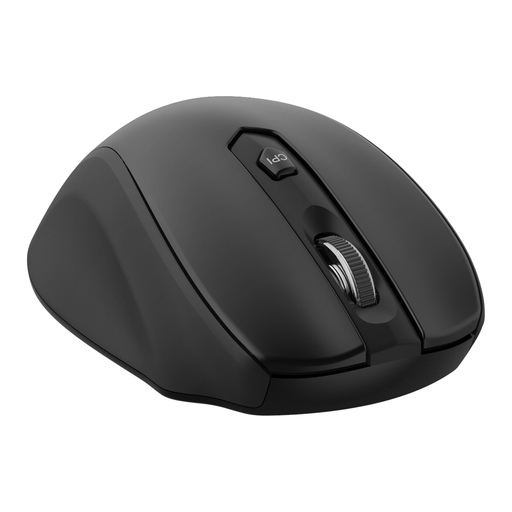
Why This Fits Their Persona: A practical choice for students, home users and first-time buyers wanting several useful controls without moving to a specialist model.
It states five DPI levels rather than presenting one sensitivity figure as a measure of quality. Buyers can also check its listed Windows, Linux and MacBook compatibility before purchase.
Offers 800/1200/1600/2000/2400 DPI settings, two side buttons and a stated wireless range of up to 33 feet.

Why This Fits Their Persona: Suits office professionals and hybrid workers who prioritise a quieter click sound and a simple, familiar setup for daily computer use.
Its key specifications identify the connection type, optical sensor, 1600 DPI resolution and quiet-click design, making the purchase decision less dependent on vague comfort claims.
Uses a 2.4GHz USB receiver and is listed for laptop and PC use with Windows and Mac systems. The quiet-click format is suitable for shared workspaces.
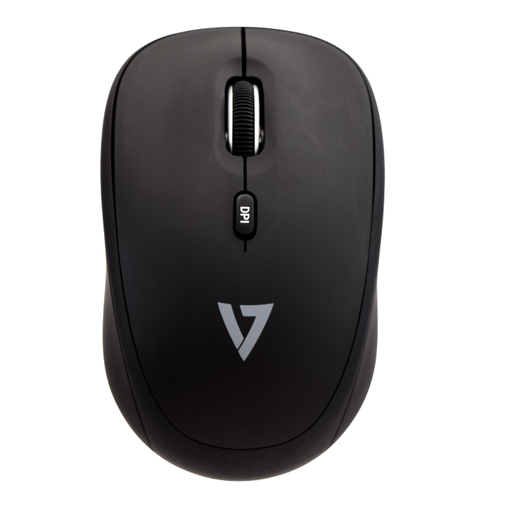
Why This Fits Their Persona: Its compact format is designed for commuting, business travel, lectures and working between a home office and other locations.
The 2.4GHz nano receiver stores in the mouse, addressing one of the most common portable-mouse problems: losing the dongle in a laptop bag.
Weighs 54g, has an ambidextrous design, includes one AAA battery and provides 1000/1600 DPI settings. The listing specifies Windows 10 and Windows 11 compatibility.
We have compiled a complete, real-time list of products that fully satisfy these strict selection criteria and UK safety regulations.
Before placing an order, confirm the following:
Yes. A 2.4GHz wireless mouse with a USB receiver is generally suitable for documents, spreadsheets, browsing and video-call administration. Check the available USB port and keep the receiver within a reasonable distance of the mouse.
Battery life varies according to the sensor, usage and power-saving design. One listed compact model specifies up to three months and includes a AAA battery. Treat this as a product-specific figure rather than a universal expectation, and check the manufacturer’s instructions for replacement guidance.
Some models are listed as compatible with Mac systems, while others specify Windows only. A MacBook may also need a USB-C hub or adaptor if the mouse uses a USB-A receiver. Confirm both operating-system support and physical port requirements before buying.