
24/7 Customer Support

Free returns

Same-day & Next-day Delivery

Quality Guaranteed

Unlock Your Welcome Offers: FREE Delivery | Up to 80% OFF | Free 30-day JoyPlus trial
Download the APP
Replacing tired halogen bulbs can make a noticeable difference to the appearance and lighting performance of your car, but buying 9012 HIR2 LED headlight bulbs is not simply a case of choosing the highest lumen figure. Vehicle compatibility, beam alignment, cooling and electrical compatibility all affect whether an upgrade works properly.
The product listing may promise exceptional brightness, a long lifespan or near-universal compatibility. However, those figures are not always directly comparable between sellers. This guide explains the main buying traps and highlights practical options for different types of UK driver.
Listings may quote 20,000LM, 26,000LM or 30,000LM per pair. These are product specifications, not a guarantee of how much useful light reaches the road. Reflector and projector housings are designed around the position of the original filament. If the LED chips are poorly positioned, a high output can create scattered light, dark areas or glare for oncoming traffic.
Look for 1:1 halogen replacement bulbs, thin chip placement and clear fitting instructions. After installation, check the beam pattern and have the headlamps aligned if necessary.
A bulb can use the same 9012 or HIR2 connector yet still trigger a dashboard warning, flicker or fail to start. Some vehicles monitor bulb resistance through their CANbus system, while limited space behind the headlamp may prevent the dust cover from closing.
CANbus-ready LED bulbs can reduce compatibility issues, but “ready” does not mean guaranteed for every model. Check your owner’s manual, existing bulb marking and the seller’s compatibility information before ordering.
LEDs convert electrical energy into heat as well as light. Fan-cooled LED bulbs use a small motor and heat sink, while fanless designs rely on their aluminium body and surrounding airflow. A fan may support active cooling but needs clearance and can eventually become noisy or stop working. A fanless bulb avoids moving parts but may require sufficient space around the heat sink.
Also remember that the bulb and surrounding components can become hot. Turn off the vehicle, allow the original bulb to cool and avoid touching the LED chip or optical surface.
9012 and HIR2 generally refer to the same bulb family, but they are not interchangeable with H4, H7, H11, HB4 or other fittings. Confirm the code printed on the old bulb or listed in the vehicle handbook.
Some HIR2 bulbs serve both dipped and main-beam functions. Check whether your car requires high-low beam LED bulbs and whether the product is intended for headlamps, fog lamps or off-road use. A bulb marketed as an LED fog light bulb may not be suitable for the main headlamp housing.
6000K LED headlight bulbs produce a cool white appearance, while 6500K xenon white headlight bulbs appear slightly cooler and bluer. Cooler light can look modern, but colour temperature alone does not indicate beam quality or useful illumination. In heavy rain, mist or dirty lenses, a very cool tint may not be the most comfortable option for every driver.
For road use, check the product’s intended application and the relevant UK requirements. A retrofit bulb must not create excessive glare, and correct headlamp aim remains essential. Confirm any road-use approval or restrictions before installation, particularly if the product is described as an off-road light.
Useful details include:
Advertised lifespans of 50,000 or 60,000 hours should be treated as manufacturer or listing specifications rather than a promise of actual service life. Heat, vibration, moisture and driving conditions can affect durability.
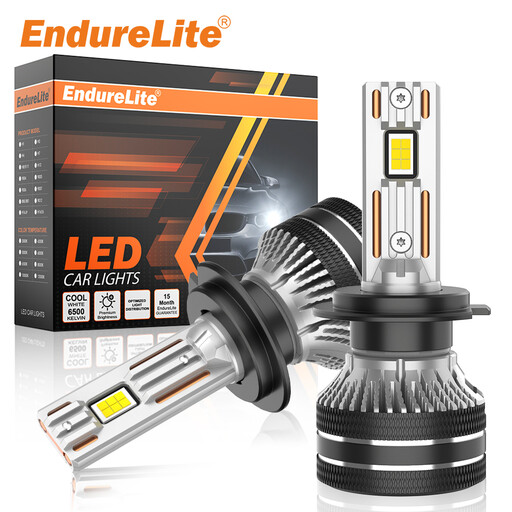
Why This Fits Their Persona: A straightforward option for drivers replacing both front bulbs and looking for a cool-white appearance without an external driver.
The listing specifies a 1:1 design, integrated CANbus-ready driver, IP68 construction and a built-in fan, addressing compatibility, warning-light and cooling concerns.
6000K light colour, plug-and-play installation, cooling fan and pack of two.
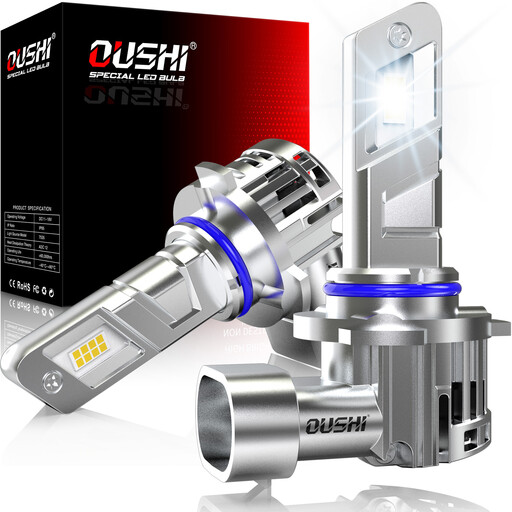
Why This Fits Their Persona: Suits motorists who prioritise a compact body, cooler colour and a high stated output for frequent night-time driving.
Its listed mini 1:1 format and integrated design are intended to avoid bulky wiring and clearance problems. The listing also notes that some sensitive vehicles may need a separate CANbus decoder.
6500K colour, 1:1 mini size, turbo fan and stated 30,000-lumen pair output.
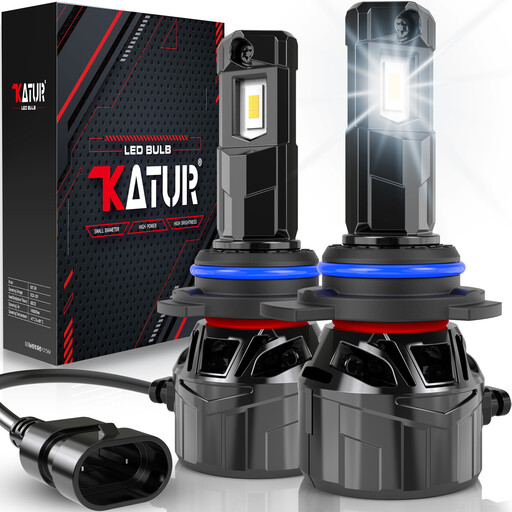
Why This Fits Their Persona: Designed for drivers who regularly use their car at night or on poorly lit rural roads and want an actively cooled replacement.
The listed 1:1 mini construction helps with restricted housing space, while the built-in turbo fan, aluminium housing and CANbus decoding system address heat and electrical compatibility considerations.
6000K colour, 120W per pair stated rating, 16,000RPM fan and support for 9–32V according to the listing.
We have compiled a complete, real-time list of products that fully satisfy these strict selection criteria and UK safety regulations.
They commonly refer to the same bulb format, but always confirm the socket and vehicle application. They are not replacements for H4, H7, H11 or HB4 bulbs.
They are designed to reduce error warnings, flickering or interference on compatible systems. Some sensitive vehicles may still require an additional decoder or resistor module, so check the product instructions and vehicle-specific feedback before purchase.
LEDs can use a different wattage than halogen bulbs, but actual running cost depends on power draw, driving hours and vehicle charging demand. Compare the stated wattage per pair rather than relying only on brightness or lifespan claims.