
24/7 Customer Support

Free returns

Same-day & Next-day Delivery

Quality Guaranteed

Unlock Your Welcome Offers: FREE Delivery | Up to 80% OFF | Free 30-day JoyPlus trial
Download the APP
Buying AA and AAA batteries seems straightforward until a controller loses power mid-game, a camera drains a pack in minutes or a drawer fills with cells that do not suit your devices. The right choice depends on chemistry, capacity, usage pattern and storage—not simply the brand or the number of batteries in the pack.
This guide explains the main buying pitfalls and compares practical options for UK households, photographers, gamers, smart-home users and anyone trying to reduce battery waste.
Disposable alkaline batteries are suitable for many low- to moderate-drain products, such as clocks, simple remotes and some toys. However, frequently used or high-drain devices may benefit from NiMH rechargeable batteries or lithium cells.
Rechargeable AA batteries and rechargeable AAA batteries usually have a nominal voltage of 1.2V, while standard alkaline and lithium cells are commonly rated at 1.5V. Many devices accept either, but some products require a particular voltage range. Always check the device instructions before switching chemistry.
AA battery packs and AAA battery packs can reduce the cost per cell, but only if you use the batteries before their storage period expires. A ten-pack of disposable cells may make sense for cameras, torches or emergency storage, while a four-pack may be more practical for an occasional-use remote.
For rechargeable batteries, compare the purchase price with the likely number of recharge cycles. A compatible battery charger is also part of the total cost.
Capacity is measured in mAh, but runtime varies with the device. A 2,500mAh rechargeable AA battery may provide extended use in a gaming controller, yet a low-drain wall clock may run for a long time on a lower-capacity cell. Higher capacity can also mean longer charging times.
For lithium AA batteries and lithium AAA batteries, manufacturers often focus on performance in high-drain devices and storage life. These cells are not rechargeable unless clearly labelled as rechargeable, and they should never be placed in a charger.
AA cells are physically larger than AAA cells. They are not interchangeable, even when the voltage is similar. Check the compartment markings and the device manual rather than relying on appearance.
Also inspect the required quantity. Devices that use two or more batteries should generally be fitted with matching cells of the same chemistry, brand and usage history. Avoid mixing old and new batteries or rechargeable and disposable types.
For NiMH cells, capacity in mAh indicates the approximate amount of charge available under specified test conditions. It is useful for comparison, but actual runtime depends on load, temperature and device design.
Check whether batteries are supplied pre-charged, how long they retain charge in storage and whether the charger supports both AA and AAA sizes. A UK battery charger should have a suitable UK plug, while a USB battery charger is convenient for travel, offices and power banks. Use the charger’s instructions and do not charge disposable lithium or alkaline cells.
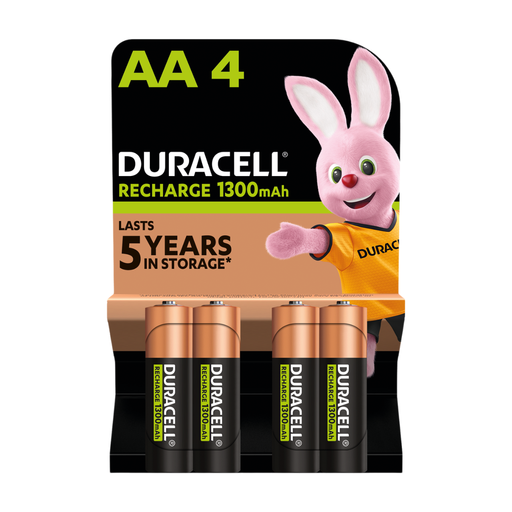
Why This Fits Their Persona: A pre-charged four-pack offers a straightforward starting point for households moving from single-use AA batteries to reusable power in remotes, toys and everyday electronics.
The 1.2V NiMH format and 1,300mAh rating are clearly stated, helping shoppers compare like with like instead of choosing on pack size alone.
Pre-charged; rechargeable hundreds of times; designed to retain up to 80% of charge for 12 months when stored correctly.
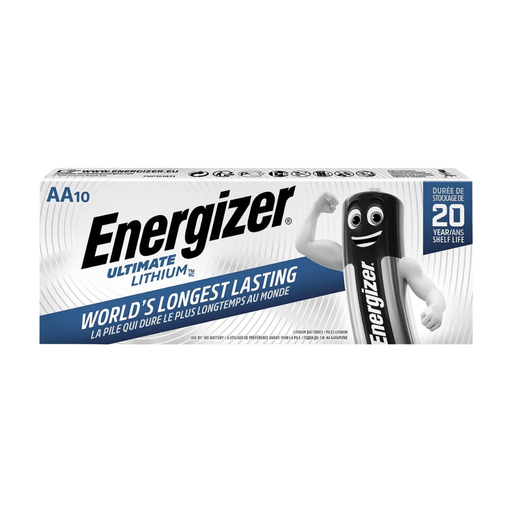
Why This Fits Their Persona: A suitable option for photographers, outdoor users and households wanting lightweight disposable cells for equipment that may be stored for long periods.
It is a clearly identified non-rechargeable lithium AA product, avoiding the common mistake of placing disposable lithium cells in a NiMH charger.
1.5V output; approximately one-third lighter than alkaline cells; storage life stated as up to 25 years when stored correctly.
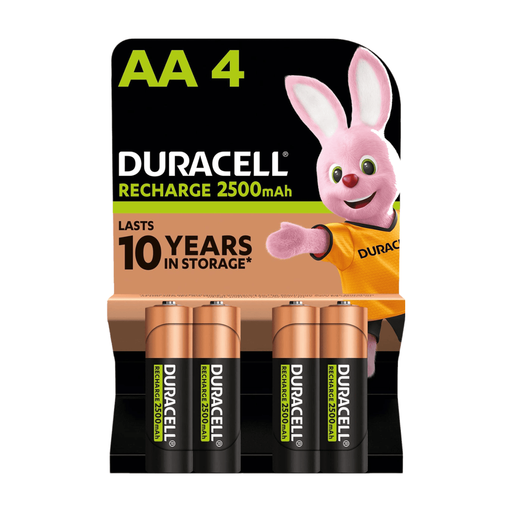
Why This Fits Their Persona: The 2,500mAh capacity is aimed at frequently used, higher-drain equipment such as gaming controllers, cameras, torches and portable audio devices.
The stated capacity makes it easier to assess heavy-use needs, while the rechargeable design avoids repeatedly buying disposable cells.
2,500mAh NiMH capacity; pre-charged; designed for hundreds of recharge cycles and up to 12 months of charge retention.
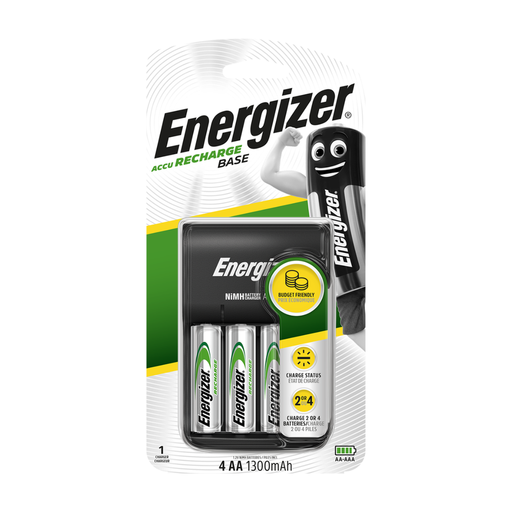
Why This Fits Their Persona: A practical kit for flats, offices, travel and homes that already use USB adapters, laptops or power banks.
The pack identifies both supported sizes—AA and AAA—and includes overcharge prevention, automatic shut-off and battery fault detection.
USB charging; supports two or four NiMH AA or AAA cells; supplied with four pre-charged 1,300mAh AA batteries.
We have compiled a complete, real-time list of products that fully satisfy these strict selection criteria and UK safety regulations.
They can be economical for frequently used devices because one set can replace multiple purchases of disposable cells. The overall value depends on the initial battery price, charger cost, electricity use and number of recharge cycles achieved.
Not necessarily. Many devices accept 1.2V NiMH batteries, but some products require 1.5V cells or specify a particular chemistry. Check the manual, especially for cameras, medical equipment, smart locks and safety devices.
Storage life varies by chemistry and product. The listed Energizer Ultimate Lithium AA and AAA cells specify storage of up to 25 years when stored correctly. Rechargeable NiMH products commonly specify charge retention for up to 12 months, although actual performance depends on temperature, age and storage conditions.