
24/7 Customer Support

Free returns

Same-day & Next-day Delivery

Quality Guaranteed

Unlock Your Welcome Offers: FREE Delivery | Up to 80% OFF | Free 30-day JoyPlus trial
Download the APP
As a Joybuy Product Recommendation Officer, my role is to help you navigate the crowded market and find products that genuinely meet your needs. When it comes to a kitchen staple as common as aluminium foil, it’s easy to assume all rolls are created equal. However, a poor choice can lead to torn sheets, wasted food and unnecessary frustration.
Many of us have been caught out by a few common pitfalls. You might grab a roll labelled "strong" only for it to shred the moment it touches a roasting tin corner. Or perhaps you've battled with a dispenser box whose cutting edge seems designed to mangle the foil rather than cut it cleanly. These seemingly small issues add up, which is why understanding a few key details before you buy can make all the difference.
To avoid disappointment, it pays to look past the marketing slogans and focus on a couple of core specifications. These details determine whether a roll of kitchen foil is fit for purpose or destined for the bin.
The single most important factor in foil performance is its thickness, measured in microns (μm). This number is often omitted from packaging, yet it's the true indicator of strength and durability.
Aluminium foil isn't just sold in rolls. Depending on your needs, one of these formats might be a more practical solution:
Based on these practical considerations, we've matched a few standout products to different user needs.
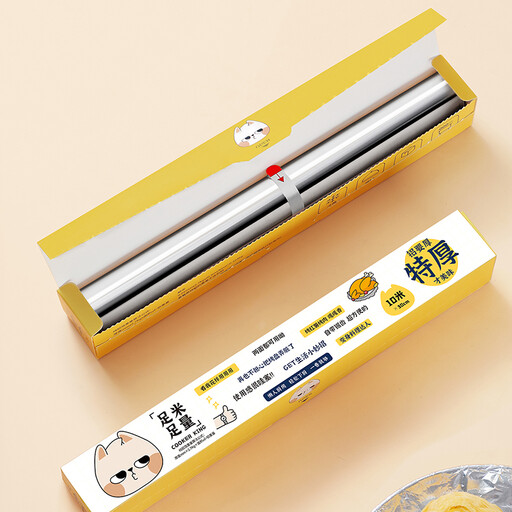
Why This Fits Their Persona: This is an ideal all-rounder for the typical UK household. It's strong enough for daily roasting and baking, but still flexible enough for wrapping sandwiches or covering leftovers, offering a reliable balance for a wide range of kitchen tasks.
With a specified thickness of 15 microns, this foil moves into the heavy duty category, avoiding the pitfall of flimsy, tear-prone foils that are common in standard-grade products.
Its food-grade rating ensures safety for direct contact with food and the 15μm thickness provides good heat resistance for oven and grill use without easily breaking down.
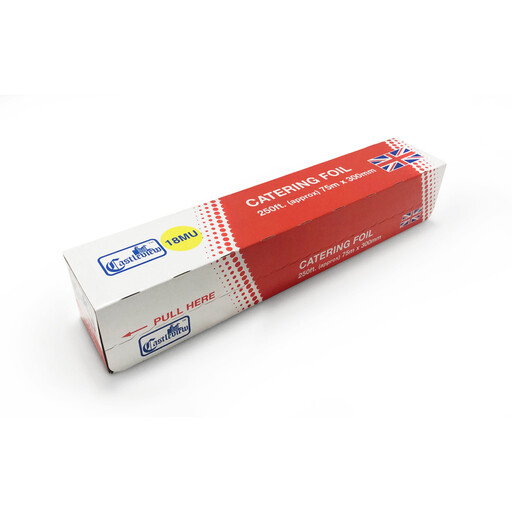
Why This Fits Their Persona: For anyone running a small food business, catering an event or doing serious batch cooking at home, this roll is a workhorse. The generous 75-metre length and professional-grade thickness mean it's both economical and reliable for high-volume tasks.
This product explicitly states its 18-micron thickness, delivering the genuine strength needed for demanding jobs and avoiding the vague "heavy duty" claims that often disappoint.
Exceptional tear resistance makes it suitable for wrapping large or awkward items. The dispenser box is designed for frequent use with a reliable cutter for clean tears.
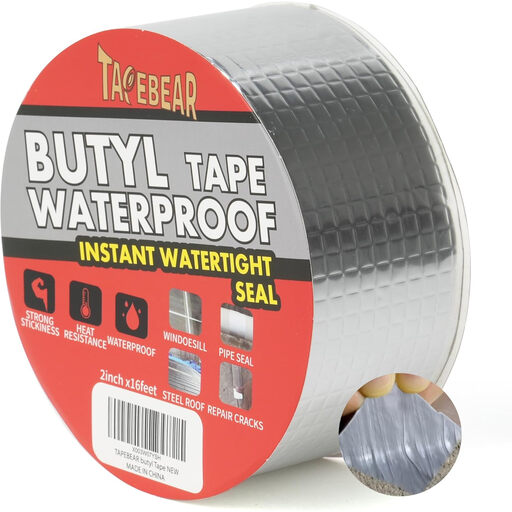
Why This Fits Their Persona: This is not for cooking. It's a specialised aluminium foil tape for the DIY enthusiast tackling leaks and repairs. It's perfect for patching an RV roof, sealing a window or repairing a leaking pipe, offering a durable, waterproof solution.
Unlike standard foil, this is an engineered product. The butyl rubber adhesive provides a long-lasting, flexible seal that general-purpose tapes can't match, preventing failed repairs.
It offers extreme weather resistance (from -40°C to 80°C) and strong adhesion to multiple surfaces like metal, wood and concrete, making it highly versatile for outdoor and indoor repairs.
We have compiled a complete, real-time list of products that fully satisfy these strict selection criteria and UK safety regulations.
The micron number indicates the thickness of the foil. One micron is one-thousandth of a millimetre. A higher micron number means a thicker, stronger and more tear-resistant foil. For reference, standard kitchen foil is typically around 10-14μm, while heavy-duty or catering foil is usually 15μm or higher.
Most food-grade aluminium foil is safe for oven use. However, you should never allow it to come into direct contact with naked flames or electric heating elements. Also, it is not suitable for use in most microwave ovens, as the metal can cause arcing (sparks). Always check the manufacturer's packaging for specific warnings and temperature limits.
For standard aluminium foil, the difference between the shiny and dull side is simply a result of the manufacturing process and has no significant impact on cooking performance. Both sides will conduct heat equally well. However, for non-stick foil, it is crucial to place the food on the dull side, as this is the side with the non-stick coating. The packaging will always specify which side to use.