
24/7 全天候客户支持

免费退货

当日/次日达

品质保障

开启新人专享福利: 全场免邮 | 低至 2 折 | 免费试用 30 天 JoyPlus 会员
下载 Joybuy
Finding a reliable way to power your 220V appliances when you're away from a mains socket can be a challenge. Whether you're on the road in your motorhome, operating tools from your work van, enjoying the outdoors on a camping trip or setting up an emergency backup power supply at home, you need a solution that is both powerful and safe for your equipment.
A 2000W pure sine wave inverter is often the go-to choice, offering a balance of power and versatility. This guide is designed to help you understand the essential features to look for, cutting through the technical jargon to provide clear, practical advice. We will explore some carefully selected options to help you find the right power converter for your truck, caravan or off-grid needs.
Before looking at specific models, it's useful to understand a few key concepts. This will help you make a more informed decision based on your specific requirements.
You will see two main types of inverters on the market: modified sine wave and pure sine wave. For powering anything more sensitive than a simple power tool or light bulb, a pure sine wave inverter is the clear choice. It produces clean, stable electricity that is identical to what you get from a wall socket at home. This is critical for modern electronics like laptops, televisions, drones and medical equipment, as it prevents humming, overheating and potential damage. A pure sine wave output ensures your devices run smoothly and efficiently.
Inverter power is described with two numbers: rated and peak.
A quality 12V to 220V power inverter should come with a comprehensive set of safety protections. Look for features like overload, over-temperature, short circuit and low/over-voltage protection. These safeguards protect both the inverter and your connected devices.
Effective cooling is also vital for performance and longevity, especially under heavy load. Models with intelligent, temperature-controlled fans offer the best balance, running only when needed to dissipate heat while keeping noise levels down. This makes for a silent power inverter that won't disturb you in a quiet campervan or during an overnight power cut.
Here are a few 2000W pure sine wave inverters that offer a strong combination of features, performance and safety for various applications.
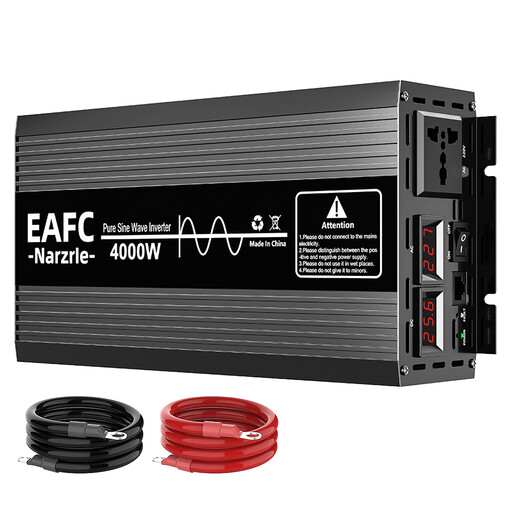
Why It Stands Out: This model's standout feature is its dual digital display, which provides real-time monitoring of both the battery's input voltage and the inverter's AC output voltage. This allows you to keep a close eye on your power system's health at a glance, preventing unexpected shutdowns from a depleted battery.
Pros:
Who is it for? This is an excellent choice for campervan power inverter users and anyone living off-grid who values the ability to easily monitor their battery and power consumption.
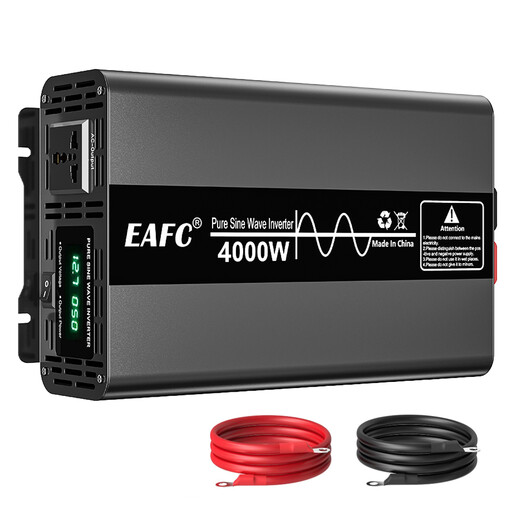
Why It Stands Out: This inverter incorporates amorphous silicon technology in its core, which contributes to higher conversion efficiency. This means less power is wasted as heat during the DC-to-AC conversion process, resulting in longer battery runtime and more stable output, even under fluctuating loads.
Pros:
Who is it for? A great option for tradespeople and those using an inverter for camping in demanding conditions, where efficiency and reliability are paramount.
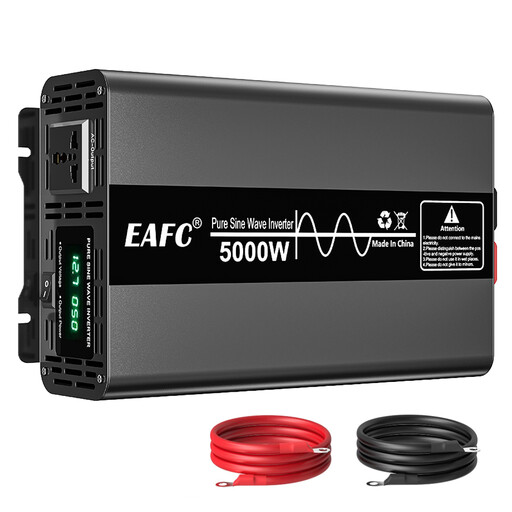
Why It Stands Out: For those who need a bit more headroom, this model steps up the power with a 2500W rated continuous output and a 5000W peak capacity. It combines the high-efficiency amorphous core with a detailed digital LCD display that shows a wealth of information, including battery percentage, output watts and internal temperature.
Pros:
Who is it for? Perfect for users who need to power more demanding car inverter for appliances setups, such as small microwaves or multiple power tools, making it ideal for well-equipped campervans, work sites or as a robust emergency backup power supply.
The heart of any mobile or off-grid power inverter system is a reliable battery. An inverter is only as good as the power source it's connected to. If you're building a system from scratch or need to upgrade your existing setup for more demanding use, ensuring you have a capable battery is the first step.
If you're looking for a heavy-duty power source for your setup, explore our selection of Lorry Battery options to find the perfect match for your new inverter.
1. What can you run on a 2000W pure sine wave inverter? A 2000W inverter can comfortably run a wide range of household appliances, including coffee makers (up to 1500W), small microwaves (600-1200W), laptops, televisions, fans and most power tools like drills and circular saws. It's always wise to check the wattage label on your appliance before connecting it.
2. Do I need a pure sine wave inverter for my campervan? Yes, it is highly recommended. Modern campervans and motorhomes are filled with sensitive electronics, from the TV and charging ports to kitchen gadgets and navigation systems. A pure sine wave inverter protects this equipment from potential damage and ensures everything runs as it should, just like at home.
3. How do I connect a 2000W inverter to my vehicle's battery? For any inverter rated above 150W, you must connect it directly to the battery terminals using the heavy-duty cables provided. Do not use the cigarette lighter socket, as it is not designed to handle the high current draw and can be a fire hazard. Ensure the positive (red) and negative (black) connections are tight and secure. For safety, always place the inverter in a dry, well-ventilated area.