
24/7 全天候客户支持

免费退货

当日/次日达

品质保障

开启新人专享福利: 全场免邮 | 低至 2 折 | 免费试用 30 天 JoyPlus 会员
下载 Joybuy
Monitoring your blood pressure at home is a practical step towards managing your health. Yet, choosing the right device can feel overwhelming. With a market full of complex features and technical jargon, it is easy to end up with a machine that is inaccurate or difficult to use. As a Joybuy Product Recommendation Officer, my role is to help you navigate these choices and find a reliable device that fits your needs.
This guide cuts through the clutter, focusing on the critical factors that ensure you get a dependable reading every time. We will start by highlighting two common pitfalls that lead to regrettable purchases.
Many modern smartwatches and fitness trackers now offer blood pressure estimation. While convenient for casual wellness tracking, it is crucial to read the small print. Most of these products state clearly that they are not medical devices and their data should not be used for diagnosis or treatment. For managing a health condition, a dedicated upper arm blood pressure monitor that is designed and validated for medical accuracy is the more appropriate tool.
A primary cause of inaccurate readings is an incorrectly sized cuff. A cuff that is too tight can lead to an artificially high reading, while one that is too loose can give a false low. Many people purchase a standard machine without first measuring their arm, only to find their readings are inconsistent. Ensuring the cuff is the correct size for your arm is not a minor detail—it is fundamental to the accuracy of your blood pressure machine for home use.
To avoid these traps, focus on a few core parameters. These are the non-negotiable features that separate a reliable medical instrument from a simple gadget.
When you see a device is clinically validated, it means it has been independently tested to meet the stringent accuracy standards set by health organisations. Look for validation against protocols from the European Society of Hypertension (ESH) or the British and Irish Hypertension Society (BIHS). This certification is your assurance that you are purchasing an accurate blood pressure machine, not just a device that provides a rough estimate.
For routine home monitoring, healthcare bodies like the NHS generally recommend an upper arm blood pressure monitor. These are widely considered to provide more consistent and reliable readings than wrist-based models.
Before you buy, take a moment to measure the circumference of your upper arm. Most standard cuffs fit arms between 22-32 cm. If your arm is larger, you will need a large cuff blood pressure monitor or a model that offers a large cuff as an accessory. Using the correct size is essential for accuracy.
Beyond accuracy, a good digital blood pressure monitor should be easy to use. Consider these practical features:
Based on these practical criteria, here are a few options suited to different user needs.
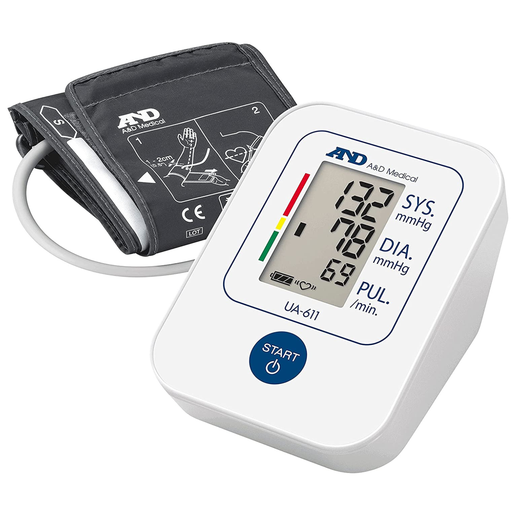
Why This Fits Their Persona: Ideal for those who need a straightforward, reliable device without unnecessary complications. Its one-button operation makes daily checks simple and quick.
This is a dedicated, clinically validated bp monitor (to ESH protocol), ensuring it provides accurate data for health management, unlike non-medical gadgets. It comes with a standard cuff and a large cuff is available separately, addressing the fit issue.
Features Irregular Heart Beat (IHB) detection and stores 30 readings with an average value function, providing core tracking features in a simple package.
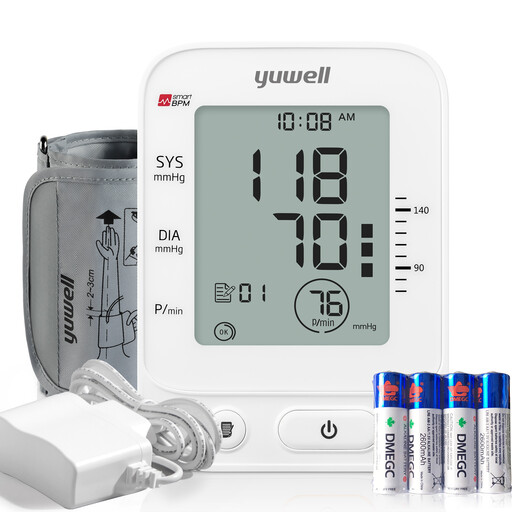
Why This Fits Their Persona: Suited for users who want to meticulously track their blood pressure over time. The large memory and clear display make reviewing past data simple and effective.
This is a medical-grade device compliant with ESH and AAMI standards. Its wide-range cuff is designed to fit a broader variety of arm sizes, directly addressing the cuff-fitting pitfall for many users.
Stores up to 99 readings, has a large 3.6-inch HD display and includes a power adapter, making it convenient and cost-effective for frequent, long-term use.
We have compiled a complete, real-time list of products that fully satisfy these strict selection criteria and UK safety regulations.
1. Are wrist blood pressure monitors as accurate as upper arm models? While wrist monitors have improved, the general consensus among medical professionals in the UK is that upper arm monitors provide a more reliable and consistent measurement for home use. This is because the upper arm is at a more direct level with the heart and the arteries are larger and closer to the surface, which can lead to more stable readings.
2. How often should I replace my home blood pressure monitor? Most home blood pressure monitors are durable, but their accuracy can drift over time. It is a good practice to have your machine checked for accuracy every two years. You can often do this at your GP surgery or a local pharmacy. If the device is dropped or the cuff becomes worn, it is wise to check its accuracy or consider a replacement.
3. What are the running costs of a home blood pressure machine? The main running cost is the power source. Many devices are battery-operated, typically using AA or AAA batteries. For frequent use, consider a model that includes a mains power adapter, like the yuwell YE660E, to save on battery costs. If you choose a battery-only model, using high-quality alkaline batteries, such as those from the ochama range, will ensure consistent power and performance.