Regular side-seat quiz viewers
If you usually sit well off-centre, watch for changes in colour, brightness and contrast while reading questions and scores. RTINGS identifies viewing angle as important for wide seating arrangements.


For a regular side seat, OLED is a useful starting point because of its wide viewing angles; an IPS LCD or an LCD with a specified wide-angle feature may also suit you, depending on the room and the exact model. Before choosing, check how the picture looks from your seat, whether quiz graphics are readable at that distance and whether reflections obscure the screen.
If you usually sit well off-centre, watch for changes in colour, brightness and contrast while reading questions and scores. RTINGS identifies viewing angle as important for wide seating arrangements.
When people sit across a sofa, dining area or L-shaped room, a picture that looks good from the central seat may not look the same to everyone. Check the TV from each regularly used position.
If a window or lamp reflects in the screen from your seat, assess glare as well as off-centre picture quality. These are separate properties; Samsung UK lists both a viewing-angle and an anti-reflection feature for its 65-inch QN90D.
Start with the picture from your actual seat, then judge size at your viewing distance and reflections under the room lighting you normally use.
Consider it when: Side seating is routine and a wide viewing angle is the main priority; LG UK describes wide angles as a benefit of OLED technology.
Check separately: The exact model’s size and reflection handling still have to work in your room.
Consider it when: You want to compare conventional LED-backlit TVs while keeping side viewing high on your list.
Trade-off: RTINGS distinguishes IPS’s generally wider viewing angles from VA’s stronger contrast. Confirm the panel type for the exact size you are considering.
Consider it when: Both an off-centre seat and room glare matter. Samsung UK lists Ultra Viewing Angle and an Anti-Reflection Screen for the 65-inch QN90D.
Check separately: Those features are model-specific and do not establish how every LCD TV will look from your seat.
| Concern | What to check | Who this matters to |
|---|---|---|
| Off-centre picture | Look for an independent viewing-angle assessment of the exact model, or inspect colour and contrast from your usual seat. | If I sit to one side most evenings, I want faces and answer graphics to remain clear rather than change as I move away from the centre. Around 50% of consumers put that picture consistency first. |
| Readable quiz graphics | Measure the distance from the side seat and check question text and scores on a screen of the size you are considering. | When my seat is farther from the TV, small answer options can be hard to follow even if the picture holds up at an angle. For around 30% of consumers, readability at that distance is the primary need. |
| Glare and reflections | Assess reflections from windows and lamps, and confirm any anti-reflection feature for the exact model and size. | A reflected window can cover the clues I am trying to read from the side. Glare control comes first for around 20% of consumers. |
LCD panel types and viewing-angle treatments differ. RTINGS notes that IPS generally retains the picture better at an angle than standard VA, while their contrast characteristics differ.
Check the exact model’s panel information or viewing-angle assessment. Labels such as LED, QLED and 4K do not establish side-seat performance.
The side seat may be farther from the screen. Which? explains that viewing distance affects the visible benefit of a 4K TV; the distance also matters when you need to read small quiz graphics.
Measure from the side seat and check representative questions, scores and subtitles at that distance before settling on a size.
Reflection control deals with light on the screen; viewing angle concerns picture changes as you move off-centre. One feature does not establish the other.
For a bright side seat, inspect the picture at your viewing angle and check reflections with the relevant lights or windows in view.
TV Licensing says a TV Licence is needed to watch live TV on channels or streaming services and to use BBC iPlayer; the requirement is about how you watch, not which TV you buy.
Check your household’s licence position before watching live programmes or using BBC iPlayer.
LG’s OLED range is relevant if you are considering OLED for a regular side seat; its UK range includes the OLED evo AI C6 line.
Sony’s BRAVIA 8 II K-65XR8M2 is a 65-inch OLED model to consider when comparing OLED TVs.
Samsung’s 65-inch QN90D is a relevant LCD example when the side seat also faces room glare.
These TVs offer different screen sizes and display descriptions for the side-seat decision. Compare each exact model’s off-centre picture, reflections and fit at your viewing distance; a shared resolution alone cannot settle those questions.
 Image unavailable
Consider this size if the side seat is far enough from the screen to make smaller quiz graphics difficult to read. The product name specifies an 83-inch, 4K Smart TV; check placement, reflections and the picture from your actual seat.
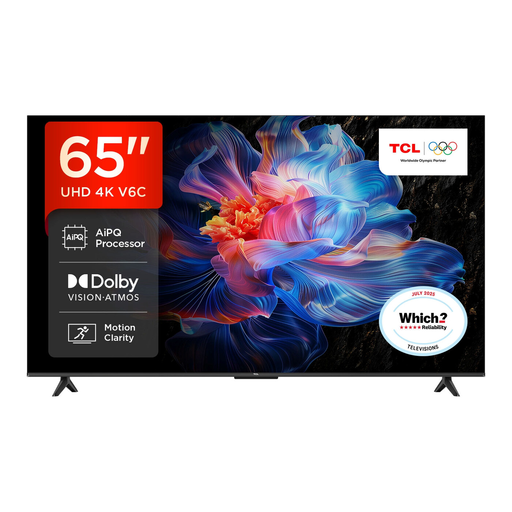 Image unavailable
Compare its 65-inch size with the distance to your side seat when judging the readability of questions and scores. The product name specifies Direct LED, 4K HDR and Google TV; assess its off-centre picture and reflections separately.
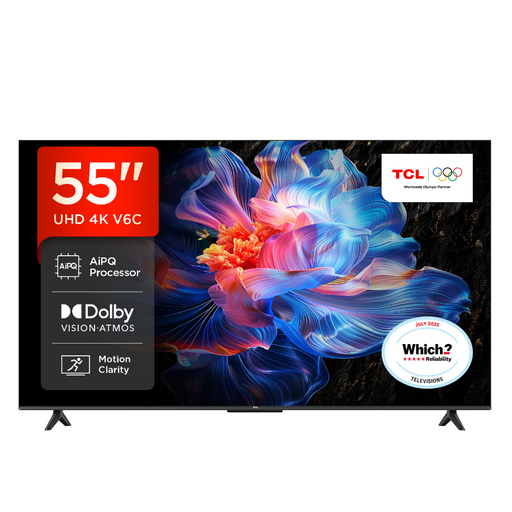 Image unavailable
This 55-inch variant is worth comparing if you need quiz text to remain readable without moving to a larger screen. Its product name specifies Direct LED, 4K HDR and Google TV; check the picture from the side and in your room lighting.
 Image unavailable
If the side seat is relatively close, check whether this 43-inch variant makes questions and scores comfortable to read. The product name specifies Direct LED, 4K HDR and Google TV; its side-viewing picture and reflection handling need their own assessment.
 Image unavailable
Consider this OLED model if side-seat picture consistency is a priority, then check whether its 65-inch screen suits your viewing distance. The product name specifies OLED, 4K HDR and Google TV; assess off-centre picture quality and reflections for this model rather than assuming they match another BRAVIA variant.
No. LG UK describes wide viewing angles as an OLED benefit, making OLED a useful route to investigate, but the exact TV still needs to suit your screen-size, reflection and connection needs. Compare its picture from your seat with any IPS LCD or specifically equipped wide-angle LCD you are considering.
View it from roughly the horizontal angle of your home seat, not just directly in front. Inspect faces, white question text, coloured score graphics and dark areas for changes as you move to the side, while allowing for differences between shop and home lighting.
TV Licensing says you need a TV Licence to watch live TV on a channel or streaming service, or to use BBC iPlayer. Check how you plan to watch and your household’s licence position; buying a TV does not itself provide a licence.
Subtitles can help where the programme service provides them. Ofcom identifies subtitling as a television access service, but availability depends on the programme and service rather than the TV’s panel type; check the relevant channel or app settings.
Check the exact TV’s mounting pattern and weight, the suitability of the wall and the mount’s instructions. If you intend to turn the screen towards the side seat, confirm the mount has enough swivel and leaves room for the connected cables.