
24/7 Customer Support

Free returns

Same-day & Next-day Delivery

Quality Guaranteed

Unlock Your Welcome Offers: FREE Delivery | Up to 80% OFF | Free 30-day JoyPlus trial
Download the APP
As a parent in the UK, ensuring your child gets all the nutrients they need for healthy growth can feel like a constant challenge, especially with a picky eater at the table. The market for children's multivitamins is vast and often confusing, filled with bright packaging and bold claims. It's easy to feel pressured into buying a supplement, but harder to know if you're choosing a genuinely beneficial product or just an expensive sweet.
Many parents find themselves caught in common purchasing traps. Before you add anything to your basket, let's look at a few pitfalls to be aware of:
To choose wisely, you need to look past the cartoon characters on the bottle and focus on a few core parameters. These are the non-negotiable factors to check before you buy.
A child's Nutrient Reference Value (NRV) changes as they grow. A supplement designed for vitamins for toddlers UK will have different levels of Vitamin A, C and D compared to one for older children.
The most effective vitamin is one your child will actually take. The format is a key part of this.
Always read the full ingredients list. Look for what's included and what's left out.
Based on these practical criteria, we've matched a few products to common UK parenting scenarios. These recommendations are designed to help you find a suitable starting point for your child's specific needs.
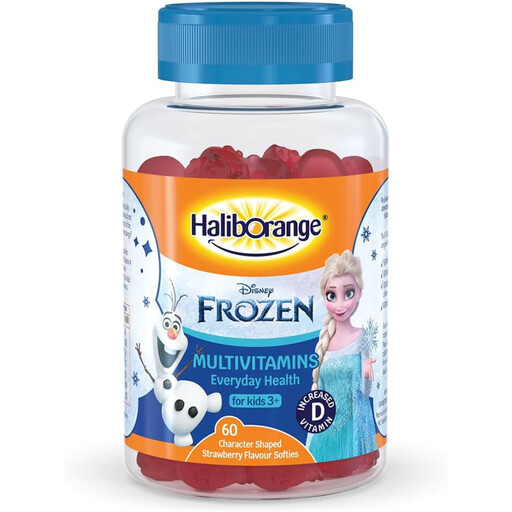
Why This Fits Their Persona: When getting your child to take any supplement is a battle, palatability is paramount. The fun character shapes and familiar strawberry flavour make these softies an easy 'yes' for young children, turning vitamin time from a chore into a treat.
This product acknowledges that for very picky eaters, a supplement they refuse to take is useless. While it contains sugar, it prioritises acceptance to ensure children get a foundational level of key nutrients, including 100% of their daily Vitamin D.
Provides a good balance of 8 essential vitamins tailored for children aged 3+. The focus on kids immune support through Vitamins A, C, D, B6 and B12 is a key benefit.
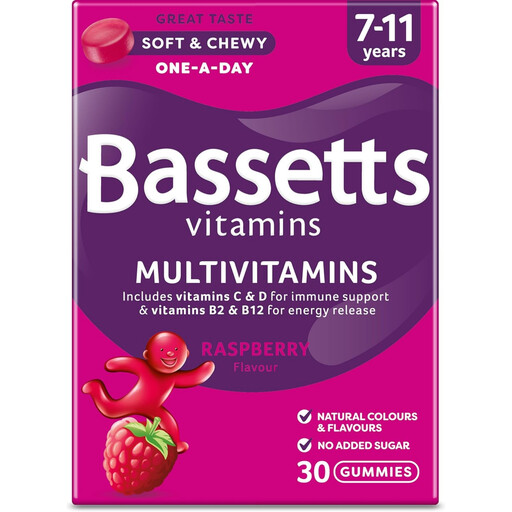
Why This Fits Their Persona: For parents of school-aged children who are conscious of sugar intake but still want the convenience of a gummy. This formula is specifically designed for the 7-11 age bracket, providing nutrients to support energy and concentration during demanding school days.
It directly tackles the "sugar trap" by being a no added sugar formulation. It also avoids the "one-size-fits-all" myth by being precisely targeted at the nutritional needs of 7 to 11-year-olds, not younger toddlers.
Includes a balance of 11 nutrients, with Riboflavin (B2) and Vitamin B12 to help reduce tiredness and fatigue and contribute to the release of energy from food—a practical benefit for active children.

Why This Fits Their Persona: This is for the parent who has done their research and is looking specifically to support cognitive function and vision. It's an ideal choice if your child doesn't eat the recommended portions of oily fish each week.
Instead of falling for the "more is better" illusion, this product focuses on delivering a specific, high-value nutrient—Omega-3 for kids (ALA from flaxseed oil)—while still providing a solid base of 8 other essential vitamins for all-round health.
It offers a plant-based source of Omega-3, making it a suitable choice for vegetarian families or children who dislike the taste of fish oil. The combination of Omega-3 with vitamins for vision (Vitamin A) provides targeted support.
We have compiled a complete, real-time list of products that fully satisfy these strict selection criteria and UK safety regulations.
A balanced and varied diet is always the foundation of good health. However, children can be notoriously selective eaters, and there may be nutritional gaps. A multivitamin can act as a safety net to help fill those gaps, particularly for key nutrients like Vitamin D and Iron. It should be seen as a supplement to, not a replacement for, a healthy diet.
For most children's multivitamins, consistency is more important than timing. Many parents find it easiest to incorporate it into a daily routine, such as at breakfast time. Taking vitamins with food can also help with the absorption of fat-soluble vitamins (A, D, E and K) and may be gentler on the stomach.
This is a valid concern. Gummy vitamins that are high in sugar and stick to the teeth can contribute to cavities, just like any other sugary sweet. To mitigate this, you can: