
24/7 Customer Support

Free returns

Same-day & Next-day Delivery

Quality Guaranteed

Unlock Your Welcome Offers: FREE Delivery | Up to 80% OFF | Free 30-day JoyPlus trial
Download the APP
A good Chinese cleaver can feel like an extension of your hand in the kitchen—a single, versatile tool for slicing, dicing and transferring ingredients. Yet, many UK shoppers find themselves with a knife that either chips after a month or is too clumsy for daily tasks. The market is filled with confusing claims, making it easy to choose a tool that’s wrong for your cooking style.
As a Joybuy Product Recommendation Officer, my role is to help you navigate these choices. Before you add that impressive-looking blade to your basket, let's look at the common pitfalls that lead to buyer's remorse.
Chinese chef knife for every task, from finely slicing garlic to hacking through a chicken carcass. This is a fundamental misunderstanding of the tool. A thin, delicate slicing cleaver will be ruined by bone, while a heavy bone chopper knife is unwieldy for precise vegetable work.To avoid these traps, focus on a few core parameters. Understanding these will empower you to select a forged kitchen knife that truly meets your needs.
The most critical distinction is between a slicing cleaver (known as a piàndāo) and a bone cleaver (gǔdāo). They are not interchangeable.
Chinese chef knife for most home kitchens. It has a relatively thin, tall blade designed for slicing, dicing and mincing vegetables, herbs and boneless meats. The thin profile allows for precision and the wide blade is perfect for scooping and transferring ingredients from the cutting board to the pan.heavy duty chopping knife. It features a much thicker, heavier blade with a wider edge angle. Its weight and robust construction are designed to withstand high impact, allowing it to cut through small bones, cartilage and tough joints without chipping. Using a slicer for these tasks is a recipe for a damaged blade.Instead of falling for vague marketing, look for specific steel grades. For a reliable and low-maintenance stainless steel cleaver, a good starting point for many home cooks is 5Cr15MoV steel. This composition offers a great balance of properties:
For those seeking higher performance, steels like 9Cr18MoV or layered Damascus steel offer superior edge retention and aesthetics, but often require more careful maintenance.
The tang is the backbone of the knife. A full tang construction, where the steel extends through the entire length of the handle, is a hallmark of a well-made knife. It provides superior strength, durability and, most importantly, balance. A balanced knife feels more controlled and less fatiguing to use, making it a safer and more effective professional chef knife.
Here are a few options that align with different cooking needs, each chosen to avoid the common purchasing pitfalls.
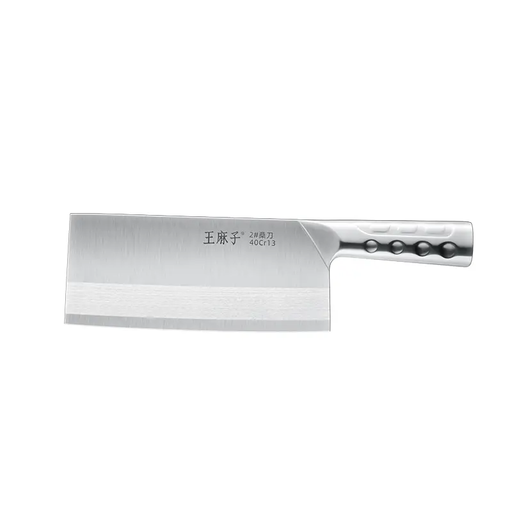
Why This Fits Their Persona: This is the quintessential daily driver for a UK kitchen. It's designed for the most frequent tasks: chopping vegetables for a stir-fry, slicing chicken for a curry or mincing garlic and ginger. It's a practical, no-fuss tool.
It is clearly identified as a "Sangdao" (slicing knife), avoiding the "one-size-fits-all" myth. It is not intended for bones, ensuring you get the right tool for daily prep.
Its versatile blade is suited for a wide array of slicing and dicing tasks. The balanced design helps reduce hand fatigue during meal preparation.
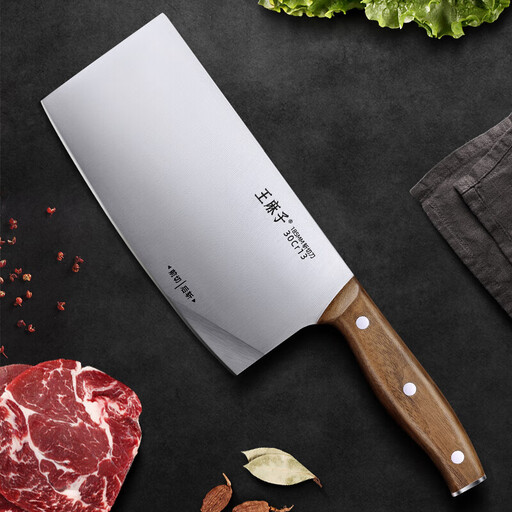
Why This Fits Their Persona: For the home cook who buys whole chickens or deals with racks of ribs, this is the right tool. It's built for power and impact, making short work of tasks that would destroy a standard chef's knife.
This is a specialised tool, not a general-purpose knife. Its thick, heavy blade is purpose-built for chopping through bone and cartilage, directly addressing the need for a dedicated meat cleaver.
Features a robust, thick stainless steel blade designed for high-impact tasks. The solid walnut handle provides a secure and comfortable grip for powerful chopping.
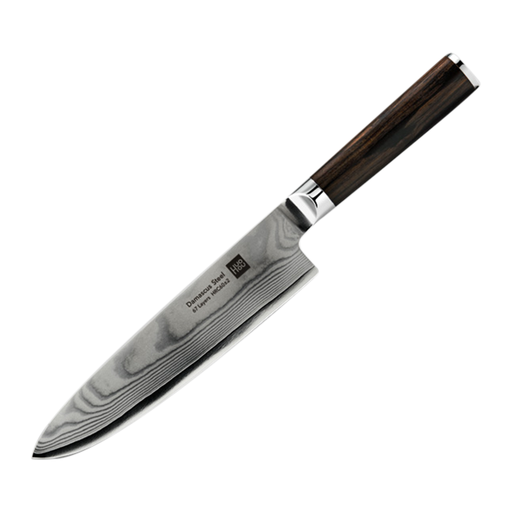
Why This Fits Their Persona: This cook appreciates fine craftsmanship and top-tier performance. The distinctive look of Damascus steel, combined with a high-performance core and elegant ebony handle, makes this a statement piece that also delivers exceptional cutting ability.
It sidesteps the vague "premium steel" trap by providing exact specifications: "67-layer Damascus composite steel with a 90Cr14MoV core". This is verifiable information for an informed buyer.
Offers exceptional sharpness from a hand-honed 16° edge. The unique and durable 67-layer Damascus steel construction provides both aesthetic appeal and performance.
We have compiled a complete, real-time list of products that fully satisfy these strict selection criteria and UK safety regulations.
It is strongly advised not to. The high heat and harsh detergents in a dishwasher can dull the blade's fine edge. More critically, they can cause wooden handles to warp, swell or crack over time, compromising the knife's safety and longevity. The recommended care is to hand-wash with mild soap and water, then dry immediately.
The method depends on the type. A thin vegetable cleaver should be sharpened on a whetstone at a shallow angle, typically between 15-18 degrees, to maintain its slicing prowess. A heavy meat cleaver or bone chopper has a more robust, wider edge (around 20-25 degrees) and can be maintained with a honing steel for regular alignment, with occasional whetstone sharpening.
While both are excellent multi-purpose kitchen knives, they have different origins and designs. A Chinese cleaver has a tall, rectangular blade that is brilliant for chopping and scooping ingredients. A Santoku knife is of Japanese origin and features a blade with a curved 'sheep's foot' tip. It is generally lighter and often favoured for its nimbleness in slicing, dicing and mincing. They can perform many of the same tasks, but their handling and feel are distinct.