
24/7 Customer Support

Free returns

Same-day & Next-day Delivery

Quality Guaranteed

Unlock Your Welcome Offers: FREE Delivery | Up to 80% OFF | Free 30-day JoyPlus trial
Download the APP
Driving on unlit B-roads or navigating motorways after dark demands clear visibility. It’s no surprise that many UK drivers are looking to replace their standard halogen H7 bulbs with brighter, more modern LED alternatives. However, the market is flooded with options, and making the wrong choice can lead to wasted money, a failed MOT or even posing a hazard to other road users.
As the Joybuy Product Recommendation Officer, my role is to help you see through the marketing clutter. Before you buy, let's look at the common pitfalls that catch out many buyers.
To ensure you get a reliable and road-legal upgrade, focus on these core technical aspects rather than just the marketing claims.
The single most important factor for safety and MOT compliance is the beam pattern. A good H7 LED conversion kit should replicate the light source position of a traditional halogen bulb.
To avoid dashboard errors and flickering, a compatible bulb is non-negotiable for most cars made in the last 15 years.
The colour and longevity of your bulb are determined by these two factors.
Based on these practical criteria, here are some H7 LED bulb options suited to different types of UK drivers.
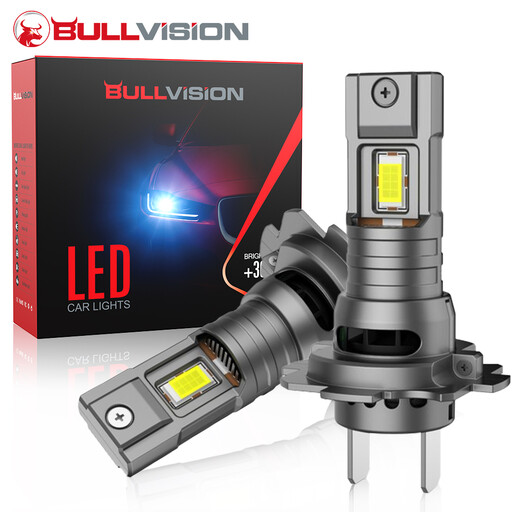
Why This Fits Their Persona: Ideal for the hands-on car owner who wants a significant and cost-effective lighting improvement over dim halogens. The compact size is well-suited for a straightforward weekend upgrade project.
Its 1:1 mini size is designed to mimic a halogen bulb's dimensions, helping to achieve a correct beam pattern and avoid glare. The integrated fan addresses the heat management pitfall directly.
A strong balance of brightness and simple plug-and-play installation. The built-in CANbus readiness aims to prevent errors on many common UK vehicles.
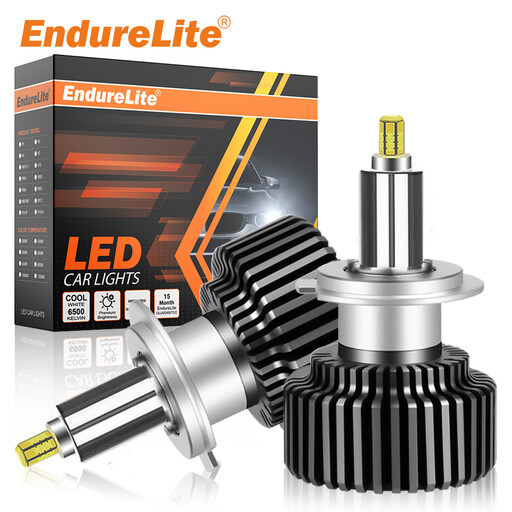
Why This Fits Their Persona: For the motorist who prioritises maximum safe illumination on dark country lanes and wants a crisp, high-end look. This user understands the importance of both high output and correct light distribution.
The combination of 360° CSP chips and a 1:1 design tackles the beam pattern pitfall by aiming for full, even illumination without dark spots. Its robust fan cooling system is built to handle the heat from its high power output.
High lumen output (20000LM per pair) for powerful visibility. The design is explicitly CANbus ready to minimise the risk of dashboard errors on a wide range of vehicles.
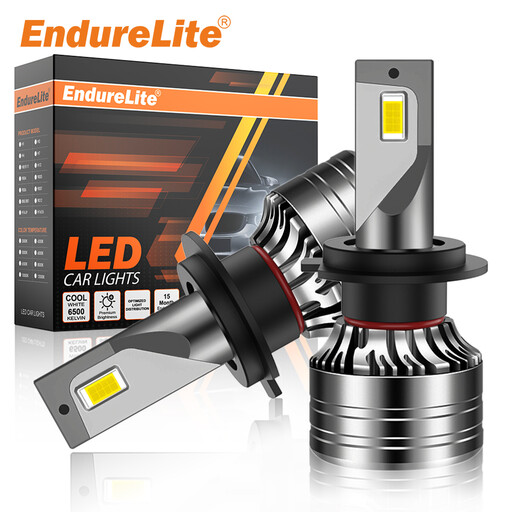
Why This Fits Their Persona: This driver wants a reliable, long-lasting safety upgrade with zero complications. The priority is a hassle-free installation and the peace of mind that comes with improved night-time visibility for daily commutes.
It directly targets the "universal fit" fallacy by focusing on a "Simply Plug n Play" installation and a design that simulates the original bulb's beam pattern, reducing the risk of both installation and glare issues.
A balanced feature set that prioritises ease of use and broad compatibility. The combination of CSP chips and active fan cooling provides a dependable, long-term lighting solution.
We have compiled a complete, real-time list of products that fully satisfy these strict selection criteria and UK safety regulations.
Not necessarily. The critical factor for the MOT test is the beam pattern. An H7 LED conversion must produce a clean, sharp cut-off line for the dipped beam, identical to the original halogen, without causing glare. Poorly designed bulbs that scatter light will almost certainly cause a failure. It is advisable to check the beam pattern against a wall or garage door after installation.
The 'K' stands for Kelvin, a scale used to measure colour temperature. A 6000K H7 bulb produces a cool, crisp white light that is very close to natural daylight. This is a popular choice as it enhances visibility and gives a car a more modern aesthetic compared to the yellowish glow of traditional halogen bulbs, which are typically rated between 2700K and 3500K.
This is a classic CANbus system conflict. It occurs because the low power consumption of LEDs leads your car's computer to believe the bulb has failed. The first solution is to ensure you have installed a bulb specifically advertised as a CANbus H7 LED. If the error persists, your vehicle may have a particularly sensitive system. In this case, you may need to fit an additional CANbus decoder, which is a small resistor that plugs in between the bulb and the car's wiring harness to resolve the error.