
24/7 Customer Support

Free returns

Same-day & Next-day Delivery

Quality Guaranteed

Unlock Your Welcome Offers: FREE Delivery | Up to 80% OFF | Free 30-day JoyPlus trial
Download the APP
Upgrading your car's standard halogen bulbs to modern LEDs is one of the most impactful changes you can make for night-time driving. A quality H7 LED headlight bulb can transform your visibility, safety and the look of your vehicle. However, the market is flooded with options, and it's easy to make a costly mistake. Many drivers find themselves with bulbs that flicker, trigger dashboard errors or produce a dangerously scattered beam.
As a Joybuy Product Recommendation Officer, my role is to help you navigate the technical jargon and marketing claims. This guide focuses on the critical factors for UK drivers, helping you avoid common pitfalls and select a reliable H7 halogen replacement that works for your car and your budget.
Before looking at specifications, it's important to recognise the common traps that lead to disappointment.
To ensure you get a reliable and effective upgrade, focus on these three non-negotiable areas.
For a seamless upgrade, especially on cars manufactured after 2010, CANbus compatibility is essential. Look for bulbs that specify a built-in intelligent driver or are explicitly "CANbus ready". This circuitry helps the bulb communicate correctly with your car's computer, preventing errors. For highly sensitive vehicle systems, an additional decoder may sometimes be required, but a well-designed bulb minimises this possibility.
The physical design of the bulb is paramount. To avoid scattering light, a good LED bulb should mimic the size and position of the filament in a traditional halogen bulb. Look for terms like "1:1 halogen design" or those using compact CSP (Chip Scale Package) chips. This ensures the light is correctly projected by your car's headlight housing, creating a sharp cut-off for the H7 dipped beam bulb and preventing glare.
For colour, a bright H7 LED 6000K (Kelvin) bulb is a popular choice. It produces a crisp, modern cool white light that improves clarity without being overly blue, which can cause eye strain and attract unwanted attention.
This is a crucial factor for longevity.
Always check the dimensions of the bulb to ensure it will physically fit. A plug and play LED headlight is only convenient if you can actually install it without modification.
Based on these practical criteria, here are some recommended options matched to different driver profiles.
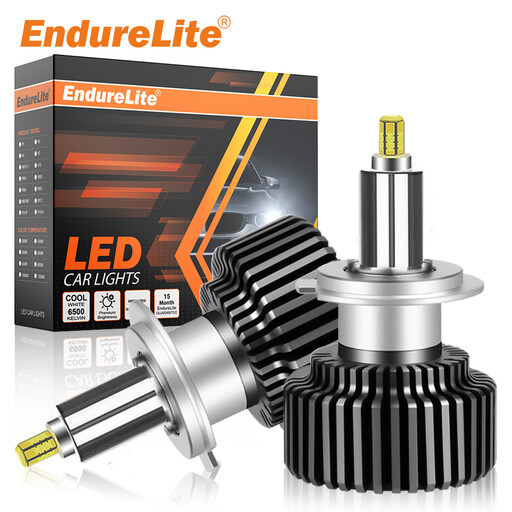
Why This Fits Their Persona: This is a solid, all-round upgrade for daily driving on UK roads. It provides a significant improvement in brightness over stock halogens, making commutes on A-roads and in suburban areas safer and more comfortable without being excessive.
It features a built-in intelligent driver and is CANbus-ready for 99% vehicle compatibility, directly addressing the dashboard error pitfall. The design also focuses on matching the stock beam pattern to prevent glare.
A balanced 6000K cool white light for excellent clarity. The active fan cooling system is designed for a 50,000-hour lifespan, ensuring long-term reliability.
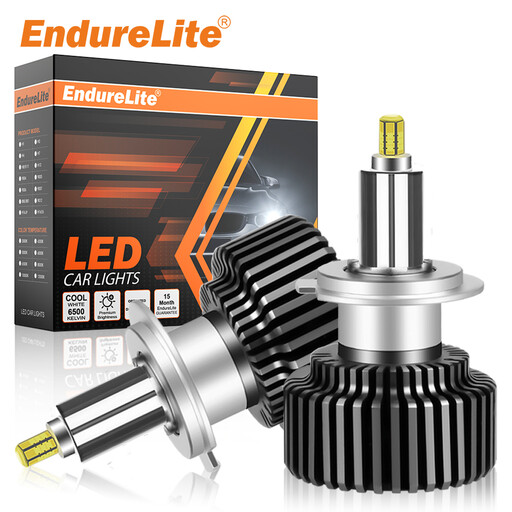
Why This Fits Their Persona: For those who frequently drive on unlit B-roads or motorways at night, maximising visibility is the top priority. This bulb's higher lumen output provides a longer and wider beam, helping to spot hazards like deer or potholes much earlier.
Despite its high brightness, it uses 360-degree CSP chips and a 1:1 design to simulate the original halogen beam, channelling the light effectively onto the road rather than into the eyes of other drivers.
Offers a very high light output for superior night vision. The powerful 10,000 RPM cooling fan and IP68 waterproof rating ensure it performs reliably in demanding conditions.
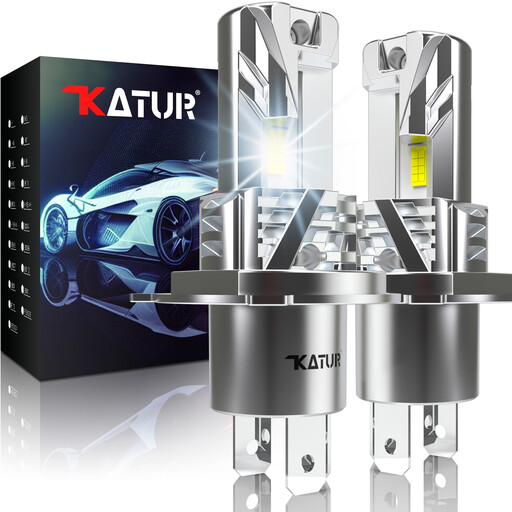
Why This Fits Their Persona: Some cars have very little space behind the headlight assembly. This profile is for the DIY enthusiast who has checked their vehicle and knows a bulky fan-cooled bulb won't fit. Note: This is an H4 bulb shown as an example of a feature to look for.
It directly solves the physical fitment pitfall. A fanless, mini-size design means it can be installed easily without needing to modify the original dust cap, ensuring a true plug-and-play experience.
The key benefit is the silent, fanless operation and compact size. When searching for an H7 bulb, look for similar "fanless" or "mini size" descriptions if space is your primary concern.
We have compiled a complete, real-time list of products that fully satisfy these strict selection criteria and UK safety regulations.
As of 2021, regulations in the UK state that converting halogen headlight units to LED bulbs is not strictly legal for road use and may result in an MOT failure. The rules require bulbs to match the 'light source' specified for the headlamp. However, this is often subject to the tester's discretion. A high-quality LED bulb with a precise beam pattern that mimics the original halogen is less likely to be failed than one that produces obvious glare. Many drivers continue to use them, but it is important to be aware of the official DVSA guidance.
A general rule of thumb is that most European cars made after 2010 (such as VW, Audi, Mercedes and BMW) and some American models (like Ford, Jeep) are more likely to have sensitive CANbus systems. If you install the bulbs and experience dashboard errors, flickering or one light not working, you will likely need to add an external CANbus decoder. It is often wise to choose a bulb advertised with a high compatibility rate to begin with.
Neither is inherently "better"; they suit different needs. A fan-cooled bulb can typically handle more power and thus produce more light, making it ideal for those seeking maximum brightness. A fanless bulb is silent and more compact, making it the only choice for vehicles with tight headlight housings where a larger, fan-cooled unit simply will not fit. The choice depends on your priority: maximum performance or guaranteed fitment.