
24/7 Customer Support

Free returns

Same-day & Next-day Delivery

Quality Guaranteed

Unlock Your Welcome Offers: FREE Delivery | Up to 80% OFF | Free 30-day JoyPlus trial
Download the APP
As Japanese slow-pitch jigging techniques gain popularity across the UK, many experienced anglers are discovering the remarkable effectiveness of the Inchiku jig. This unique lure, with its weighted head and free-swinging octopus skirt, presents an irresistible target for demersal species. However, choosing the right weight and colour for UK conditions can be a challenge.
This guide is designed to help you select the right Inchiku jig for your specific needs, whether you're targeting cod over offshore wrecks, pollack on deep reefs or bass in tidal races. We will cover the key factors to consider before you buy and offer some practical recommendations.
Selecting the correct Inchiku jig involves more than just picking an attractive colour. To get the most out of these lures, you need to match them to the depth, tide and target species.
The most critical factor is the jig's weight. A lure that is too light will not reach the bottom in a strong tide, while one that is too heavy will have a dull, unnatural action. A good rule of thumb is to use approximately 1.5 grams of weight for every metre of water depth.
The combination of a metal jig and a soft, pulsating skirt is what makes these Japanese jigging lures so effective. The colour choice should be guided by water clarity and light conditions.
An Inchiku jig's effectiveness relies on its two-part design. The weighted head gets the lure down, while the separate octopus skirt flutters enticingly on the drop. Ensure the assist hooks are sharp, strong and appropriately sized for your target species. The free-swinging nature of the hooks helps improve the hook-up ratio and reduces the chance of a fish throwing the hook during the fight.
Based on their design, versatility and suitability for UK sea angling, here are our recommendations from the Ecooda Avanzato range.
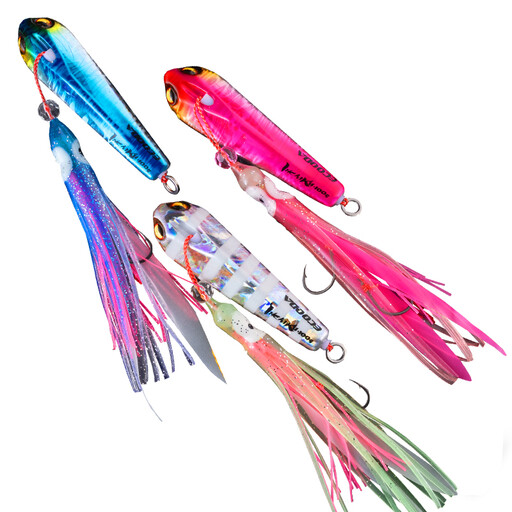
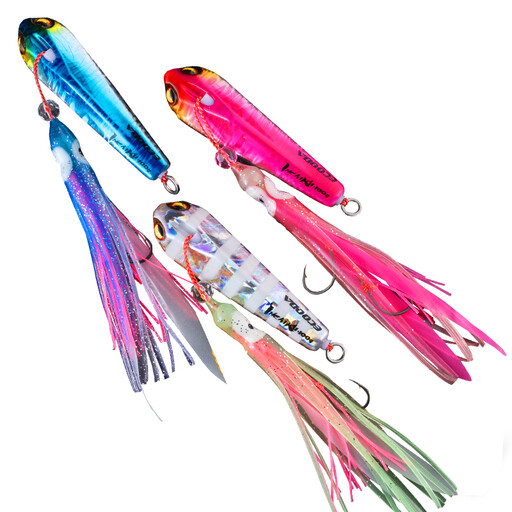
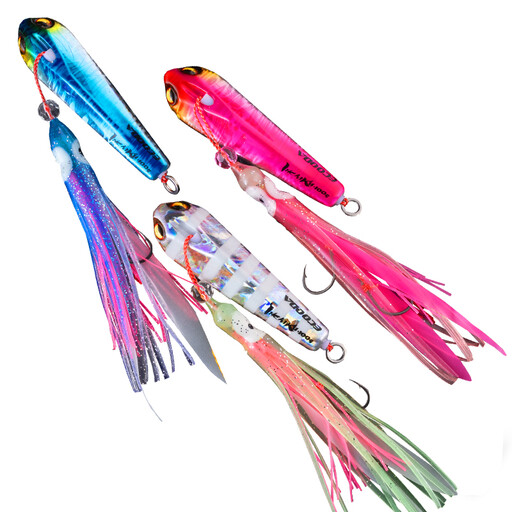
The Inchiku is a fantastic and specific tool. If you are looking to broaden your lure collection with other types of slow pitch jigging lures or general-purpose saltwater jigs, there are many other shapes and styles to explore. Each has a unique action designed for different scenarios.
Browse our full collection of fishing jigs to find the perfect lure for your next trip.
An Inchiku jig is highly effective for a wide range of UK demersal species. Its fluttering skirt and darting head action are particularly attractive to predators like cod, pollack, bass, coalfish and even ling. The lure mimics a wounded squid or small octopus, a common food source for these fish.
The technique is a form of slow pitch jigging. It is far more relaxed than traditional speed jigging. Simply let the lure fall to the seabed. Then, use a slow lift-and-fall retrieve. A single, slow lift of the rod tip by a metre or two, followed by a controlled drop on a semi-slack line, is all that is needed. Most bites will come as the lure flutters back down, so it is vital to stay in contact with the lure to detect subtle takes.
The key difference lies in the construction. A standard slow pitch jig is typically a single, flattened piece of metal designed to slide, wobble or flutter on its own. An Ecooda Inchiku jig, by contrast, has a two-part design: a solid weighted head and a separate, free-swinging octopus skirt with assist hooks. This creates a more complex, two-stage action that many anglers find gives them an edge, especially when fish are less aggressive.