
24/7 全天候客户支持

免费退货

当日/次日达

品质保障

开启新人专享福利: 全场免邮 | 低至 2 折 | 免费试用 30 天 JoyPlus 会员
下载 Joybuy
Having access to 230V mains electricity when you are away from a wall socket is no longer a luxury; it's a modern necessity. Whether you're living the van life, enjoying a weekend camping trip, working on a remote job site or simply preparing for an unexpected power cut at home, a reliable power inverter is a key piece of equipment.
However, choosing the right device can be confusing. The market is filled with technical terms like 'wattage', 'peak power' and 'waveform'. This guide is designed to help you understand what a pure sine wave inverter 12v does and how to select a model that safely meets your power needs, without the marketing hype.
Before looking at specific models, understanding a few core concepts will ensure you make an informed choice.
The most critical factor is the type of AC power the inverter produces.
An inverter's power is measured in watts (W). You will see two figures:
To find the right wattage, check the power labels on your appliances and add them up. For example, a laptop might need 65W, while a small travel kettle could require 1000W. Always choose an inverter with a continuous wattage rating that comfortably exceeds your total needs.
A good DC to AC converter should be both versatile and safe. For low-power needs (typically under 150W), an inverter that plugs into your vehicle's cigarette lighter socket is convenient. For higher-power units, like a 2000w inverter, a direct connection to the battery terminals with heavy-duty cables is required for safety and performance.
Look for models with a comprehensive set of safety protections, including safeguards against overload, short circuits, over-temperature and both under and over-voltage. Modern units may also include a power inverter with USB C ports for fast-charging phones and tablets directly.
Here are a few pure sine wave inverters that offer a great combination of performance, features and reliability for different use cases.
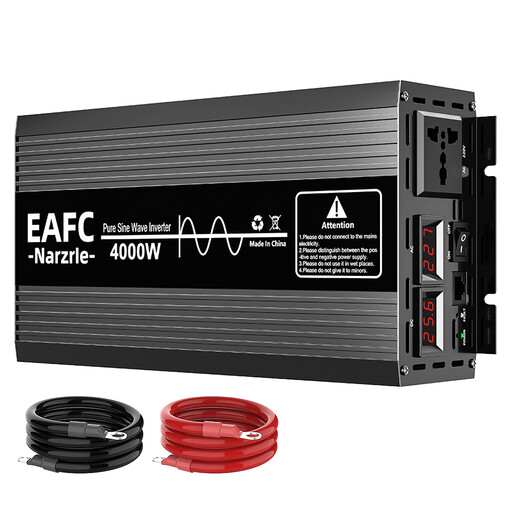
Why It Stands Out: This EAFC model provides a substantial 2000W of continuous power, making it a versatile workhorse. The dual digital displays are a standout feature, allowing you to monitor both the battery's input voltage and the inverter's output voltage in real-time, giving you a clear picture of your power system's health.
Pros:
Who is it for? This is an excellent choice for inverter for van and motorhome owners who need to run multiple appliances. It's also a reliable off-grid power solution for cabins or a powerful backup for home emergencies.
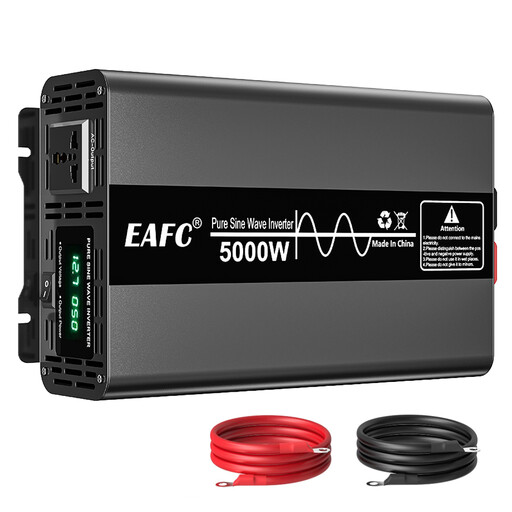
Why It Stands Out: For those with even greater power demands, this 2500W rated inverter offers serious capability. Its detailed digital LCD display provides a comprehensive overview of the system's status, including output wattage, battery percentage and internal temperature. Its robust construction is engineered to perform reliably in a wide range of temperatures.
Pros:
Who is it for? This is a powerful RV power inverter for full-time travellers or tradespeople who rely on high-draw equipment. Its high output and robust build make it suitable for demanding off-grid applications where reliability is paramount.
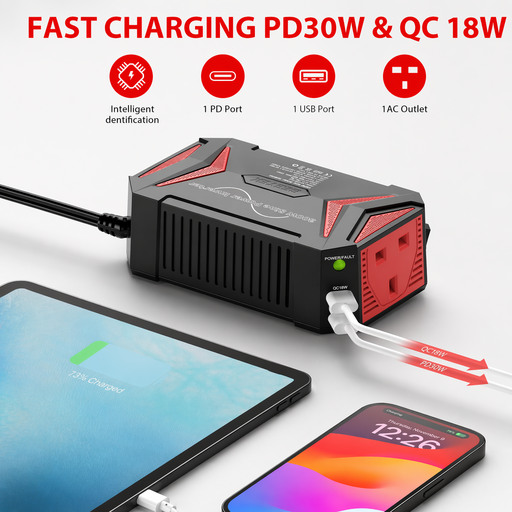
Why It Stands Out: The BESTEK 300w inverter focuses on portability and modern convenience. It plugs directly into your car's 12V socket and provides clean pure sine wave power for smaller devices. Its main advantage is the inclusion of both a PD 30W Type-C port and a QC 18W USB-A port, allowing for rapid charging of the latest smartphones, tablets and even some laptops without needing their bulky power bricks.
Pros:
Who is it for? This is the ideal car power inverter for commuters, sales professionals, families on road trips or anyone who needs to reliably power and charge personal electronics away from home.
The right inverter depends entirely on your specific needs for power and portability. If the models above aren't quite what you're looking for or if you need a different wattage, you can browse our complete collection to find the perfect fit for your vehicle or off-grid setup.
Explore our full range of portable inverter models.
This depends entirely on the inverter's continuous wattage rating.
For low-power inverters (under 150W) plugged into a cigarette lighter, you can typically power small devices for short periods without the engine running. However, for any high-power inverter connected directly to the battery, it is strongly recommended to have the engine running during use. This allows the alternator to replenish the battery and prevents you from draining it completely.
Inverters rated above approximately 150W must be connected directly to the battery terminals. They come with heavy-duty red (positive) and black (negative) cables. Ensure the inverter is switched off, connect the red cable to the positive battery terminal and the black cable to the negative terminal and tighten the connections securely. This direct connection is crucial for safely drawing the high current required for powerful appliances.