
24/7 Customer Support

Free returns

Same-day & Next-day Delivery

Quality Guaranteed

Unlock Your Welcome Offers: FREE Delivery | Up to 80% OFF | Free 30-day JoyPlus trial
Download the APP
Mounting a shelf, radiator, cabinet or electrical fitting on plasterboard requires more than choosing the largest pack on the shelf. The wrong fixing can spin in the board, pull through under load or leave an oversized hole that is difficult to repair.
This guide compares Rawlplug plasterboard fixings, Rawlplug cavity fixings, spring toggles and related wall anchors so you can select the right solution for UK homes, rental properties, workshops and trade installations.
An M5 fixing is not automatically suitable for every heavy object. The substrate, cavity depth, board thickness and fixture design all affect performance. A strong screw in a poorly matched anchor may still fail.
Product descriptions often show the overall fixing length but not the maximum board or fixture thickness. For example, a 38mm fixing may support a particular fixing thickness, while a shorter M4 model may be intended for thinner board or fittings. Always check the stated fixing thickness before ordering.
A plasterboard anchor is designed to grip a void or spread its load behind the board. A frame fixing is generally used by drilling through a fixture into a solid substrate such as brick, concrete or stone. Using cavity wall fixings in masonry or standard wall plugs in hollow plasterboard can produce an insecure installation.
First identify what is behind the surface:
Before drilling, use an appropriate detector to check for concealed cables and pipes. For installations such as radiators, cabinets and electrical equipment, consider the item’s weight when loaded, not just its empty weight.
The diameter affects the screw and anchor interface, while the length must accommodate the wall board, fixture and the expanded or folded section behind the surface.
M4 and M5 wall fixings are common choices for cavity installations. The products listed here specify different drill sizes, including 8mm for M4 Interset fixings and 10mm for M5 Interset fixings. Do not assume that a similar-looking anchor uses the same hole size.
Longer is not always better. Excess length can make installation awkward, while insufficient length may prevent the anchor from opening correctly behind the board.
For one household project, a card of six may be practical. For repeated work by electricians, plumbers, installers or maintenance teams, a trade pack or box can reduce interruptions and cost per fixing.
Also check whether the fixing needs:
Self-drill plasterboard fixings avoid pre-drilling and can be convenient for lighter applications. However, convenience should not replace checking the intended load and substrate.
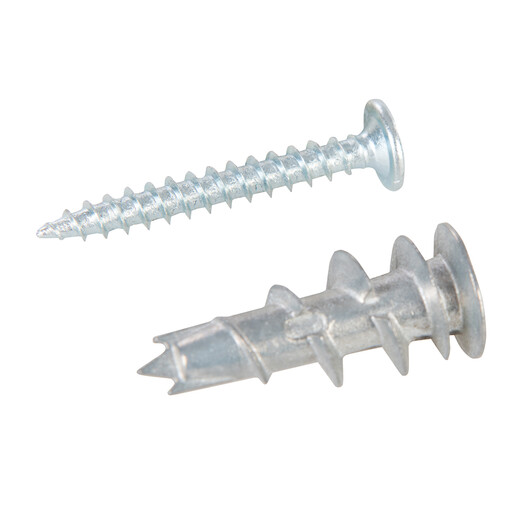
Why This Fits Their Persona: A practical option for homeowners handling multiple light-duty plasterboard jobs, such as pictures, small shelves and accessories.
It avoids the assumption that every plasterboard anchor needs a large pre-drilled hole: the product is described as self-drilling and requires no special setting tool.
100-pack; anti-corrosion finish; sharp self-tapping thread; removable and reusable according to the product description.
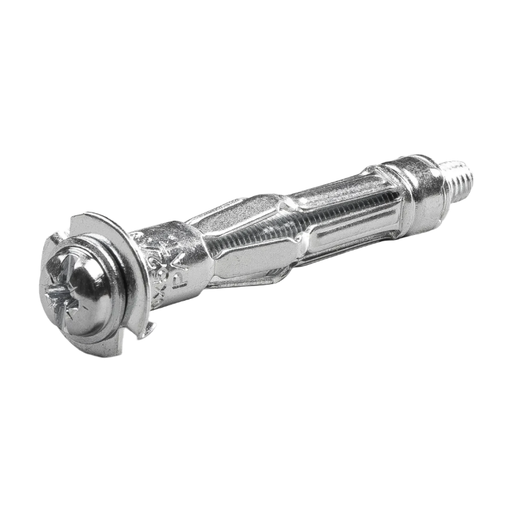
Why This Fits Their Persona: Suitable for users who want a specified cavity fixing for shelves, bathroom accessories, radiators and kitchen cabinets on plasterboard.
The stated 8mm drill size and 17mm fixing thickness make it easier to compare the product with the actual board and fixture thickness.
Trade pack of 20; removable and reusable screw and fixture; compatible with a standard slotted or Pozidriv screwdriver.
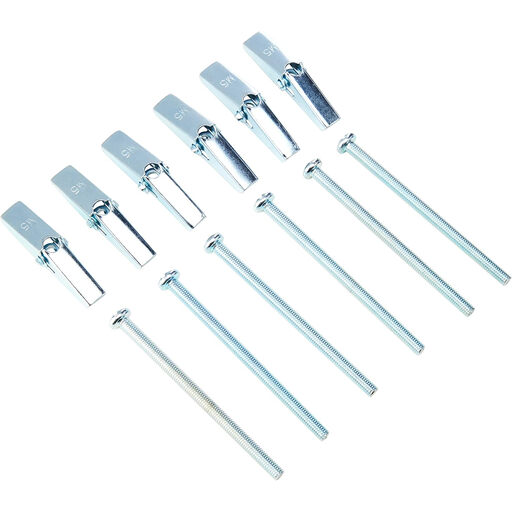
Why This Fits Their Persona: Designed for users mounting larger fixtures to cavity walls or ceilings, including double plasterboard, lathe and plaster, plywood or hardwood.
Its toggle spreads the load over a wider area, addressing the risk of relying on a small contact point in a lower-strength cavity surface.
M5 x 80mm format; pack of six; no special tool required according to the product description.
We have compiled a complete, real-time list of products that fully satisfy these strict selection criteria and UK safety regulations.
Some Rawlplug cavity fixings and spring toggles are designed for larger fixtures, but suitability depends on the item’s total loaded weight, the board construction and the number and spacing of anchors. Check the manufacturer’s technical information and distribute the load across suitable fixing points.
The Interset products listed above state that the screw and fixture can be removed and reused, which can be useful when moving radiators or redecorating. Inspect the fixing after removal and replace it if the threads, sleeve or surrounding board have been damaged.
There is no universal lifespan. Service life depends on the load, vibration, moisture, installation quality and condition of the wall. A fixing that remains tight and undamaged may continue to perform, but looseness, cracking, corrosion or movement is a reason to remove the load and reassess the installation.