
24/7 Customer Support

Free returns

Same-day & Next-day Delivery

Quality Guaranteed

Unlock Your Welcome Offers: FREE Delivery | Up to 80% OFF | Free 30-day JoyPlus trial
Download the APP
A reliable chef knife is the single most important tool in any kitchen. The right knife can transform meal preparation from a chore into a pleasure, allowing for precise, efficient and safe cutting. However, with so many options available, finding the perfect all-purpose kitchen knife can feel overwhelming. A dull or poorly balanced blade not only slows you down but can also be a safety hazard.
This guide is designed to cut through the clutter. As a Joybuy Product Recommendation Officer, my role is to provide clear, practical advice to help you select a high-quality kitchen knife that suits your needs as a home cook in the UK. We will explore key features to look for and present some of our top recommendations for 2026.
Before diving into specific products, let's cover a few essential factors to consider. Understanding these will help you make a more informed decision.
The heart of any knife is its blade. For most home kitchens, a stainless steel chef knife offers an excellent balance of sharpness, durability and corrosion resistance. Look for details on the type of steel used; for instance, 400 series stainless steel is a common choice known for its toughness and ease of maintenance.
You will also encounter different blade styles, most commonly the classic Western chef's knife and the Japanese santoku knife.
A knife should feel like an extension of your hand. An ergonomic knife handle is crucial for control, comfort and reducing fatigue during longer prep sessions. Handle materials vary from durable synthetic composites to traditional wood. The key is to find a knife that feels balanced in your hand—not too blade-heavy or handle-heavy. This balance provides maximum control and makes the knife safer to use.
Here are a few carefully selected options that offer great performance and value for enthusiastic home cooks.
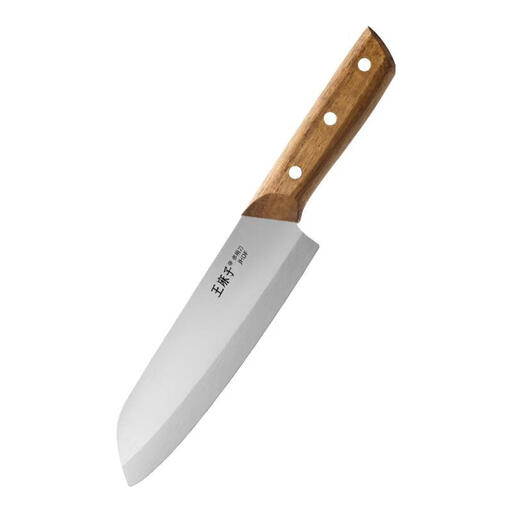
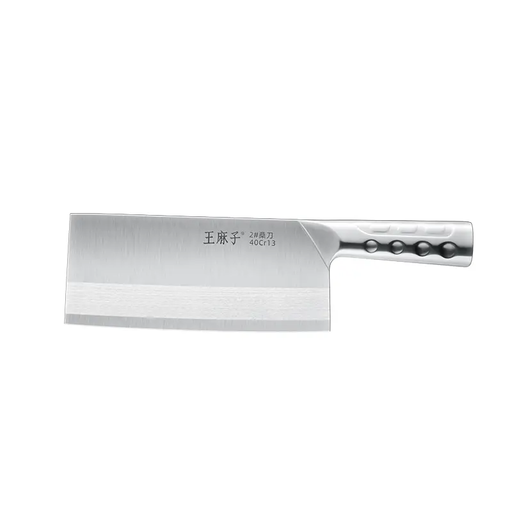
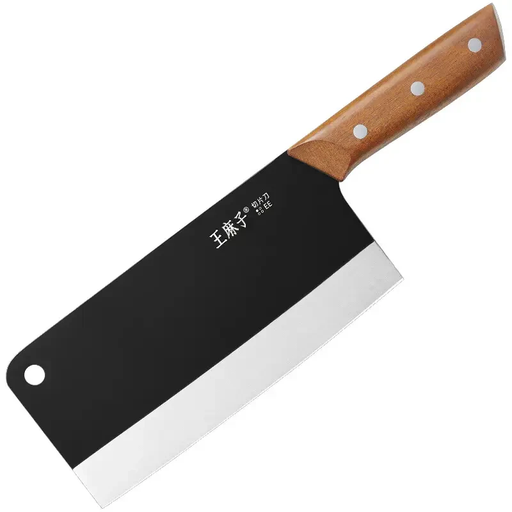
If these specific models aren't quite what you're looking for, or if you'd like to explore cleavers, paring knives or other specialised blades, there are many more choices available.
Browse our full collection of Knives and Tools to find your perfect kitchen companion.
The main differences are in the blade shape and cutting motion. A Western chef knife has a curved blade edge, designed for a 'rocking' chop. A Santoku knife has a straighter edge and is used with more of a direct downward chopping or slicing motion. Santokus are often slightly shorter and lighter, which some cooks find more agile.
A sharp kitchen knife is a safe knife. To maintain its edge, regular honing is recommended. A honing steel realigns the microscopic edge of the blade between sharpenings. For actual sharpening (removing metal to create a new edge), a whetstone or a quality pull-through sharpener is necessary. Always hand-wash your quality knives and dry them immediately to protect the blade and handle.
For someone starting to build their kitchen toolset, a chef knife or a Santoku knife between 6 to 8 inches (15-20 cm) is an excellent choice. Both are incredibly versatile and can handle over 90% of daily cutting tasks. The models recommended above, such as the WANGMAZI Kitchen Chef Knife, are great starting points as they offer a balance of performance, versatility and ease of use.