
24/7 Customer Support

Free returns

Same-day & Next-day Delivery

Quality Guaranteed

Unlock Your Welcome Offers: FREE Delivery | Up to 80% OFF | Free 30-day JoyPlus trial
Download the APP
For UK sea anglers, choosing an ECOODA AVANZATO fishing lure is less about picking the brightest colour and more about matching the lure’s weight, action and running depth to the venue. A lure suited to a sheltered estuary may be difficult to control from a deep-water boat mark, while an unnecessarily heavy model can reduce casting comfort and make lighter tackle unsuitable.
The AVANZATO range includes vibrating lures, sinking pencils, Inchiku jig lures, hard fishing lures and soft fishing lures in weights from 60 g to 200 g. That gives shore and boat anglers useful choice, but it also creates several opportunities to buy the wrong format.
A heavier lure is not automatically a longer-casting lure. Casting distance also depends on the rod’s casting range, line diameter, wind direction and the lure’s shape. A 60 g vibrating fishing lure may suit a medium-heavy shore outfit, whereas a 150 g or 200 g lure can require a much stronger rod and leader setup.
Always compare the lure weight with the stated casting range of your rod. Overloading a rod can affect control and may increase the risk of equipment damage.
A vibrating fishing lure creates movement as it is retrieved, while a sinking pencil lure is generally selected for controlled sinking, casting and horizontal retrieves. An Inchiku jig lure is more closely associated with vertical or stepped jigging, particularly from a boat.
Marketing descriptions can make every action sound suitable for every situation. In practice, the choice should reflect whether you intend to cast, work the lure through the water column or fish vertically beneath a boat.
Six-colour selections offer flexibility, but colour alone does not determine whether a lure will produce results. Water clarity, cloud cover, depth and the amount of natural light all affect how visible a lure may be. In murky coastal water, a contrasting finish may be easier to track. In clear water, a more natural silverfish-style appearance may be a sensible starting point.
Treat colour as one part of the selection process rather than a guarantee of catch performance.
The available ECOODA AVANZATO formats include:
Check your rod, reel, line and leader as a complete system. A lure that is technically castable may still be uncomfortable to retrieve for a full session if the outfit is not matched to it.
A hard fishing lure usually has a rigid body, while a soft fishing lure has a flexible body that can be paired with suitable hooks or jig heads depending on its design. A vibrating lure is intended to provide noticeable movement during retrieval, whereas a sinking pencil lure can be allowed to descend before being worked at a chosen depth.
For boat anglers, an ECOODA AVANZATO jig lure or Inchiku design may be more practical than a surface-oriented popper lure when fish are holding deeper in the water column. For shore anglers, a long-cast lure or sinking pencil can be easier to work across open water.
Before ordering, check the listing for the supplied hooks, split rings and terminal components. These parts receive considerable strain in salt water. Rinse the lure with fresh water after use, dry it fully and inspect hooks and rings for corrosion or distortion.
No lure is maintenance-free. Regular rinsing and dry storage can help preserve finishes and reduce avoidable replacement costs.
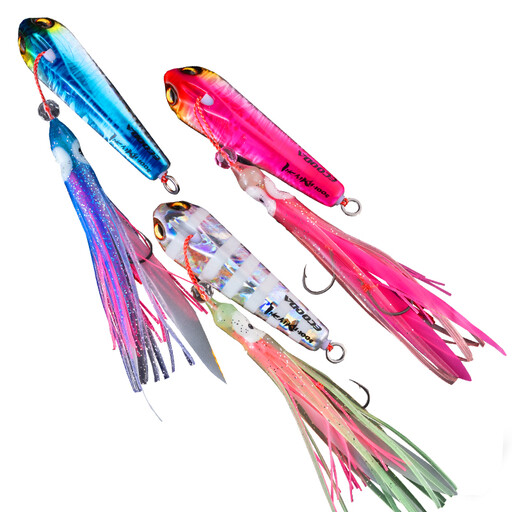
Why This Fits Their Persona: A 60 g format gives newcomers a manageable entry point for lure fishing from suitable shore marks, piers and smaller boat setups.
Its stated 60 g weight is clear, helping buyers compare it with their rod’s casting range instead of choosing by colour alone.
60 g weight; six colour options; sinking pencil and vibrating format.
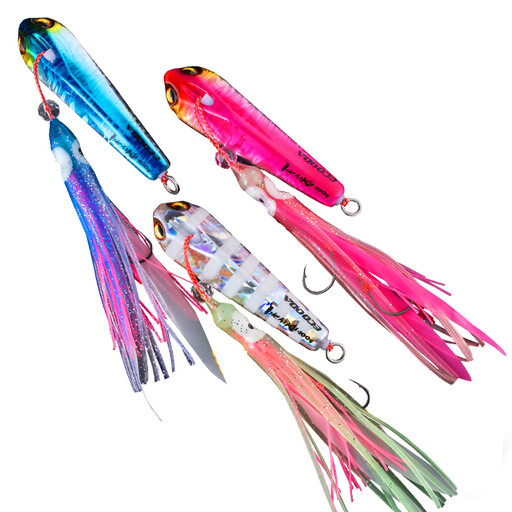
Why This Fits Their Persona: The named long-cast format is suited to anglers covering distance from beaches, rocky marks or open promenades where reach is important.
It separates the long-cast design from general lure claims, while the stated 80 g weight remains easy to check against tackle specifications.
80 g weight; sinking pencil format; six available colours.
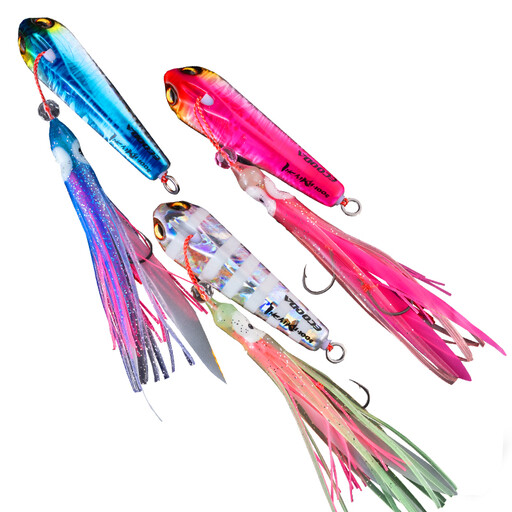
Why This Fits Their Persona: The 150 g Inchiku jig lure is aimed at boat anglers who need a heavier presentation for vertical fishing and deeper water.
The product type and weight make its intended vertical-jigging role clearer than selecting a generic hard fishing lure for every method.
150 g weight; Inchiku jig profile; silverfish styling; six colours.
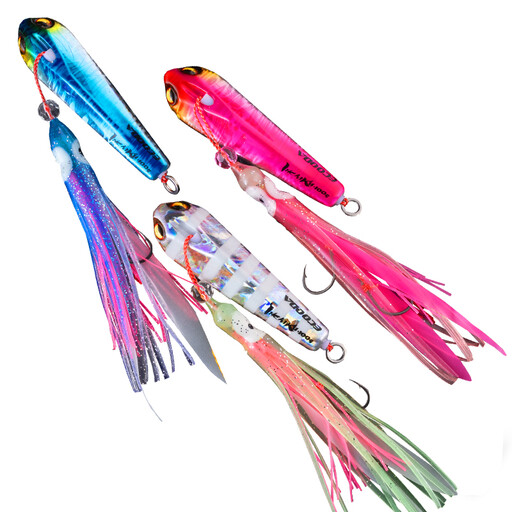
Why This Fits Their Persona: A 200 g hard lure is intended for anglers whose setup and fishing conditions call for a substantial weight, such as strong current or deep-water boat work.
The clearly stated 200 g specification discourages accidental pairing with light tackle, and the rigid hard-lure format is distinct from a soft lure.
200 g weight; hard lure construction; six colour options.
Your choice does not have to stop at the four profiles above. The range also includes:
Check the individual listing before purchase for supplied terminal tackle, dimensions, colour selection and delivery information. Product titles identify the lure category and weight, but they should not replace checking your own rod and reel specifications.
We have compiled a complete, real-time list of products that fully satisfy these strict selection criteria and UK safety regulations.
It depends on the rod’s casting range, wind and current. A 60 g fishing lure may be easier to handle with a lighter compatible outfit. An 80 g fishing lure, particularly a long-cast sinking pencil, may offer a more substantial option where extra weight is appropriate. Always follow the rod manufacturer’s recommended range.
For deeper water or stronger tide, anglers may consider 100 g, 150 g or 200 g fishing lures, but depth and current are only part of the decision. Match the lure to the boat rod, reel, line and leader, and confirm that the setup can control the lure safely.
Rinse the lure and terminal components with fresh water after every saltwater session. Allow it to dry before storing it in a ventilated tackle box. Inspect hooks, split rings and connection points regularly, replacing corroded components before the next trip.