
24/7 Customer Support

Free returns

Same-day & Next-day Delivery

Quality Guaranteed

Unlock Your Welcome Offers: FREE Delivery | Up to 80% OFF | Free 30-day JoyPlus trial
Download the APP
Upgrading your car’s headlights from dim, yellowing halogens to crisp, bright LED headlight bulbs seems like a straightforward decision. It promises better visibility on dark country lanes, a modern look and a longer lifespan. However, the path to a successful car headlight upgrade is filled with pitfalls that can leave you with dazzling oncoming traffic, dashboard warning lights and a failed MOT.
As the Joybuy Product Recommendation Officer, my role is to help you navigate the market and identify the key features that truly matter. Before you add any bulbs to your basket, let’s look at the three most common traps that UK drivers fall into.
To make an informed choice, you need to look past the marketing hype and focus on three core parameters. Getting these right is essential for a safe and effective upgrade.
The single most important factor is the fitment code. This code (e.g., H7 LED bulb, H4 LED, 9005 HB3 LED) defines the bulb's base and how it locks into your headlight housing. You can find your car's required code in the owner's manual or by inspecting the existing bulb.
Beyond the base, look for bulbs with a 1:1 design that mimics the size and filament position of the original halogen. This is crucial for ensuring the light is correctly reflected by your headlight housing, creating a sharp, focused beam pattern that illuminates the road ahead without causing glare. This is also a key requirement for passing an MOT inspection.
For a hassle-free car headlight upgrade, a 'plug and play' design is ideal. These bulbs are designed to connect directly to your car's existing wiring without any modification. However, as mentioned, the CANbus system can be tricky.
While many bulbs are advertised as CANbus ready LED bulbs, compatibility can vary, especially with German marques like BMW, Audi and Mercedes-Benz. For these vehicles, you may still need an additional decoder or resistor to prevent errors. Always check the product description for any specific vehicle exclusions.
To help you choose, we've matched some options to common UK driver profiles, highlighting how they address the buying pitfalls.
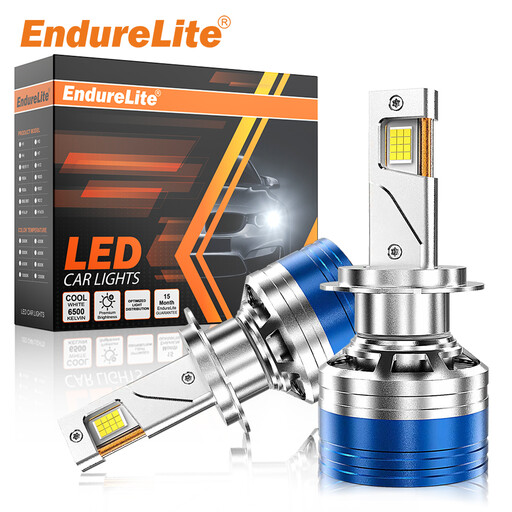
Why This Fits Their Persona: Ideal for the owner of a popular UK car like a Ford Focus or Vauxhall Corsa who wants a simple, effective upgrade. The multi-socket H8/H9/H11 compatibility and 'plug and play' design make it a low-risk, high-reward choice for a first-time LED installation.
The 1:1 mini design directly addresses the "bad fit" pitfall by ensuring it fits into the stock housing and replicates the halogen beam pattern. Its built-in CANbus driver is designed for high compatibility with most mainstream vehicle systems, reducing the risk of dashboard errors.
Features an active cooling fan and an IP68 waterproof rating, addressing the durability and heat dissipation concerns for a long operational life.
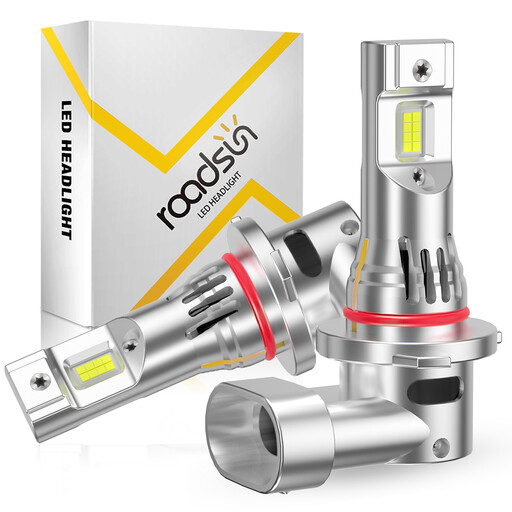
Why This Fits Their Persona: For the driver who prioritises maximum illumination and sustained performance. The 9005/HB3 fitment is common for high beams in many vehicles and this bulb's focus on high brightness and cooling is perfect for spirited night driving on unlit roads.
This bulb directly tackles the heat dissipation pitfall with a high-performance turbo fan and aviation aluminium housing. This ensures the CSP chips do not overheat, preventing the brightness degradation common in cheaper, fanless models.
The combination of premium CSP chips and a powerful cooling system is designed to deliver a substantial increase in light output and a long service life, offering strong value for performance-oriented users.
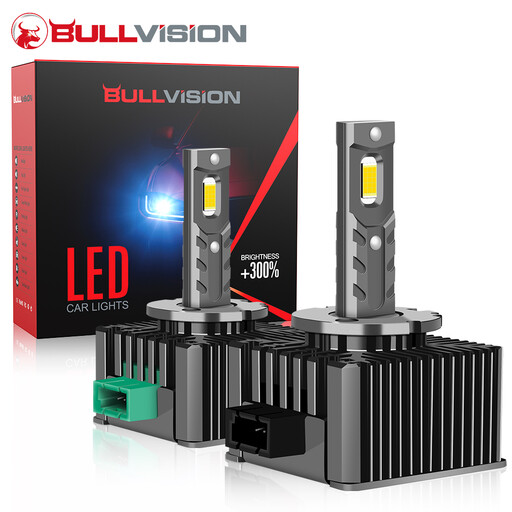
Why This Fits Their Persona: This is for drivers of vehicles equipped with factory HID (High-Intensity Discharge) headlights who want to switch to LED technology. These bulbs are specifically designed to replace D-series HID bulbs, offering a direct upgrade path.
It completely bypasses the "universal fit" trap by being a purpose-built replacement for a very specific family of bulbs (D1S, D2S, etc.). This ensures it connects correctly to the vehicle's existing ballast and fits the projector housing, which is essential for a proper beam pattern.
Provides the benefits of LED technology—such as instant-on brightness and a long lifespan—to vehicles that came with HIDs, which can be costly to replace and degrade in colour and brightness over time.
We have compiled a complete, real-time list of products that fully satisfy these strict selection criteria and UK safety regulations.
The legality of aftermarket LED headlight bulbs in the UK depends on their use. For a vehicle to pass its MOT, the headlights must produce a clear and appropriate beam pattern that doesn't dazzle other drivers, be securely fitted and show a light of the correct colour (white or yellow). While many high-quality LED bulbs with a 1:1 design can achieve this, the regulations are subject to change. It is always advisable to check the latest guidance from the DVSA and to keep your original halogen bulbs for the MOT if you are uncertain.
Some vehicles, particularly from manufacturers like Volkswagen, BMW and Mercedes-Benz, do not use a standard spring clip to hold the H7 bulb. Instead, they use a separate plastic or metal adapter. If your car has one of these, you will likely need to purchase a bulb holder adapter specifically designed to mount an H7 LED bulb in your vehicle's headlight housing.
Many manufacturers state their LED bulbs are significantly brighter than standard halogen bulbs. While this is often perceivable in terms of light output (lumens), the most important factor for road safety is the effective brightness. This is determined by the beam pattern. A well-designed LED bulb will focus its bright light onto the road and verges, improving visibility without scattering light upwards into the eyes of oncoming drivers.