
24/7 Customer Support

Free returns

Same-day & Next-day Delivery

Quality Guaranteed

Unlock Your Welcome Offers: FREE Delivery | Up to 80% OFF | Free 30-day JoyPlus trial
Download the APP
Finding the right yoga mat can feel overwhelming. The market is flooded with options, all promising the perfect practice. But many fall short, leaving you with a mat that’s slippery, uncomfortable or falls apart after a few sessions. As a Joybuy Product Recommendation Officer, my role is to help you see past the marketing jargon and focus on what truly matters for a safe and effective workout.
Before you add a mat to your basket, let's look at the common pitfalls that UK buyers encounter and how to sidestep them.
To ensure your new gym mat is a long-term partner for your fitness journey, focus on these three practical specifications.
The thickness of your mat is crucial and depends entirely on your primary activity.
The material dictates the mat's grip, weight, durability and feel.
Consider how you'll use your mat. If you plan to attend classes, a lightweight mat with an included yoga mat with strap is essential for easy transport. For beginners, some mats feature alignment lines printed on the surface to help guide hand and foot placement, which can be a useful aid for developing good form.
Instead of a one-size-fits-all approach, we've matched specific mats to different user needs.
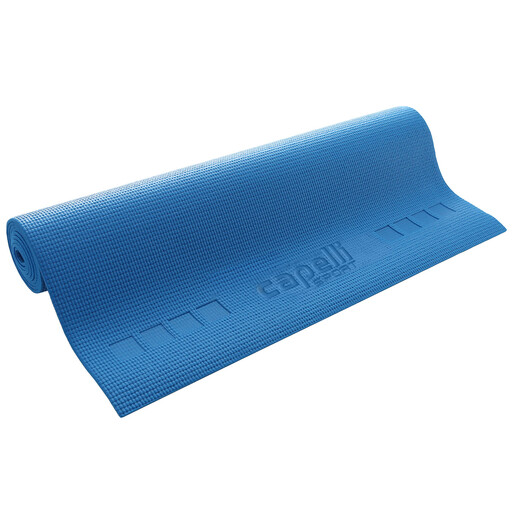
Why This Fits Their Persona: Ideal for those new to yoga or home fitness who need a functional, no-frills mat without a large initial investment. Its durable PVC material withstands early use and the 4mm thickness is a step up from ultra-thin options, providing a basic level of comfort on typical UK household flooring.
While it's a thinner mat, the 4mm thickness offers more protection than the flimsy 2-3mm mats that often disappoint beginners. Its embossed PVC surface is designed for durability and provides a reliable grip for foundational poses, avoiding the 'slippery surface' issue common in untextured, cheap mats.
Durable and easy-to-clean PVC material. A cost-effective entry point into home fitness.
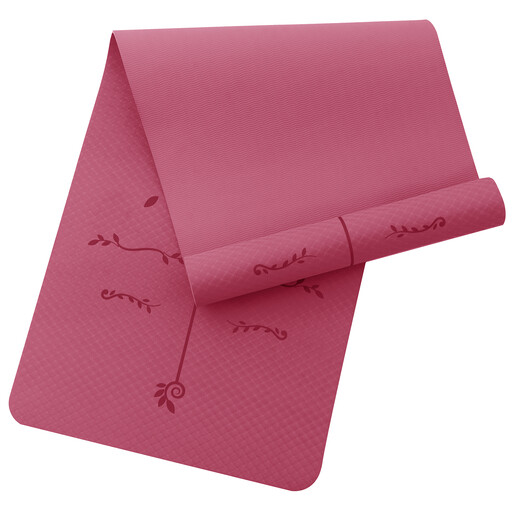
Why This Fits Their Persona: Perfect for the individual whose routine includes a mix of yoga, Pilates and bodyweight exercises. The 6mm thickness hits the sweet spot between cushioning and stability, while the lightweight TPE material and included yoga mat with strap make it easy to take to the gym or a class.
This mat directly addresses the 'material mismatch' by using TPE, which offers superior grip and less odour than basic PVC. The 6mm thickness prevents the 'too thin' pitfall, providing ample joint support for a varied fitness mat workout without compromising stability.
Lightweight TPE material with alignment lines for better form. Includes a carrying strap for portability.
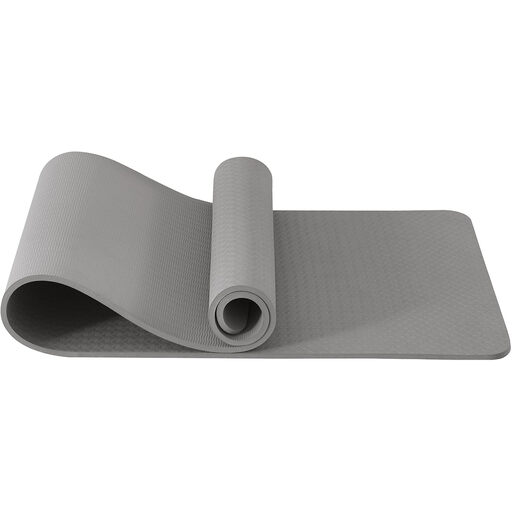
Why This Fits Their Persona: This mat is for those who prioritise joint protection and comfort, especially during floor-based exercises like Pilates or restorative yoga. The generous 10mm thickness provides substantial cushioning for the spine, hips and knees on hard surfaces.
It completely eliminates the 'too thin' problem by offering maximum cushioning. The high-density TPE material ensures it's not just thick but also supportive (resisting compression), while the double-sided texture provides the reliable non-slip yoga mat surface needed for safe practice.
A thick yoga mat (10mm) for superior cushioning and joint support. High-density TPE material for durability and comfort.
We have compiled a complete, real-time list of products that fully satisfy these strict selection criteria and UK safety regulations.
Many new mats have a thin film left over from the manufacturing process. To improve grip, it's a good idea to "break in" your mat. Gently wipe it down with a damp cloth and a small amount of mild soap. Rinse with a clean, damp cloth and let it air dry completely, away from direct sunlight. Avoid using oils or lotions on your hands and feet before practice, as this can reduce grip.
The main difference is typically thickness. A Pilates mat is usually thicker (often 10mm or more) to provide extra cushioning for the spine during the rolling exercises common in Pilates. A standard yoga mat is often thinner (4mm-6mm) to provide a more stable surface and better connection to the floor for standing and balancing poses. However, many modern 6mm or 8mm mats are versatile enough to be used for both disciplines.
Durability depends on the material, frequency of use and how it's cared for. PVC mats are known for their longevity and can last for several years, even with regular use. TPE mats are also durable but can be more susceptible to abrasion. With proper care (cleaning and correct storage), a quality TPE mat should serve you well for 1-3 years of regular practice.